Disease
fungalMummy Berry
Monilinia vaccinii-corymbosi
The most damaging blueberry disease in the eastern US, killing shoots in spring and mummifying fruit later in the season.
- Pathogen type
- Fungal
- Hosts
- 3
- Symptoms
- 3
- Scientific name
- Monilinia vaccinii-corymbosi
- Resistant varieties
- 3
Biology and conditions
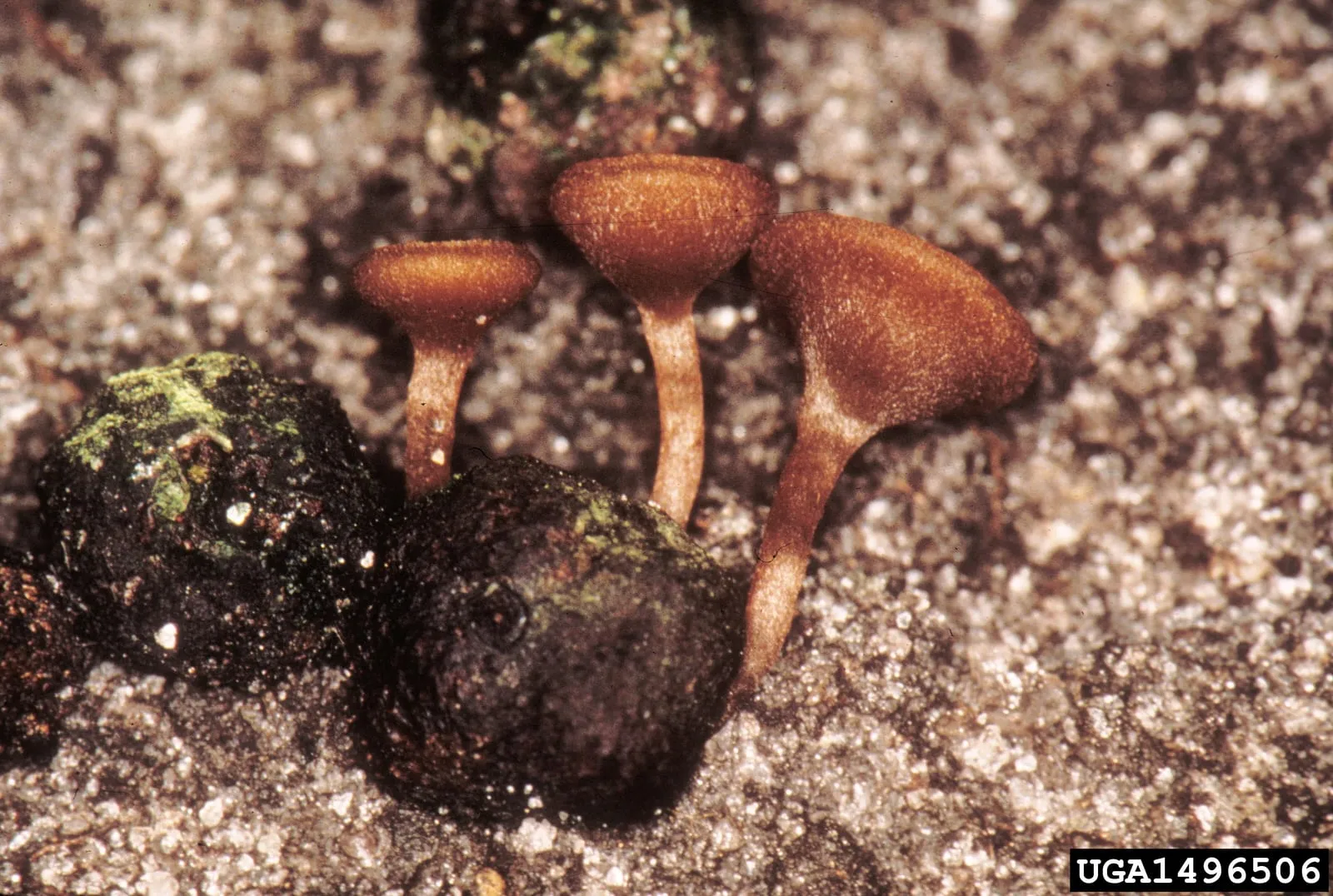
Mummy berry (Monilinia vaccinii-corymbosi) is a fungal disease with a two-stage infection cycle that makes it particularly destructive in blueberry plantings. In spring, overwintered mummies on the ground produce small cup-shaped apothecia that release ascospores during bud swell and early shoot growth. These spores infect new shoots, causing the wilting and blackening known as shoot strike. Infected shoots then sporulate, producing conidia that are carried by insects (primarily bees) to open flowers during bloom. The secondary infection mummifies developing fruit, which falls to the ground and overwinters as the next generation of inoculum.
The disease thrives when spring conditions are wet and cool at bud break. Apothecia development requires extended soil moisture and humid conditions coinciding with host phenology. Eastern blueberry-growing regions face consistent annual pressure because these conditions are routine rather than exceptional. A single season of heavy infection can substantially reduce yield and leave a larger mummy bank to drive the following year's cycle.
The most cost-effective management combines cultural controls with targeted fungicide applications. Removing or burying mummies before spore release in late fall or early spring breaks the inoculum cycle at its source. Deep cultivation or thick mulch (4 inches or more) prevents mummies from producing viable apothecia. Where cultural controls alone are insufficient, a fungicide program timed from bud break through bloom addresses the primary infection window before secondary spread begins.
Variety selection provides a long-term structural advantage. Bluetta, Northland, and Elliott have demonstrated reduced susceptibility compared to highly susceptible cultivars. In regions with consistent annual pressure, these varieties can meaningfully reduce dependence on fungicide inputs over time.
Symptoms
- ▸ Wilting and blackening of new shoots in spring (primary infection)
- ▸ Pink-tan mummified fruit at harvest (secondary infection)
- ▸ Mummies on the ground beneath bushes
IPM controls
- ✓ Remove and bury or burn fallen mummies in late fall
- ✓ Cultivate or mulch deeply to bury mummies before spore release
- ✓ Fungicide program from bud break through bloom
- ✓ Plant resistant varieties where available
Resistant varieties
Selecting a variety with documented resistance is the most effective single decision for low-input management of mummy berry.
Affected crops
Image: "Monilinia vaccinii-corymbosi apothecia", by University of Georgia Plant Pathology , University of Georgia, Bugwood.org, via Wikimedia Commons, licensed under CC-BY Source.

Related