Disease
fungalOnion White Rot
Sclerotium cepivorum
Soil-borne fungal disease specific to alliums. Sclerotia survive 20+ years in soil; once present, the disease persists indefinitely in that bed.
- Pathogen type
- Fungal
- Hosts
- 6
- Symptoms
- 4
- Scientific name
- Sclerotium cepivorum
- Resistant varieties
- 0
Biology and conditions
Onion white rot (Sclerotium cepivorum) is a soil-borne fungal pathogen with an unusually long survival profile. The fungus produces small, hard, black resting structures called sclerotia that persist in soil for 20 or more years without a host plant. This persistence is the defining management problem: crop rotation, which works for most soil-borne pathogens, provides essentially no benefit against white rot because the inoculum simply waits.
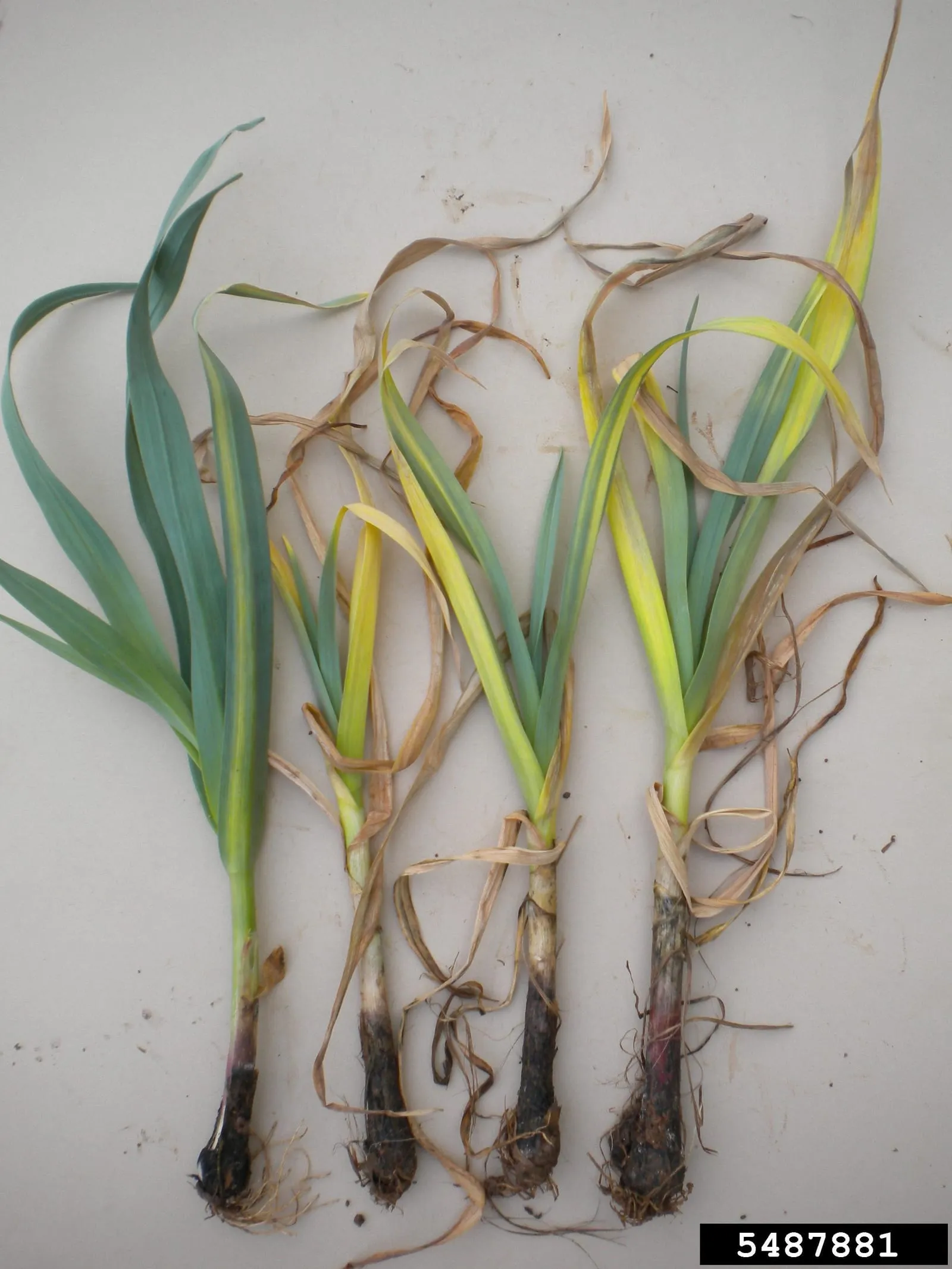
The disease is specific to the allium family. Onion, garlic, leek, shallot, scallion, and chives are all susceptible; other crops in the same bed are unaffected. Infection progresses from the roots and bulb base upward. White, fluffy mycelium appears at the soil line, often studded with the same black sclerotia that will contaminate the bed for decades. Above ground, the first sign is leaf yellowing and progressive dieback that resembles drought stress or nutrient deficiency. By harvest, infected bulbs have soft, collapsing tissue and often fall apart when pulled.
Cool, moist soil conditions favor active infection. The pathogen is most aggressive in spring and fall when soil temperatures are moderate and moisture is high, which unfortunately coincides with the primary growing window for alliums in most temperate zones.
No commercially available allium variety offers meaningful resistance. The most cost-effective strategy for uninfested ground is strict prevention: certified disease-free planting stock, clean tools between beds, and vigilant inspection before introducing soil or amendments from outside. Where infestation is confirmed, raised beds filled with imported soil represent the most reliable long-term option. Soil solarization can reduce sclerotia numbers but not eliminate them.
Symptoms
- ▸ Yellowing and dieback of leaves
- ▸ White fluffy mycelium and small black sclerotia at the base of the bulb
- ▸ Soft rot of bulbs at harvest
- ▸ Bulbs that fall apart when pulled
IPM controls
- ✓ Source certified disease-free seed garlic and onion sets
- ✓ Never plant alliums in known-infested ground (rotation alone won't help due to long sclerotia survival)
- ✓ Soil solarization in summer can reduce inoculum but not eliminate it
- ✓ Garlic powder soil drench triggers premature germination of sclerotia in absence of host (experimental)
- ✓ Raised beds with imported soil for established infestations
Affected crops
Image: "Allium sativum - White rot (Stromatinia cepivora) - Elizabeth Bush", by Elizabeth Bush, Virginia Polytechnic Institute and State University, Bugwood.org, via Wikimedia Commons, licensed under CC-BY Source.
_-_Elizabeth_Bush.jpg)
Related