Disease
fungalOrange Rust
Arthuriomyces peckianus
Systemic fungal disease that permanently infects black raspberries and blackberries (not red raspberry); infected plants must be removed entirely.
- Pathogen type
- Fungal
- Hosts
- 3
- Symptoms
- 3
- Scientific name
- Arthuriomyces peckianus
- Resistant varieties
- 0
Biology and conditions
Orange rust is caused by Arthuriomyces peckianus, a systemic fungal pathogen that colonizes the entire plant rather than isolated tissue. Once established in a crown or cane, the infection spreads through the plant's vascular system, rendering topical fungicide treatments ineffective. There is no chemical or cultural treatment that clears an established infection.
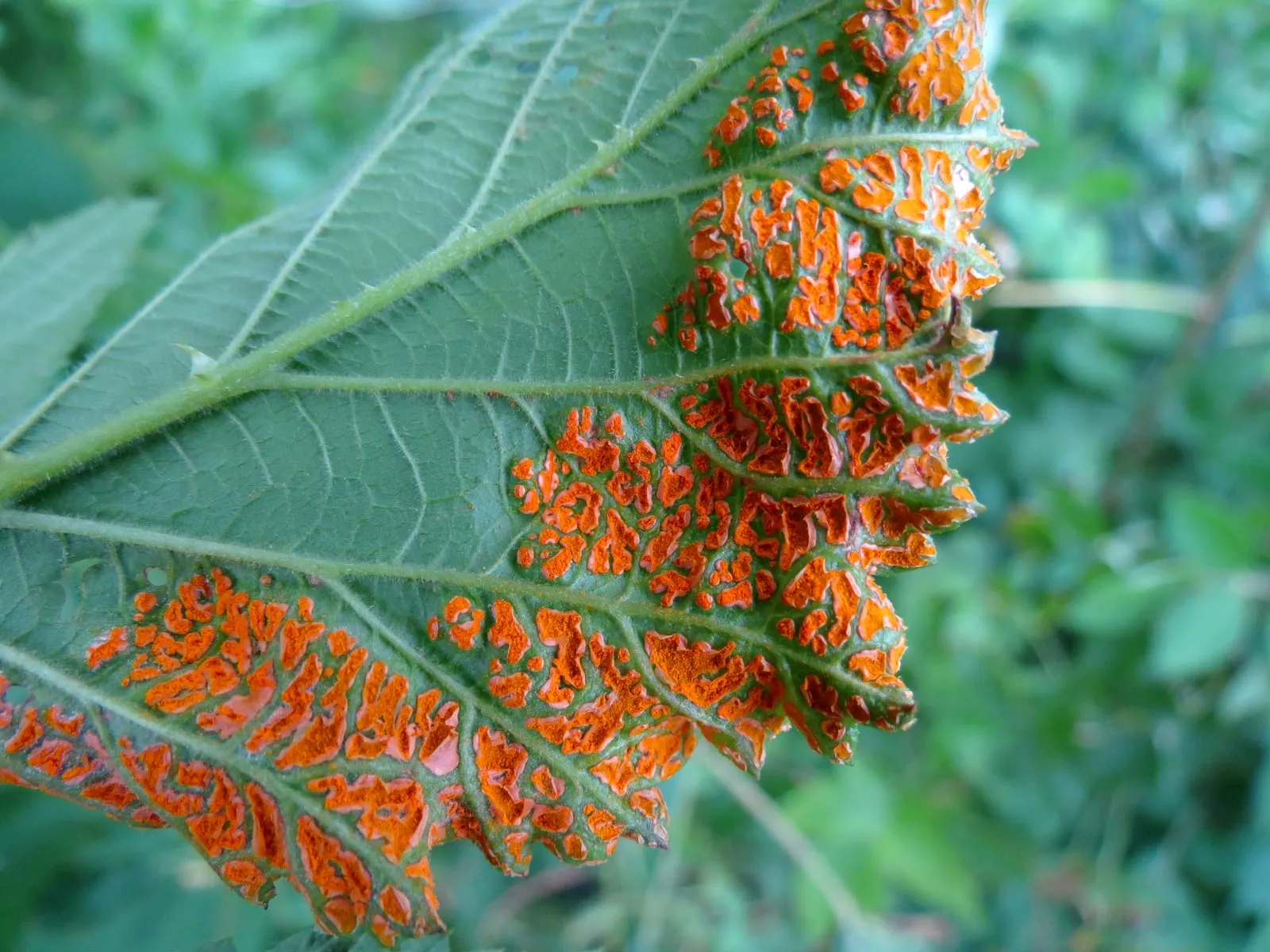
The pathogen overwinters as mycelium in infected crowns and roots. As temperatures warm in spring and humidity rises, infected plants push out spindly, distorted shoots with chlorotic foliage. The diagnostic sign appears on leaf undersides: bright orange powdery spore masses (aeciospores) that release into the air and move to neighboring susceptible plants. Warm, wet spring weather accelerates both spore production and dispersal distance. Closely spaced plantings create conditions where a single infected plant can seed an entire row before the infection is noticed.
Host range is narrow but critical to management planning. Black raspberries and blackberries are highly susceptible. Yellow raspberries carry meaningful susceptibility. Red raspberries are essentially immune, which makes them a practical buffer when sited adjacent to susceptible plantings.
The most cost-effective strategy is eradication combined with prevention. Infected plants cannot be rehabilitated; the entire plant including crown and root mass must be removed and destroyed. Leaving root fragments risks regrowth and continued spore production. Sourcing only certified disease-free nursery stock eliminates the most common introduction pathway. No commercially available black raspberry or blackberry varieties are widely documented as orange-rust-resistant, so cultural controls and clean stock selection remain the primary line of defense.
Symptoms
- ▸ Bright orange powdery spores on leaf undersides in spring
- ▸ Spindly weak shoots with chlorotic foliage
- ▸ Reduced or no fruit
IPM controls
- ✓ Dig out and destroy entire infected plants including roots (no cure)
- ✓ Inspect new growth in spring before spores release
- ✓ Plant clean certified stock
- ✓ Maintain wide spacing between plantings to slow spread
Affected crops
Image: "Arthuriomyces peckianus", by Katja Schulz, via Wikimedia Commons, licensed under CC-BY Source.

Related