Disease
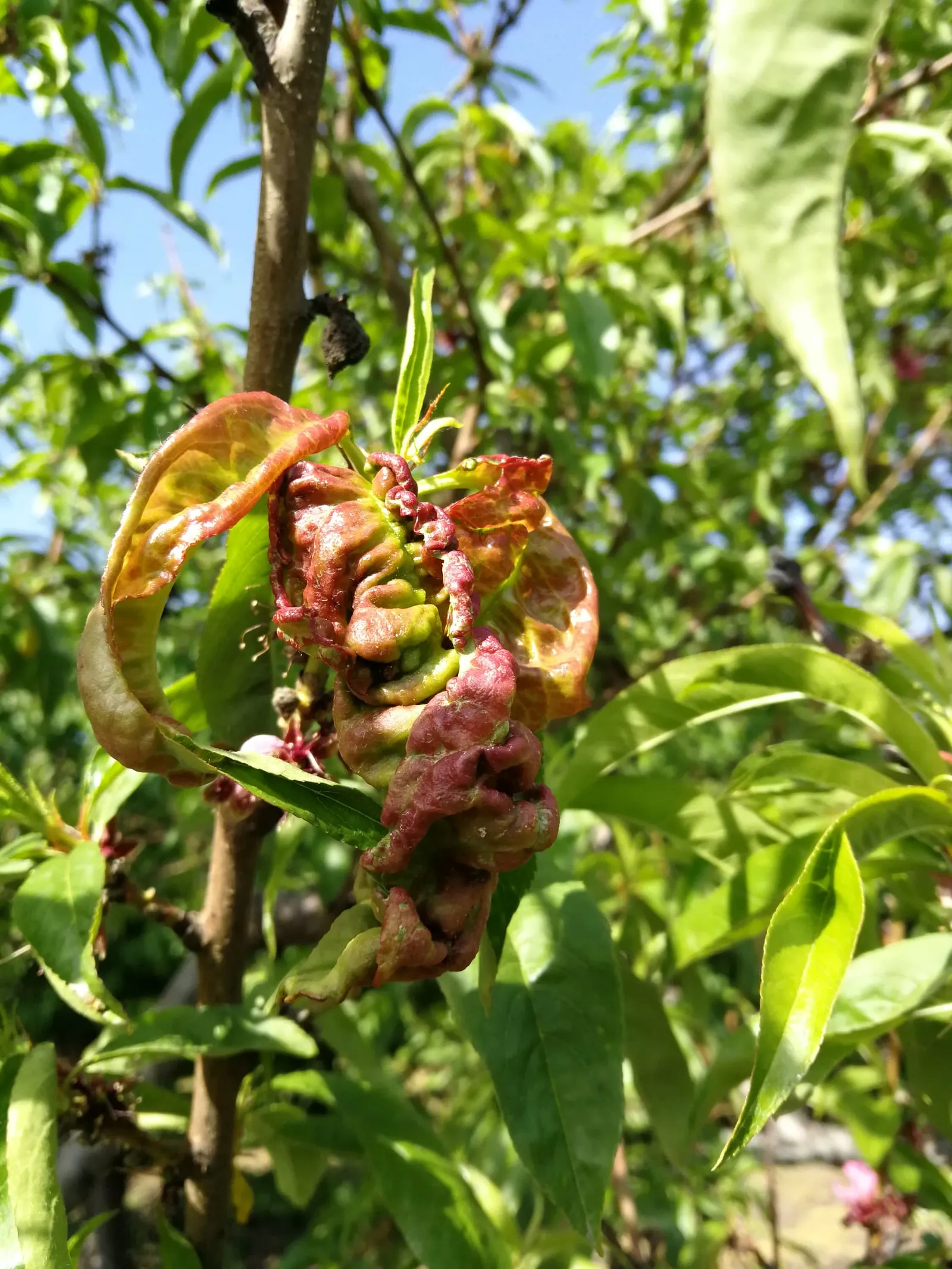
fungalPeach Leaf Curl
Taphrina deformans
Distinctive springtime disease causing red, puckered leaves. Manageable with one well-timed dormant spray.
- Pathogen type
- Fungal
- Hosts
- 1
- Symptoms
- 3
- Scientific name
- Taphrina deformans
- Resistant varieties
- 2
Biology and conditions
Peach leaf curl is caused by Taphrina deformans, a fungal pathogen that overwinters as spores on bark surfaces, bud scales, and twig crevices. Infection occurs during a narrow window in late winter and early spring, when swelling buds absorb free moisture and temperatures remain cool. Once temperatures climb and leaves fully expand, the infection window closes; new growth emerging after that point will be unaffected.
The fungus disrupts normal cellular development in emerging tissue. Infected leaves thicken, pucker, and turn shades of red or yellow before browning and dropping prematurely. A single severe season rarely kills a mature tree, but repeated defoliations over consecutive years deplete carbohydrate reserves, reduce fruit set, and weaken overall vigor. Cool, wet springs favor heavy infections; dry springs often pass with minimal damage even on untreated trees.
Control is unusually straightforward for a fungal disease. A single dormant copper spray applied before bud swell, when spores sit exposed on bark and bud surfaces, provides effective season-long protection. Timing matters more than formulation; applications made after bud swell have substantially reduced efficacy. Most home orchards that experience recurring outbreaks simply missed the spray window in affected years rather than applied the wrong product.
Growers who prefer to avoid annual sprays have two documented resistant options: Frost peach and Indian Free. Both carry meaningful field resistance and suit low-spray management systems or humid climates where dormant spray timing is difficult to maintain reliably.
Symptoms
- ▸ Red, puckered, distorted new leaves
- ▸ Premature defoliation in severe cases
- ▸ Reduced vigor over consecutive years
IPM controls
- ✓ Single dormant copper spray before bud swell
- ✓ Resistant varieties
- ✓ Tree-vigor maintenance
Resistant varieties
Selecting a variety with documented resistance is the most effective single decision for low-input management of peach leaf curl.
Affected crops
Image: "Taphrina Deformans, Iasi Roumania", by Tanasa009, via Wikimedia Commons, licensed under CC-BY Source.

Related