Disease
fungalPear Scab
Venturia pyrina
Fungal disease similar to apple scab but specific to pear, causing leaf and fruit lesions.
- Pathogen type
- Fungal
- Hosts
- 1
- Symptoms
- 3
- Scientific name
- Venturia pyrina
- Resistant varieties
- 0
Biology and conditions
Pear scab is caused by Venturia pyrina, a fungal pathogen closely related to the apple scab fungus (Venturia inaequalis) but host-specific to pear. The disease follows a spring-driven cycle: the fungus overwinters in infected leaf litter and mummified fruit on the orchard floor, then releases ascospores during wet periods from budbreak through late spring. Spore release is triggered by rain events when temperatures exceed roughly 5°C (41°F), and infection requires a leaf-wetness period whose duration varies with temperature. Warm, humid springs with frequent rainfall create ideal conditions for primary infection; secondary spread through conidia can extend damage into summer if wet weather persists.
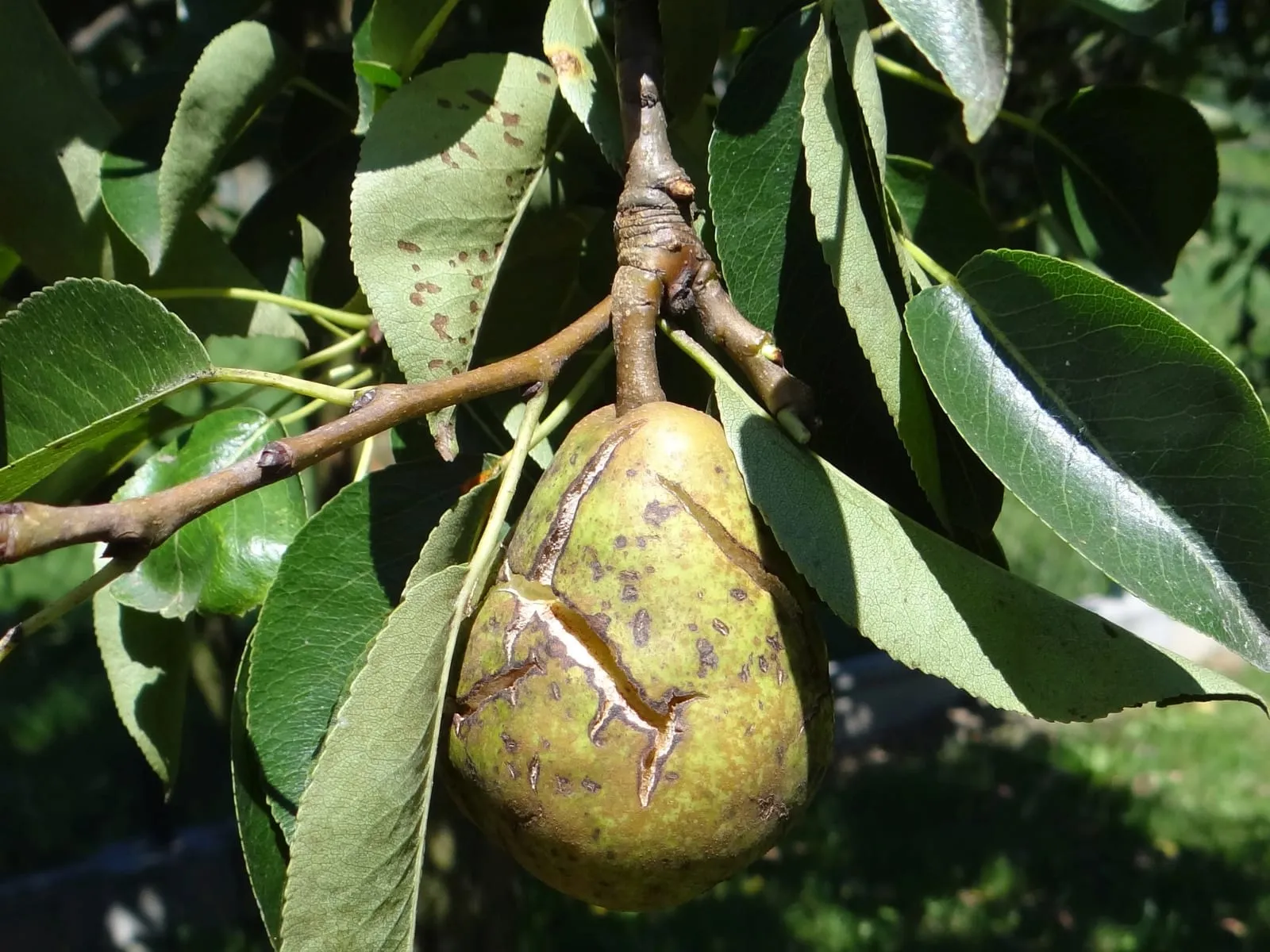
Symptoms begin as olive-brown, velvety spots on young leaves and developing fruit. Fruit lesions harden into raised, corky scabs that reduce marketability and, in severe cases, cause cracking or distortion. Heavy early-season leaf infection can trigger defoliation by midsummer, weakening trees and reducing the following season's bloom potential.
Management follows the same logic as apple scab programs. Sanitation is the low-cost foundation: thorough removal or incorporation of fallen leaves reduces primary inoculum heading into spring. A fungicide program beginning at green tip and extending through petal fall addresses the highest-risk infection windows. Timing applications around actual wetting events rather than a fixed calendar schedule improves both efficacy and cost efficiency.
Resistant varieties, where available in a given region, offer the most durable long-term solution and can significantly reduce dependence on repeated fungicide applications. Variety trial data from regional extension services is worth consulting before planting, as resistance ratings vary by region and can shift as pathogen populations adapt over time.
Symptoms
- ▸ Olive-brown spots on leaves
- ▸ Scabby lesions on fruit
- ▸ Defoliation in severe cases
IPM controls
- ✓ Sanitation of fallen leaves
- ✓ Fungicide program from green tip
- ✓ Resistant varieties where available
- ✓ Pruning for airflow
Affected crops
Image: "Venturia pyrina a1 (2)", by Jerzy Opioła, via Wikimedia Commons, licensed under CC-BY Source.
.jpg)
Related