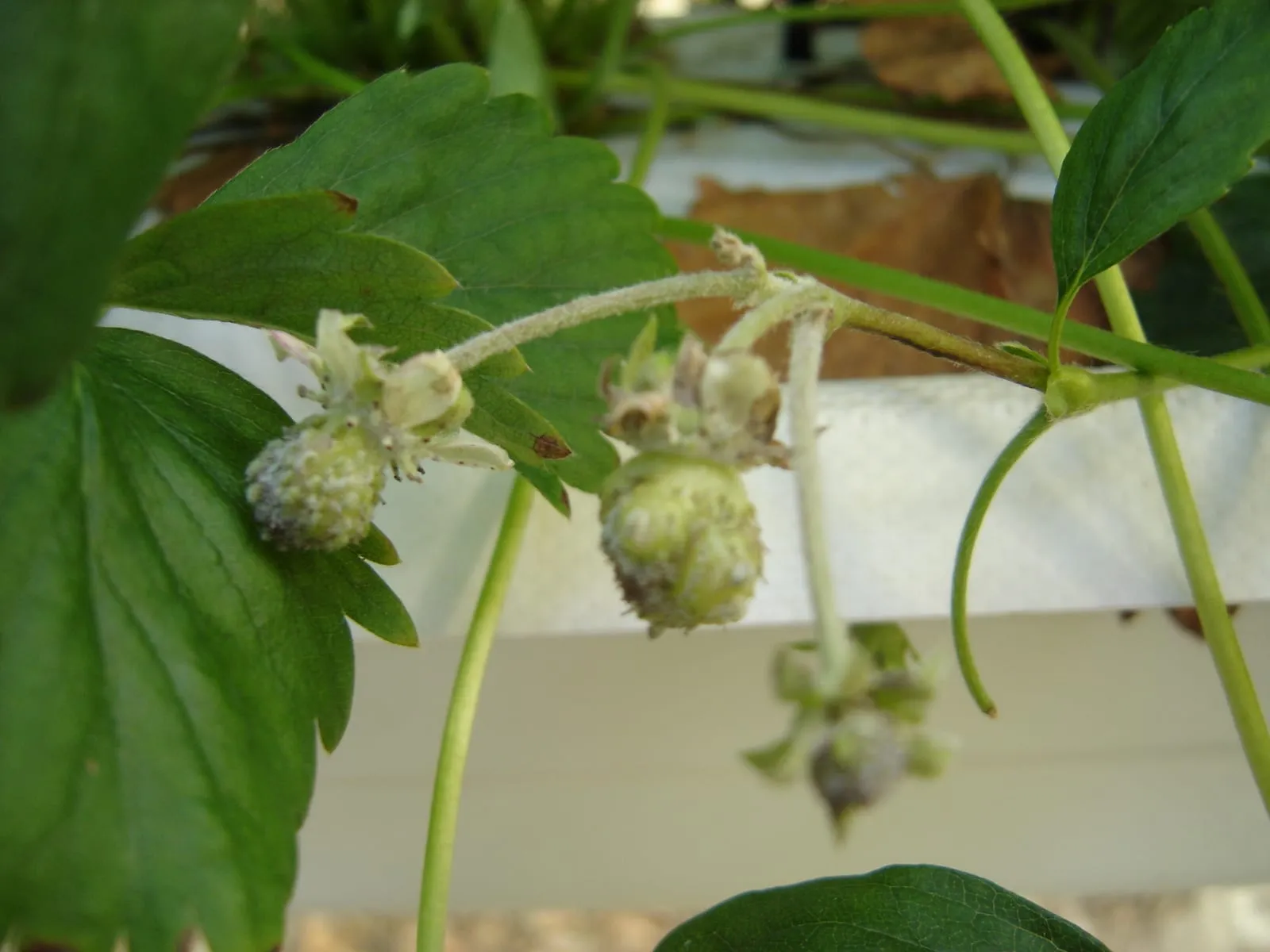
Disease
fungalBerry Powdery Mildew
Podosphaera and Sphaerotheca species
Surface-feeding fungal disease producing white powdery growth on leaves and fruit, particularly damaging on gooseberries.
- Pathogen type
- Fungal
- Hosts
- 8
- Symptoms
- 3
- Scientific name
- Podosphaera and Sphaerotheca species
- Resistant varieties
- 3
Biology and conditions
Berry powdery mildew is caused by obligate parasitic fungi in the genera Podosphaera and Sphaerotheca, with different species specializing on different hosts across the Ribes family, strawberries, honeyberries, and goji. The pathogen lives only on living plant tissue, producing white mycelium and chains of conidia visible as a powdery coating on leaf surfaces, young shoots, and developing fruit.
Unlike many fungal diseases, powdery mildew does not require standing water on leaf surfaces to germinate. It favors warm days combined with cool, humid nights and spreads readily when plants are crowded or positioned where air circulation is poor. High-nitrogen fertilization that pushes dense, succulent new growth creates favorable tissue for infection. Gooseberries are particularly susceptible; advanced infections can produce a brown-felted coating on mature fruit, known as American gooseberry mildew, which renders berries unmarketable. On strawberries, honeyberries, and currants, infection typically remains on foliage unless disease pressure is severe, but it reduces photosynthetic capacity and weakens plants over successive seasons.
The most cost-effective management strategy is variety selection. Gooseberry cultivars Hinnonmaki Red, Invicta, and Captivator carry meaningful resistance and significantly reduce spray needs. For susceptible plantings, open pruning to improve airflow is the highest-leverage cultural practice. Sulfur-based fungicides and potassium bicarbonate both provide reliable suppression when applied at the first sign of white growth; repeated applications are often necessary during warm, humid periods. Milk spray diluted 1:10 with water is a low-cost organic option with documented efficacy in small-plot research, though it requires thorough and consistent coverage to be effective.
Symptoms
- ▸ White powdery coating on leaves, shoots, and fruit
- ▸ Distorted new growth
- ▸ Brown-felted mature growth on gooseberry fruit (American mildew)
IPM controls
- ✓ Plant resistant varieties (especially for gooseberry)
- ✓ Sulfur or potassium bicarbonate sprays at first sign
- ✓ Open pruning for airflow
- ✓ Avoid excessive nitrogen
- ✓ Milk spray (1:10 dilution) for organic control
Resistant varieties
Selecting a variety with documented resistance is the most effective single decision for low-input management of berry powdery mildew.
Affected crops
Image: "Oïdium du Fraisier", by Dollymoon, via Wikimedia Commons, licensed under CC-BY Source.

Related