Disease
fungalVegetable Powdery Mildew
Multiple species (Erysiphales)
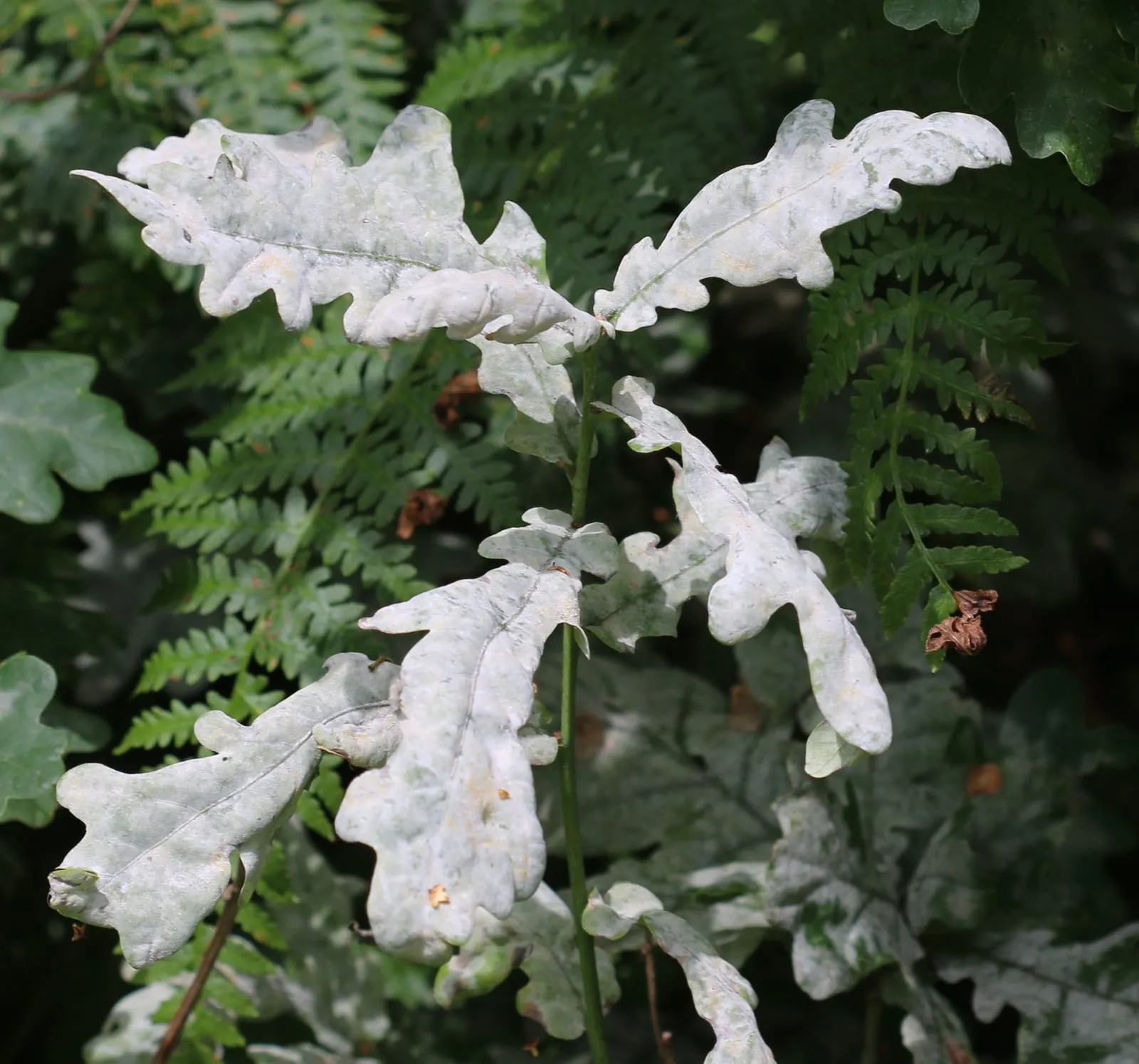
Surface-feeding fungal disease producing white powdery growth on leaves and stems. Reduces yield by stealing photosynthate and accelerating senescence.
- Pathogen type
- Fungal
- Hosts
- 7
- Symptoms
- 3
- Scientific name
- Multiple species (Erysiphales)
- Resistant varieties
- 0
Biology and conditions
Vegetable powdery mildew is caused by several fungal species in the order Erysiphales, with different species specializing on different host families. Cucurbits (cucumbers, squash, pumpkins, melons) and peas are each susceptible to their own suite of Erysiphales pathogens, which is why the disease can appear across an entire garden even when plants are not touching.
Unlike most fungal diseases, powdery mildew thrives in warm, dry conditions with moderate humidity rather than in wet ones. Optimal development typically occurs between 70 and 80 degrees Fahrenheit with relative humidity around 50 to 70 percent. Temperatures above 90 degrees and sustained rainfall actually suppress the pathogen. This counterintuitive relationship means late summer and early fall, when days remain warm but nights cool sharply, represent peak infection risk across most growing zones. Gardens under moisture stress are not protected; dry conditions at the leaf surface favor spore germination.
The fungus is an obligate biotroph: it cannot complete its life cycle outside living host tissue. Spores disperse by wind and establish new infections rapidly. Successive overlapping infection cycles through a single growing season are common, compressing the timeline from first white patch to significant canopy loss.
The most cost-effective management combines resistant variety selection with early intervention. Most modern cucurbit cultivars carry quantitative resistance that slows rather than fully blocks infection, extending productive canopy life by several weeks. At first sign of symptoms, potassium bicarbonate or sulfur sprays applied to both leaf surfaces interrupt the infection cycle at low cost. Milk spray at a 1:10 dilution has shown efficacy in published university trials and fits certified-organic programs. Prompt removal of heavily infected leaves reduces local spore load and is worth doing even when sprays are in rotation.
Symptoms
- ▸ White powdery patches on upper leaf surfaces
- ▸ Yellowing leaves under heavy infection
- ▸ Premature plant senescence and reduced fruit size
IPM controls
- ✓ Plant resistant varieties (most modern cucurbit cultivars carry some resistance)
- ✓ Wide spacing and pruning for airflow
- ✓ Potassium bicarbonate or sulfur sprays at first sign
- ✓ Milk spray (1:10 dilution) for organic control
- ✓ Remove and destroy infected leaves promptly
Affected crops
Image: "Erysiphe alphitoides (Oak powdery mildew) - Flickr - S. Rae", by S. Rae from Scotland, UK, via Wikimedia Commons, licensed under CC-BY Source.
_-_Flickr_-_S._Rae.jpg)
Related