Disease
fungalSeptoria Leaf Spot
Septoria lycopersici
Fungal disease that defoliates tomato from the bottom up. Doesn't directly affect fruit but reduces yield through loss of leaf area.
- Pathogen type
- Fungal
- Hosts
- 1
- Symptoms
- 3
- Scientific name
- Septoria lycopersici
- Resistant varieties
- 0
Biology and conditions
Septoria leaf spot is caused by Septoria lycopersici, a soilborne fungal pathogen that overwinters in infected plant debris and splashes onto lower leaves during rain or overhead irrigation. The disease cycle accelerates when temperatures fall between roughly 60 and 80 degrees Fahrenheit and relative humidity remains high for extended periods. Under those conditions, the spore-producing pycnidia (tiny black fruiting bodies visible under magnification in lesion centers) can release a new generation of conidia within two weeks of initial infection, enabling rapid progression from the base of the plant upward.
The pathogen does not infect fruit directly, but the economic damage comes from cumulative defoliation. As lesions colonize progressively higher foliage, the plant loses photosynthetic capacity and nutrient cycling efficiency, which compresses fruit size and reduces yield in the final weeks of the season. Growers who delay intervention often find plants stripped to bare stems by midsummer in wet years.
Management is most cost-effective when it targets spore dispersal rather than attempting to eradicate established infections. Mulching the soil surface beneath plants interrupts the primary splash pathway. Removing infected lower leaves at first sign eliminates sporulating tissue before it contaminates adjacent canopy layers. Staking and selective pruning for airflow shortens the window of canopy wetness that favors germination. Protectant fungicides (chlorothalonil, mancozeb) can slow progression but are rarely cost-justified outside unusually wet seasons or high-value plantings. Two-to-three-year rotation away from tomato and related solanaceous crops remains the most durable cultural control; the pathogen does not persist indefinitely without host tissue. No commercially available tomato varieties carry confirmed resistance to S. lycopersici, which makes the cultural toolkit the first and most reliable line of defense.
Symptoms
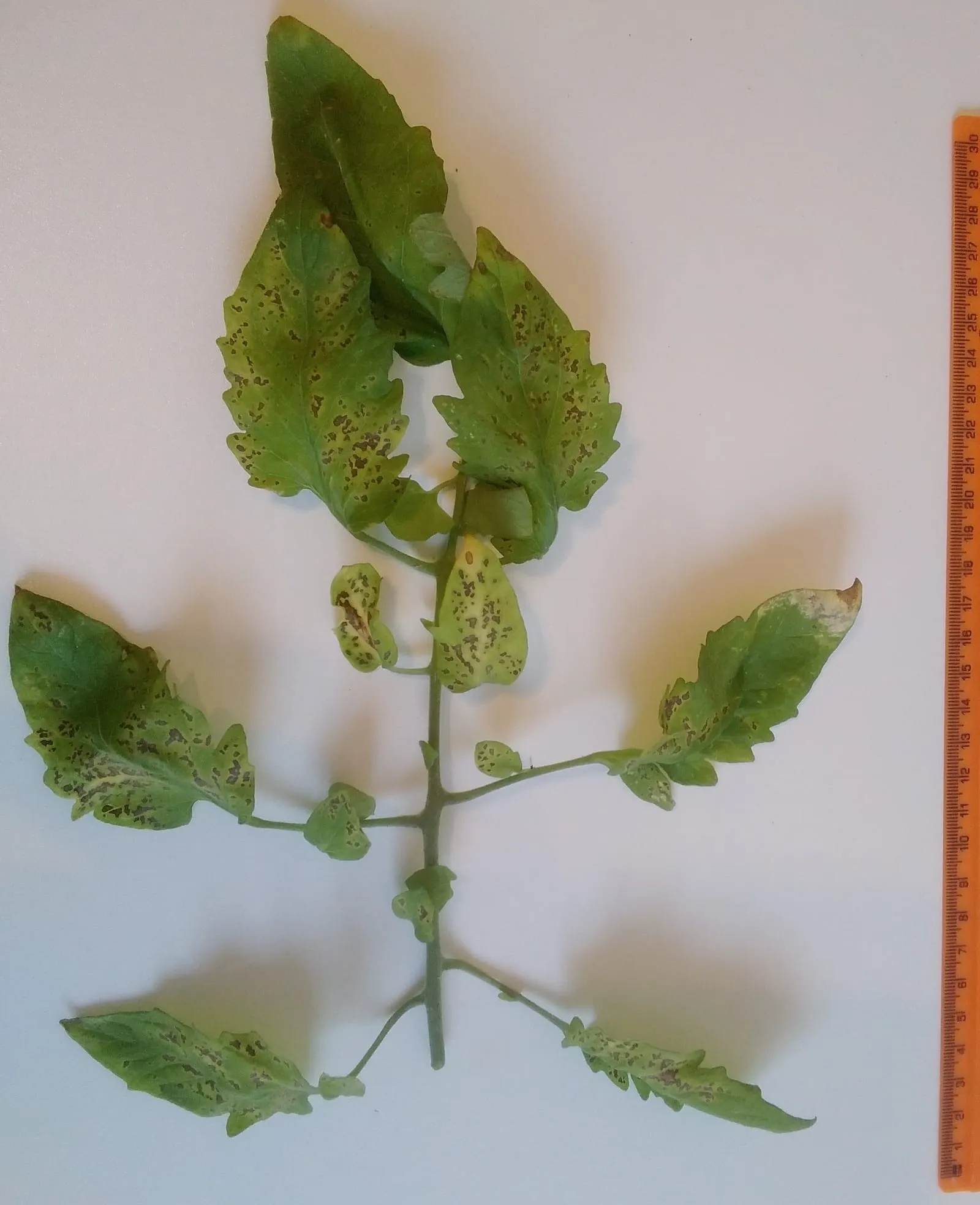
- ▸ Small dark-brown circular spots with light gray centers on lower leaves
- ▸ Tiny black fruiting bodies visible in lesion centers with a hand lens
- ▸ Yellowing and dropping of lower foliage progressing up the plant
IPM controls
- ✓ Mulch to prevent soil splash
- ✓ Remove infected lower leaves promptly
- ✓ Stake or cage and prune for airflow
- ✓ Crop rotation away from tomato beds for 2-3 years
- ✓ Sanitation: destroy infected residue at season end (do not compost)
Affected crops
Image: "Septoria leaf spot symptoms on tomato leaf (Septoria lycopersici on Solanum lycopersicum leaf)", by MerielGJones, via Wikimedia Commons, licensed under CC-BY Source.
.jpg)
Related