Disease
fungalSooty Mold
Capnodium spp.
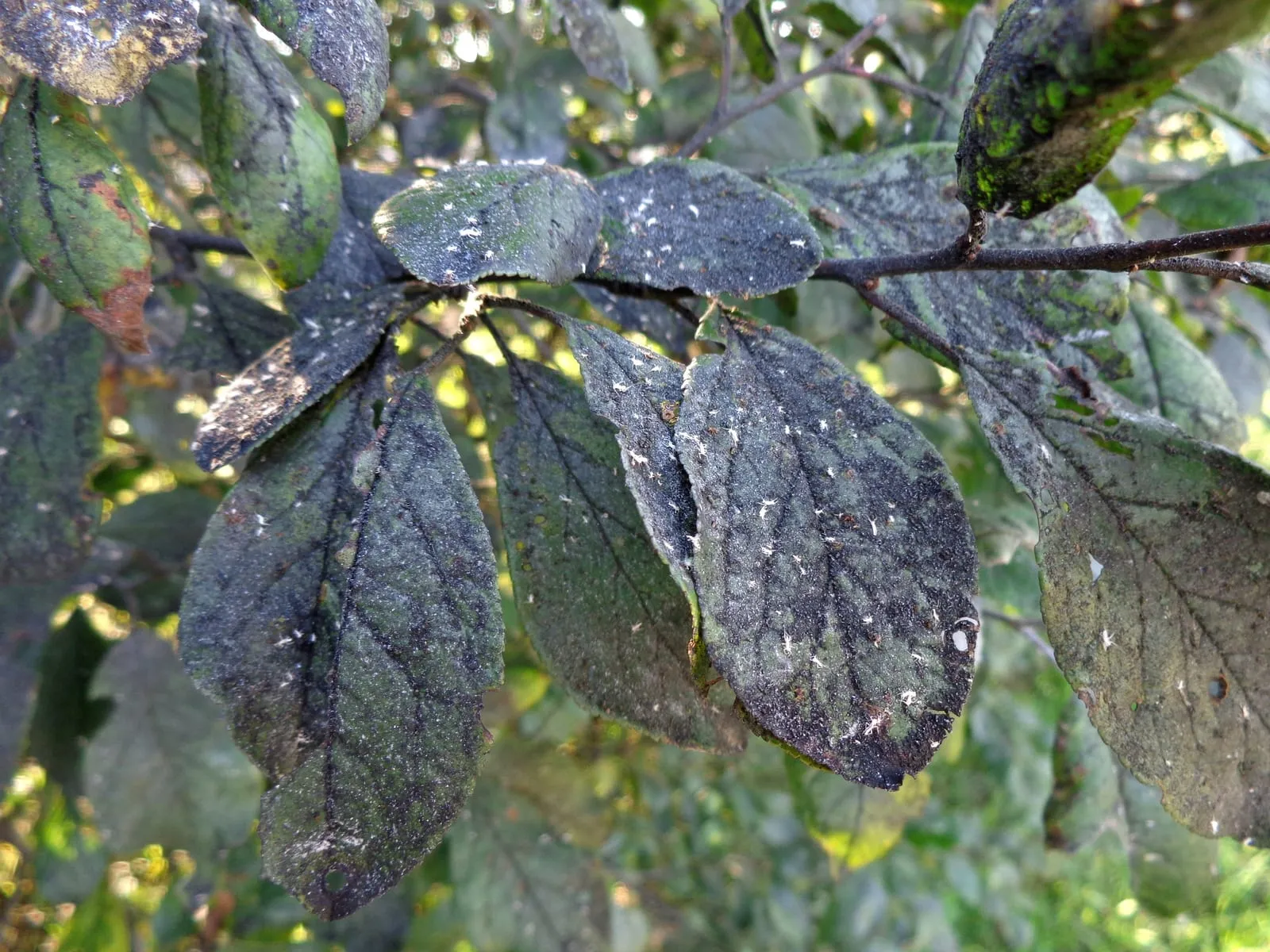
Black fungal coating that grows on honeydew secreted by aphids, scale, mealybugs, and whiteflies. Doesn't infect plant tissue directly but blocks photosynthesis and disfigures fruit.
- Pathogen type
- Fungal
- Hosts
- 9
- Symptoms
- 2
- Scientific name
- Capnodium spp.
- Resistant varieties
- 0
Biology and conditions
Sooty mold is caused by fungi in the genus Capnodium and related genera that colonize honeydew, the sugar-rich excretion produced by sap-sucking insects. The fungus does not infect plant tissue directly; it grows on the surface of leaves, stems, and fruit wherever honeydew accumulates. This distinction matters for management: sooty mold is a symptom of an insect problem, not a primary disease.
The conditions that favor sooty mold are those that favor its insect hosts. Warm, humid weather accelerates aphid, scale, mealybug, and whitefly populations, producing more honeydew and therefore more fungal substrate. Dense canopies with poor air circulation keep surfaces moist longer and concentrate pest populations. The affected crops, including citrus (lemon, orange, lime, grapefruit), mango, avocado, guava, lychee, and macadamia, are largely grown in the warm, humid climates where honeydew-producing insects thrive, which explains the overlap.
The black coating reduces photosynthesis by shading leaf surfaces. On fruit, it causes cosmetic damage that can reduce marketability even when the flesh is unaffected. Severe infestations on young trees can measurably slow growth by limiting light interception over an extended period.
Management begins with the insects. Controlling aphids, scale, mealybugs, or whiteflies removes the honeydew source, and existing sooty mold weathers off naturally or can be washed away with water and mild soap on accessible foliage. Ant activity is a secondary factor worth addressing: ants actively protect honeydew-producing insects from natural predators, so disrupting ant access to the canopy (sticky barriers on trunks, for example) allows beneficial insects to suppress pest populations more effectively. No resistant varieties are relevant here because susceptibility to sooty mold follows from insect host pressure, not from plant genetics.
Symptoms
- ▸ black soot-like film on leaves, stems, and fruit
- ▸ presence of honeydew-producing pests
IPM controls
- ✓ Treat the underlying insect infestation; sooty mold disappears once honeydew stops
- ✓ Wash off existing mold with water and mild soap on accessible foliage
- ✓ Encourage ant control; ants protect honeydew-producing pests from predators
Affected crops
Image: "Capnodium sp. 01", by AfroBrazilian, via Wikimedia Commons, licensed under CC-BY Source.

Related