Disease
fungalSouthern Blight
Sclerotium rolfsii
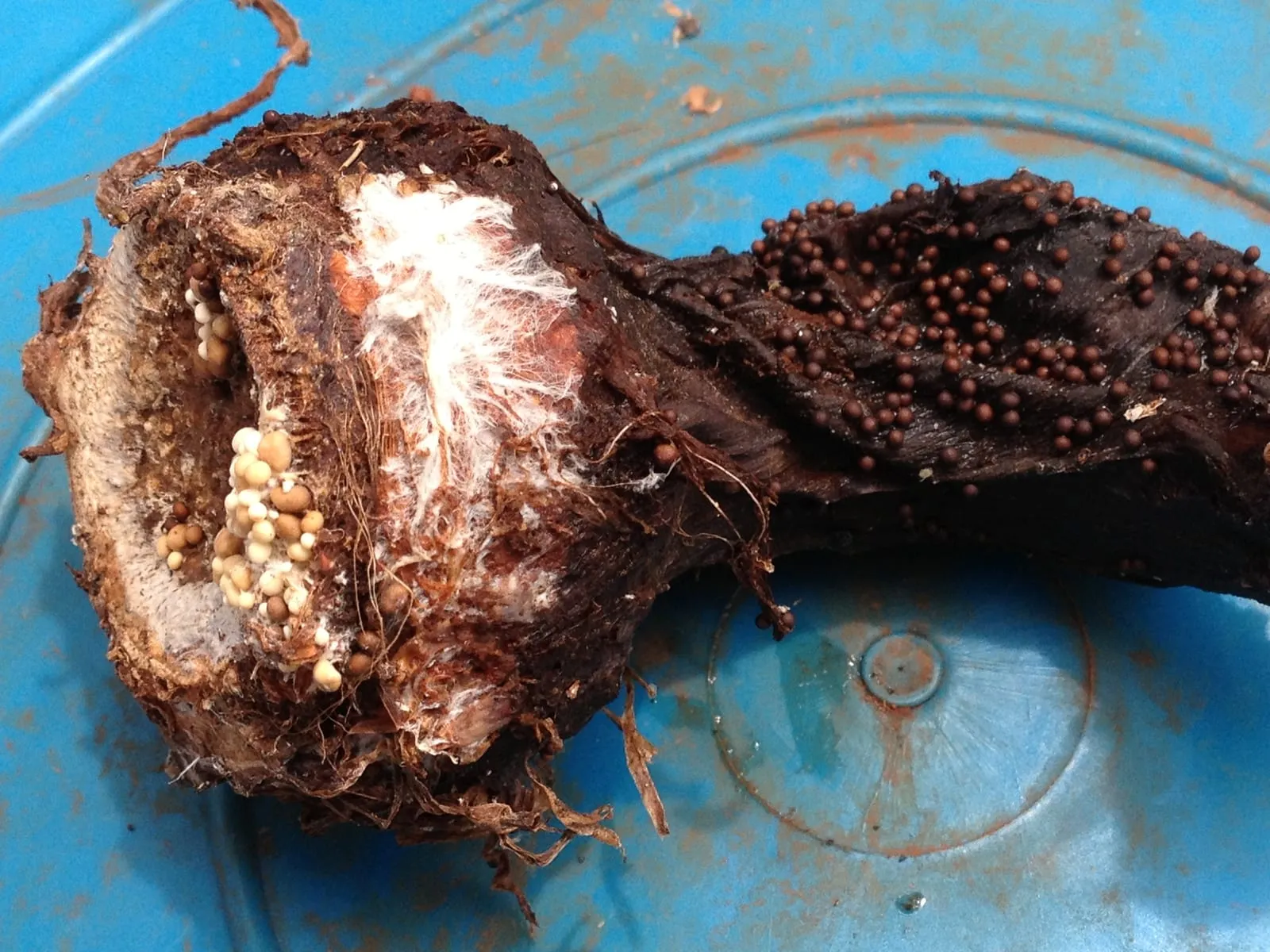
Soil-borne fungal disease most damaging in warm humid Southern conditions. White mycelial fans and small mustard-seed-sized sclerotia at the soil line are diagnostic.
- Pathogen type
- Fungal
- Hosts
- 10
- Symptoms
- 4
- Scientific name
- Sclerotium rolfsii
- Resistant varieties
- 0
Biology and conditions
Southern Blight is caused by Sclerotium rolfsii, a soil-borne fungal pathogen that overwinters as hard, round sclerotia roughly the size of mustard seeds. These structures persist in soil for years, germinating when temperatures climb above 85°F and the surrounding soil stays moist. The disease is most destructive in the Southeast and Gulf Coast states, where summer temperatures and humidity align with the pathogen's optimum range, but it can appear in any region during extended hot, wet spells.
The diagnostic sign is a white, fan-shaped mat of mycelium spreading outward at the soil line from the base of the stem. Infected plants wilt suddenly, often appearing healthy one day and collapsed the next. The tan-to-brown sclerotia visible on or near the affected stem confirm the identification. Root rot and fusarium wilt can look similar in early stages, so checking for the mycelial fan and sclerotia before applying a specific treatment is worth the few minutes it takes.
No commercially resistant varieties are widely available for most affected crops. Management depends on disrupting the pathogen's soil population. Rotation to non-host crops (corn, small grains) for two to three years is the most effective long-term strategy: S. rolfsii has a broad host range covering most common vegetable crops but spares grasses. Deep tillage to six inches or more buries sclerotia below their germination depth. Where drainage is poor, raised beds substantially reduce incidence. Cover cropping with mustard or marigold before a susceptible crop provides biofumigation that degrades sclerotial viability over time.
Symptoms
- ▸ Sudden wilting of plants during hot weather
- ▸ White cottony mycelium fanning out at soil line and on lower stems
- ▸ Tan to brown round sclerotia (look like mustard seeds) on or near affected stems
- ▸ Stem rot at soil line and plant collapse
IPM controls
- ✓ Crop rotation to non-host (corn, small grains) for 2-3 years
- ✓ Deep tillage to bury sclerotia below germination depth
- ✓ Remove and destroy infected plants and surrounding soil
- ✓ Improve drainage; soggy soil favors disease
- ✓ Cover crops of mustard or marigold reduce inoculum (biofumigation)
Affected crops
Image: "Taro- Southern blight caused by Sclerotium rolfsii", by Plant pests and diseases, via Wikimedia Commons, licensed under CC0 Source.

Related