Disease
fungalSpur Blight
Didymella applanata
Fungal disease that produces purple-brown lesions at leaf nodes on red and yellow raspberry canes, weakening fruiting laterals.
- Pathogen type
- Fungal
- Hosts
- 2
- Symptoms
- 3
- Scientific name
- Didymella applanata
- Resistant varieties
- 0
Biology and conditions
Spur blight is caused by Didymella applanata, a fungal pathogen that overwinters in infected cane tissue and releases spores during wet spring weather. The disease targets red and yellow raspberries almost exclusively, colonizing tissue at leaf nodes during the first growing season with little visible effect, then revealing its damage the following year when those canes bear fruit. Infected nodes produce weak or dead lateral shoots, which cuts yield disproportionately because fruiting laterals emerge from precisely those node positions.
Conditions that favor spur blight are routine in raspberry plantings: moderate temperatures in the 60 to 75°F range, persistent leaf wetness during spring cane elongation, and dense stands that limit airflow. High nitrogen inputs compound the risk by driving rapid, succulent growth that is more susceptible to infection and takes longer to dry after rain.
No commercially dominant red or yellow raspberry variety is widely rated as resistant to Didymella applanata, so cultural management carries the most weight. The most cost-effective single practice is prompt removal of all floricanes (second-year canes) immediately after harvest. Those canes are the primary inoculum source; leaving them through winter allows the fungus to sporulate into nearby primocanes. Combining harvest-season removal with aggressive thinning of primocanes to open the canopy disrupts the infection cycle without chemical inputs. Where disease pressure is consistently high, a lime-sulfur dormant spray applied before bud break in early spring adds suppression, though it is not a substitute for sound sanitation. Avoiding excessive nitrogen, particularly late in the season, reduces the density of growth that makes plantings difficult to dry and ventilate.
Symptoms
- ▸ Purple-brown lesions centered on leaf nodes
- ▸ Premature leaf drop
- ▸ Weak or dead lateral shoots in second year
IPM controls
- ✓ Annual removal of fruited canes after harvest
- ✓ Wide spacing and aggressive thinning of new canes
- ✓ Lime-sulfur dormant spray
- ✓ Avoid excessive nitrogen which promotes dense weak growth
Affected crops
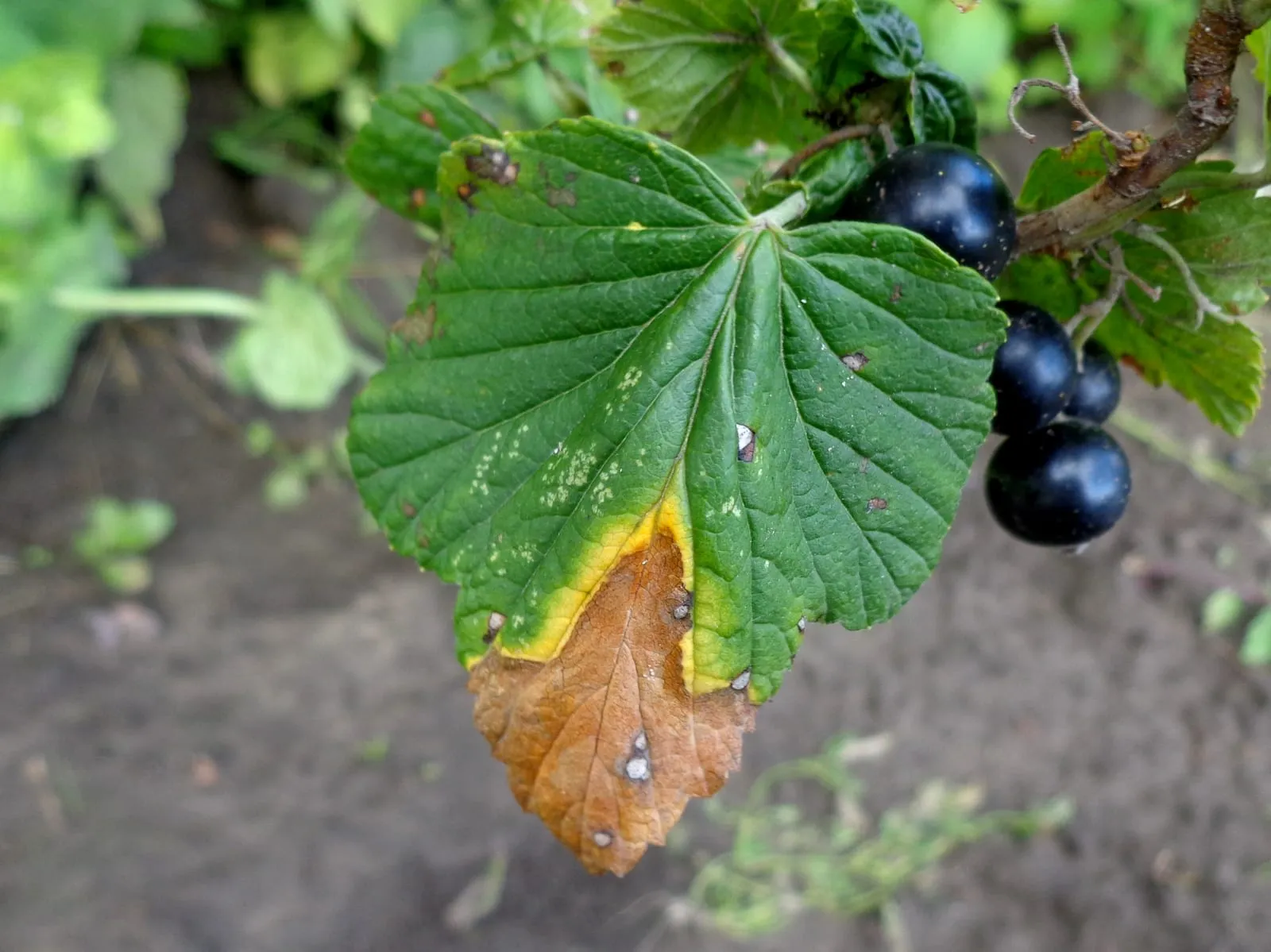
Image: "Didymella applanata 01", by AfroBrazilian, via Wikimedia Commons, licensed under CC-BY Source.

Related