Disease
physiologicalSunscald
Physiological disorder
Damage from direct intense sun exposure on fruit or bark, particularly on plants suddenly exposed by pruning, defoliation, or hot weather. Distinct from sunburn (which is reversible).
- Pathogen type
- Physiological
- Hosts
- 4
- Symptoms
- 3
- Scientific name
- Physiological disorder
- Resistant varieties
- 0
Biology and conditions
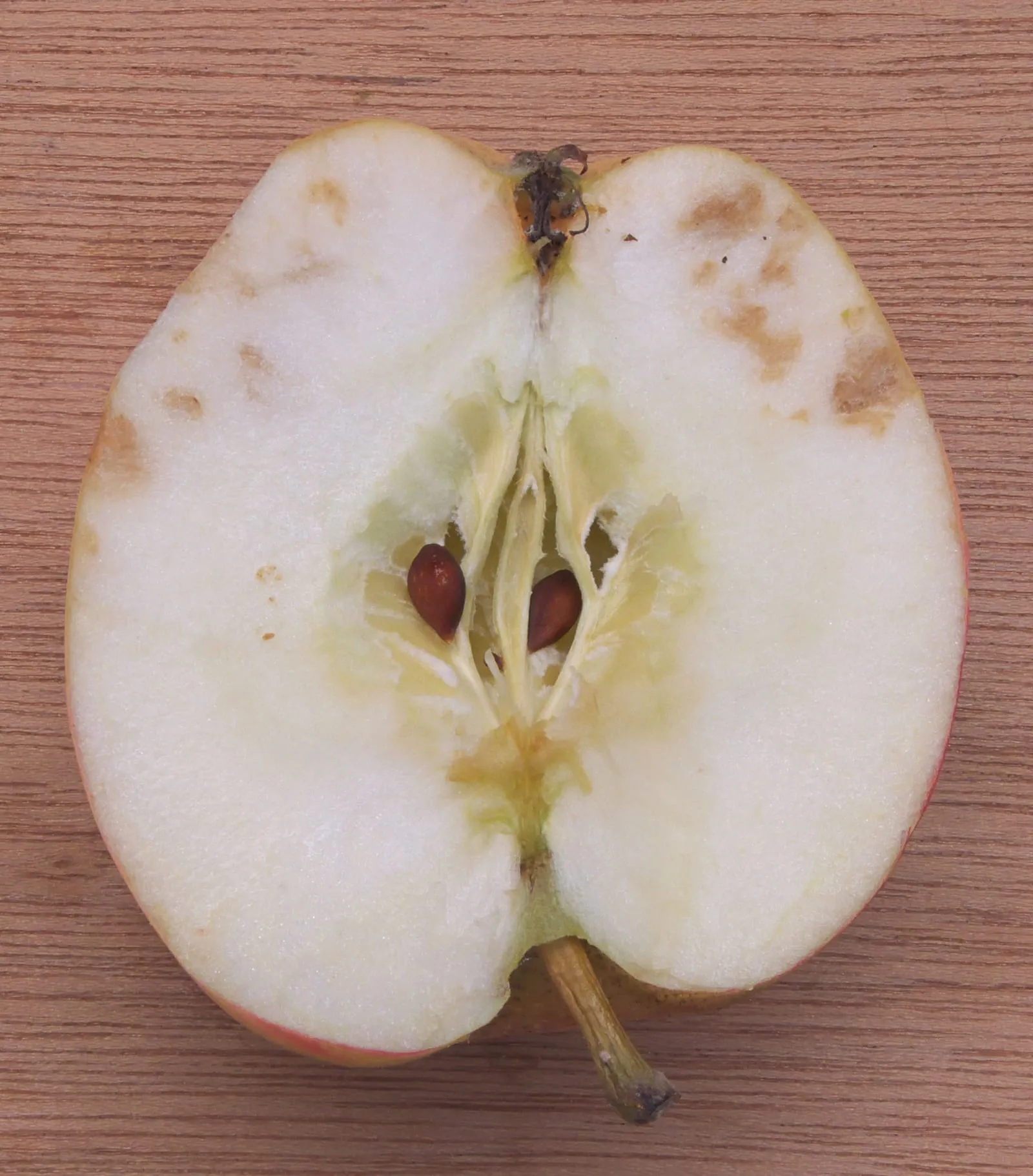
Sunscald is a physiological disorder, not a pathogen-caused disease. It occurs when fruit or bark is exposed to intense direct solar radiation without sufficient foliage cover or prior acclimation. The mechanism differs by plant part: on fruit (tomatoes, peppers, apples), rapid surface heating denatures the outer cell layers, producing pale tan to white papery patches that soon collapse. On young tree trunks, south- and southwest-facing bark absorbs heat during clear winter days, then refreezes overnight when temperatures drop sharply, rupturing the cambium in a pattern distinct from frost crack.
Conditions that favor sunscald are predictable: sudden defoliation from disease, heavy pruning, or pest damage; heat waves pushing ambient temperatures above 95°F; and low humidity that accelerates tissue desiccation. Container-grown transplants moved abruptly from shade into full sun are especially vulnerable in the first week. In apple orchards, trunk sunscald is most common on trees less than four years old, whose bark has not yet developed the thickness to buffer large diurnal temperature swings.
Management centers on preserving the canopy that already functions as a shade buffer. On vegetables, keeping foliage healthy through late summer is more cost-effective than any reactive treatment once damage appears. Where heat waves are forecast, 30-50% shade cloth deployed before temperatures peak prevents most fruit damage. For young fruit trees, trunk whitewashing with diluted white latex paint (roughly 1:1 paint to water) applied in late fall is a well-documented preventive. Affected fruit should be removed promptly: the collapsed tissue is a reliable entry point for secondary bacterial and fungal rots that spread to adjacent healthy fruit.
Symptoms
- ▸ Pale tan to white papery patch on sun-exposed fruit (tomato, pepper, apple)
- ▸ Cracked white patches on south or southwest-facing trunk bark of young trees
- ▸ Affected fruit tissue collapses and often becomes a secondary-rot entry point
IPM controls
- ✓ Maintain healthy foliage cover over fruit (avoid heavy late-summer defoliation that exposes fruit)
- ✓ Whitewash trunks of young fruit trees with diluted latex paint to reduce winter sunscald
- ✓ Site west-facing tomato rows to get morning sun without afternoon sun stress
- ✓ Shade cloth (30-50%) over peppers and tomatoes during heat waves above 95°F
Affected crops
Image: "Malus domestica 'Summerred' bitterpit, kurkstip (e)", by Rasbak, via Wikimedia Commons, licensed under CC-BY Source.
.jpg)
Related