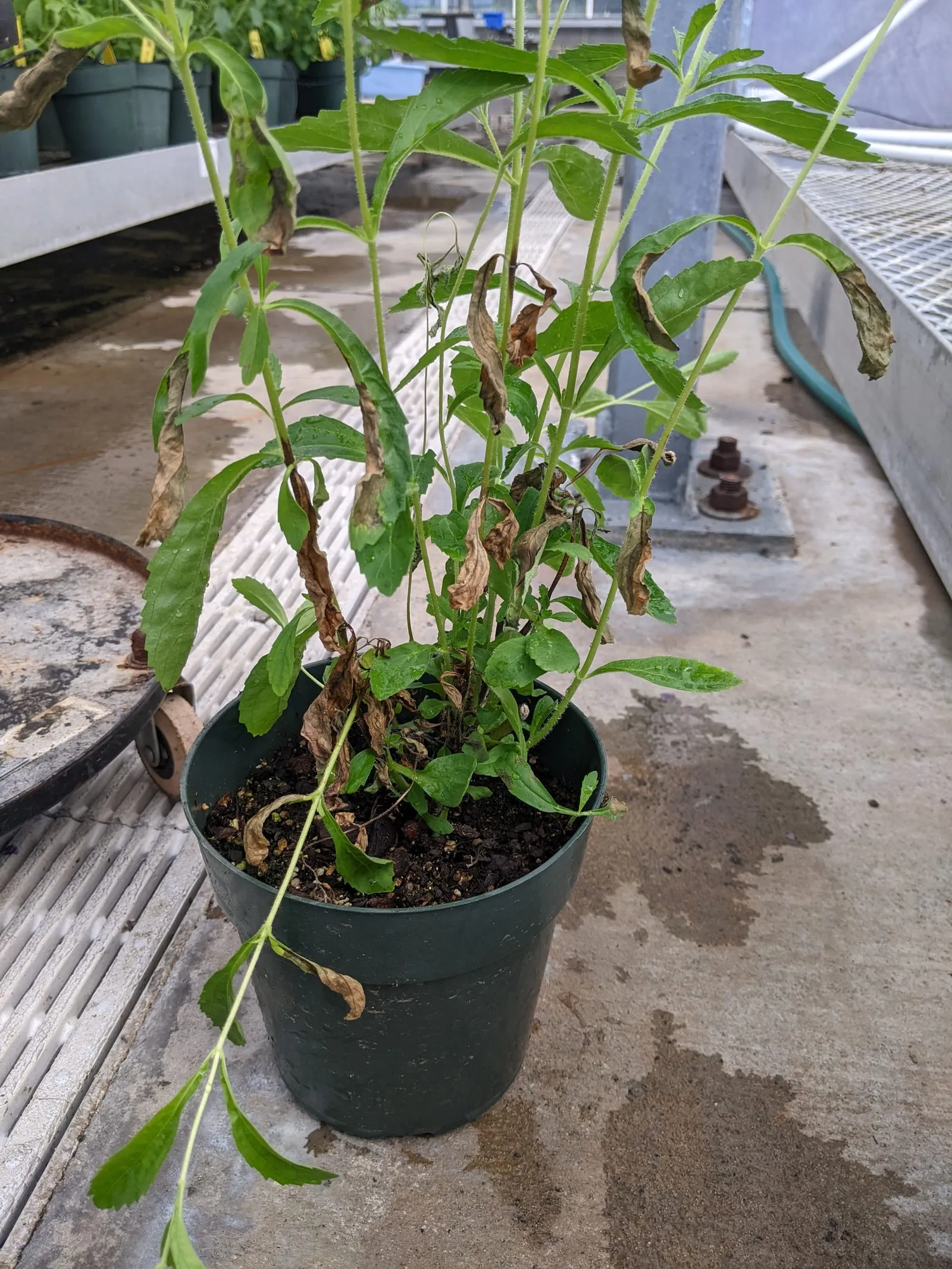
Disease
viralTomato Spotted Wilt Virus
Tomato spotted wilt orthotospovirus (TSWV)
Virus vectored by thrips, particularly western flower thrips. Wide host range and growing global distribution. No cure once infected.
- Pathogen type
- Viral
- Hosts
- 4
- Symptoms
- 4
- Scientific name
- Tomato spotted wilt orthotospovirus (TSWV)
- Resistant varieties
- 3
Biology and conditions
Tomato Spotted Wilt Virus (TSWV, formally Tomato spotted wilt orthotospovirus) is a viral pathogen with an unusually wide host range and no curative treatment once a plant is infected. The virus is transmitted almost exclusively by thrips, with western flower thrips (Frankliniella occidentalis) serving as the primary vector across most growing regions. Thrips acquire the virus as larvae and can transmit it throughout their adult lives, making early-season thrips pressure particularly consequential.
Conditions that favor outbreaks include warm temperatures (spread peaks between 70 and 85 degrees F), high thrips populations moving in from surrounding weeds or cover crops, and dense plantings where colonization builds rapidly. Overhead irrigation and humid conditions suppress thrips somewhat, but the virus spreads fast enough that population reduction alone rarely eliminates risk.
Management centers on three practical levers: roguing infected plants immediately before thrips can acquire and spread the virus further, reducing thrips populations before they peak, and sourcing transplants verified as virus-free. Reflective mulches disrupt thrips settlement; blue sticky traps provide early population monitoring and modest suppression. Eliminating weed hosts within and around the planting area cuts off the reservoir that sustains thrips between crop cycles.
The most reliable protection is genetic resistance. Varieties carrying the Sw-5 gene, often labeled as TSWV-resistant in seed catalogs, have demonstrated consistent field performance. Mountain Glory, BHN 444, and Plum Crimson are documented resistant options. In regions with recurring TSWV pressure, resistant varieties shift from a preference to a baseline requirement; chemical controls on thrips alone are insufficient once virus incidence is established in a planting.
Symptoms
- ▸ Bronze or purplish ringed spots on leaves
- ▸ Stunted growth
- ▸ Concentric-ringed yellow or red spots on fruit
- ▸ Distorted leaves and shoot tips
IPM controls
- ✓ Plant resistant varieties (look for 'TSWV' or 'Sw-5' resistance)
- ✓ Manage thrips populations (reflective mulch, blue sticky traps)
- ✓ Rogue out infected plants immediately
- ✓ Source virus-free transplants
- ✓ Eliminate weed hosts in surrounding areas
Resistant varieties
Selecting a variety with documented resistance is the most effective single decision for low-input management of tomato spotted wilt virus.
Affected crops
Image: "Stevia rebaudiana TSWV symptoms 3", by Garlan Miles, via Wikimedia Commons, licensed under CC-BY Source.

Related