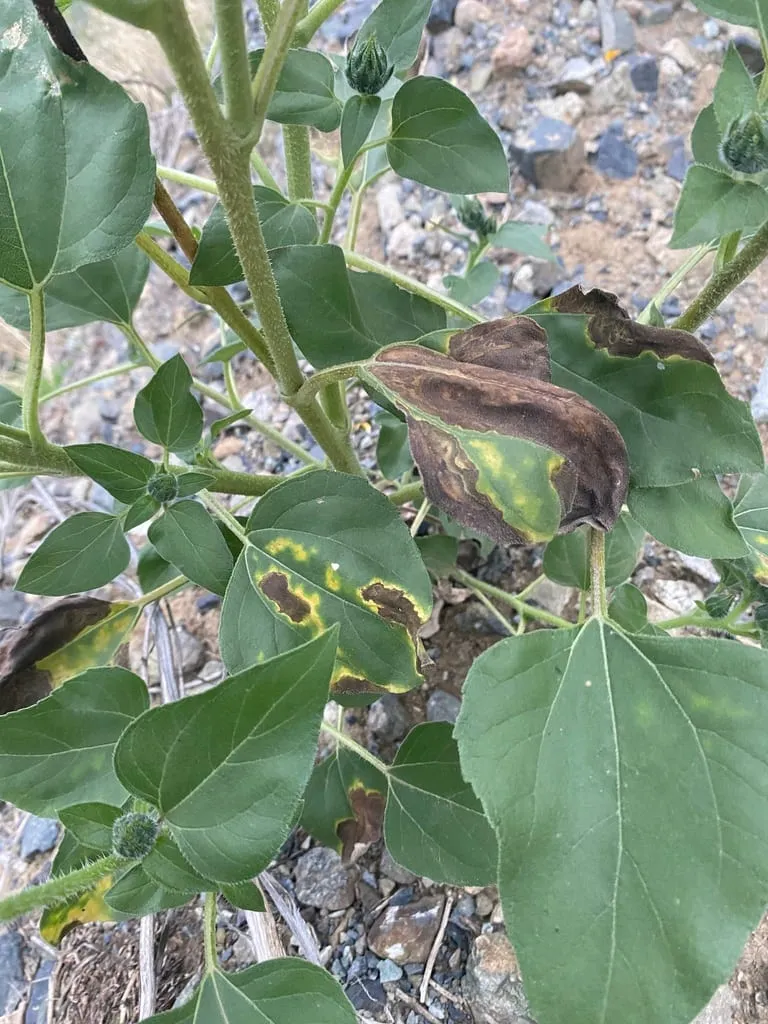
Disease
fungalVerticillium Wilt
Verticillium dahliae
Soil-borne fungal disease similar to fusarium wilt but with broader host range and cooler temperature optimum. Persists in soil for 10+ years.
- Pathogen type
- Fungal
- Hosts
- 7
- Symptoms
- 4
- Scientific name
- Verticillium dahliae
- Resistant varieties
- 3
Biology and conditions
Verticillium Wilt is caused by Verticillium dahliae, a soil-borne fungus that persists in garden soil as microsclerotia for a decade or more. Unlike fusarium wilt, which is most destructive in hot conditions, verticillium is most active when soil temperatures fall between 60°F and 75°F, making it a notable problem in cool springs and in gardens at northern latitudes. The pathogen enters through roots, colonizes the vascular system, and blocks water transport, producing the characteristic daytime wilting that eases overnight as transpiration slows.
The symptom that most reliably distinguishes vascular wilts from other causes is brown discoloration in the stem tissue, visible when the stem is cut near the base. Yellowing appears first on lower leaves, frequently in V-shaped wedges rather than as uniform leaf death. Plants may persist and produce modest yields, or decline rapidly, depending on inoculum density in the soil, soil texture, and temperature patterns during critical growth stages.
Verticillium dahliae infects a wide host range including tomato, eggplant, potato, pepper, and strawberry, so rotating away from all Solanaceae for five or more years is the standard recommendation. In practice, small gardens with limited beds make long rotations difficult. Soil solarization suppresses inoculum in the top several inches and is worth attempting in climates with strong summer sun. Fall-planted mustard cover crops and other biofumigant brassicas reduce microsclerotia counts incrementally over multiple seasons. No chemical controls are effective once a bed is infested.
The most cost-effective long-term strategy is variety selection from the start. Tomato varieties carrying the 'V' resistance designation, including Mountain Magic, Defiant, and Iron Lady, should be the default choice in any garden with a documented or suspected history of verticillium problems.
Symptoms
- ▸ Yellowing of lower leaves often in V-shaped wedges
- ▸ Wilting during heat of day, recovery overnight
- ▸ Brown vascular discoloration when stem is cut
- ▸ Stunted plants with reduced yield
IPM controls
- ✓ Plant resistant varieties ('V' resistance codes)
- ✓ Crop rotation away from infested beds for 5+ years (avoiding all Solanaceae)
- ✓ Soil solarization for small areas
- ✓ Cover crops of mustards or biofumigants in fall reduce inoculum
- ✓ No chemical control
Resistant varieties
Selecting a variety with documented resistance is the most effective single decision for low-input management of verticillium wilt.
Affected crops
Image: "Verticillium dahliae", by Z, via iNaturalist, licensed under CC-BY Source.
Related