Disease
fungalWalnut Anthracnose
Ophiognomonia leptostyla
Fungal leaf disease causing premature defoliation in wet seasons, weakening trees over consecutive years and reducing kernel fill.
- Pathogen type
- Fungal
- Hosts
- 2
- Symptoms
- 3
- Scientific name
- Ophiognomonia leptostyla
- Resistant varieties
- 0
Biology and conditions
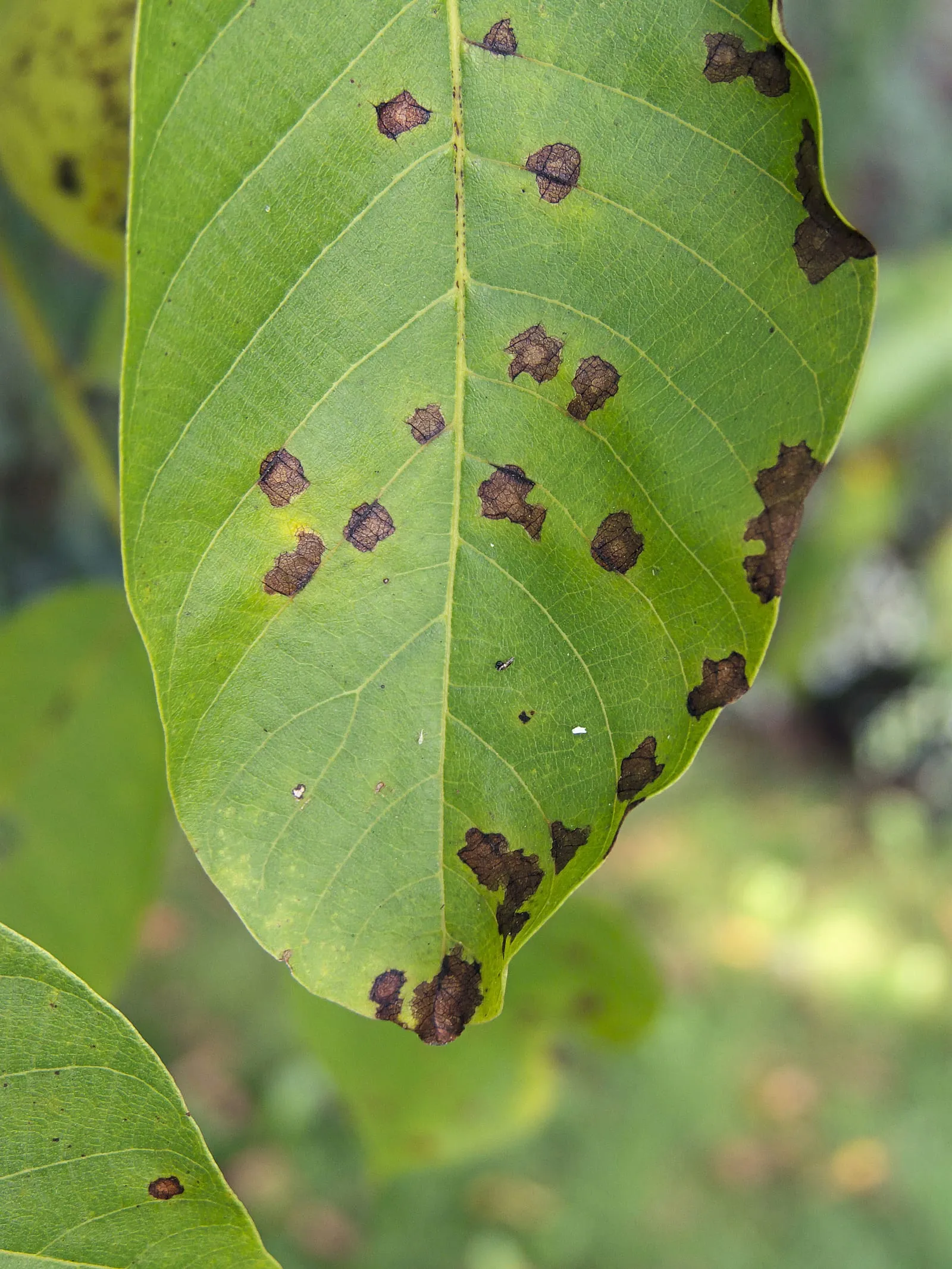
Walnut anthracnose is caused by the fungus Ophiognomonia leptostyla, which overwinters in infected leaf debris on the orchard floor. Spores are released during wet spring conditions and infect expanding leaflets, producing dark angular spots bounded by leaf veins. Repeated infection cycles through the growing season drive yellowing and premature defoliation, sometimes beginning as early as midsummer in rainy years.
The pathogen favors prolonged leaf wetness combined with moderate temperatures, conditions common across humid summers in the eastern and midwestern United States. A single defoliation event in a healthy, established tree is generally tolerable if it occurs after shell hardening in late summer. Cumulative defoliation across consecutive wet seasons is the real concern: reduced carbohydrate reserves weaken tree structure and impair kernel fill in the following crop.
Management centers on sanitation. Removing fallen leaves in autumn eliminates the primary overwintering inoculum and is the single most cost-effective intervention available to home orchardists. Pruning to open canopy structure improves airflow and accelerates leaf drying after rain, reducing the window for infection. Fungicide applications are occasionally warranted for young trees or during seasons with unusually heavy early pressure, but established trees with adequate vigor rarely require chemical intervention when sanitation is consistent. No walnut varieties with strong commercial resistance are widely available; resistant rootstock research has not yet translated into broadly accessible nursery selections.
Symptoms
- ▸ Dark angular spots on leaflets
- ▸ Yellowing and premature leaf drop in midsummer
- ▸ Sparse late-season canopy
IPM controls
- ✓ Sanitation of fallen leaves (removes overwintering inoculum)
- ✓ Pruning for airflow
- ✓ Resistant rootstocks where available
- ✓ Tolerate on established trees if defoliation occurs after shell hardening
Affected crops
Image: "Gnomonia leptostyla on Juglans regia Buccaneer", by Rasbak, via Wikimedia Commons, licensed under CC-BY Source.

Related