Disease
fungalWhite Mold
Sclerotinia sclerotiorum
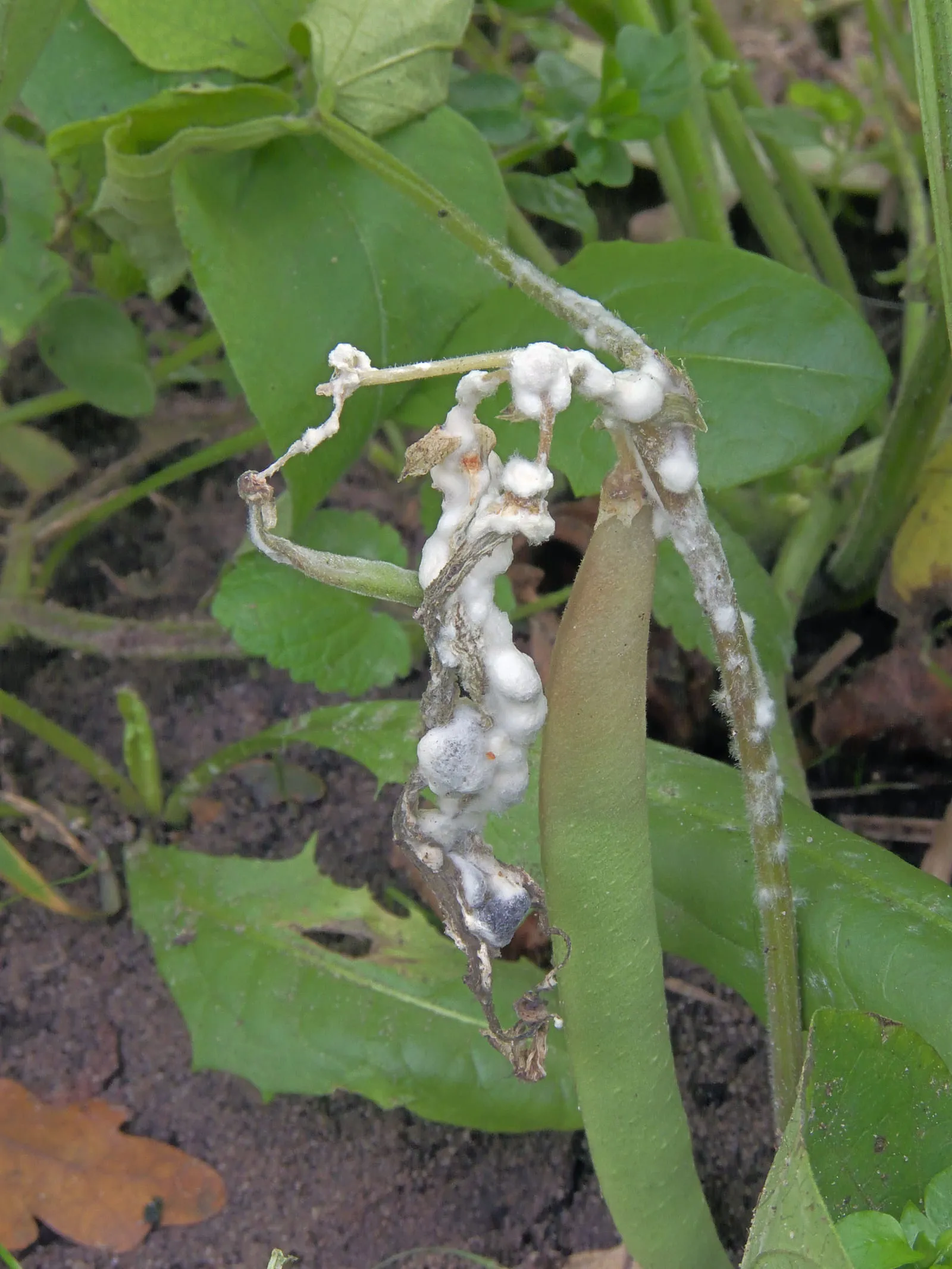
Fungal disease that produces fluffy white mycelium on stems and lower leaves. Forms hard black sclerotia (resting bodies) that survive 5+ years in soil.
- Pathogen type
- Fungal
- Hosts
- 6
- Symptoms
- 4
- Scientific name
- Sclerotinia sclerotiorum
- Resistant varieties
- 0
Biology and conditions
White mold (Sclerotinia sclerotiorum) is a fungal pathogen with an unusually wide host range, capable of infecting beans, lettuce, and the full range of brassicas including cabbage, broccoli, and cauliflower. The fungus overwinters as sclerotia, hard black resting bodies roughly the size of a BB that persist in soil for five or more years without a living host. Under cool, moist conditions, sclerotia germinate and release spores that colonize plant tissue, producing the distinctive cottony white mycelium on stems and lower foliage. As infection progresses, affected stems wilt and collapse; new sclerotia form inside hollowed stems and fall back into the soil, perpetuating the cycle.
The disease is most destructive in dense plantings where canopy closure restricts airflow and soil stays wet between irrigations. Overhead irrigation compounds the problem by keeping foliage wet for extended periods. Once established in a garden or field, white mold is difficult to eradicate because sclerotia survive conventional crop rotations unless susceptible hosts are completely absent for four or more years.
No resistant varieties are currently available for the primary affected crops, so cultural management carries the full load. The most cost-effective strategy combines wide plant spacing to restore airflow, a switch from overhead to drip irrigation, and rotation to non-host grass or grain cover crops that interrupt the disease cycle. On heavily infested ground, deep tillage buries surface sclerotia below germination depth, though it trades soil structure for short-term suppression. A four-plus-year rotation away from all susceptible hosts is the clearest path to reducing soil inoculum to manageable levels.
Symptoms
- ▸ White cottony growth on stems and lower foliage
- ▸ Hard black BB-sized resting bodies (sclerotia) inside affected stems and on soil
- ▸ Wilting and collapse of affected plants
- ▸ Most severe in cool wet weather and dense canopies
IPM controls
- ✓ Wide spacing and pruning for airflow
- ✓ Avoid overhead irrigation
- ✓ Crop rotation away from susceptible hosts for 4+ years
- ✓ Deep tillage buries sclerotia where they cannot germinate
- ✓ Cover crops of grasses or grains break the disease cycle
Affected crops
Image: "Sclerotinia sclerotiorum at Phaseolus vulgaris, sclerotiënrot stamsperzieboon", by Rasbak, via Wikimedia Commons, licensed under CC-BY Source.

Related