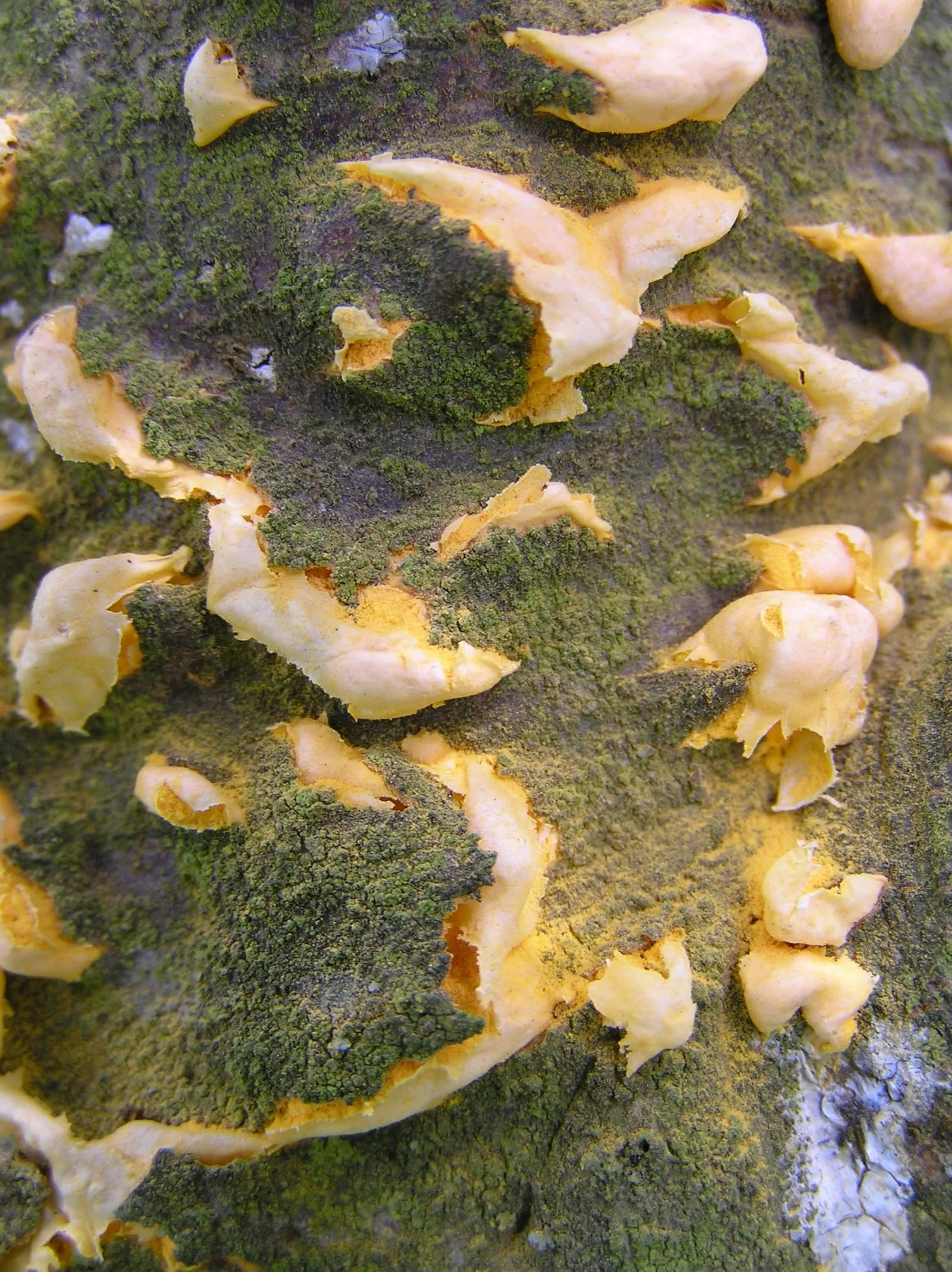
Disease
fungalWhite Pine Blister Rust
Cronartium ribicola
Two-host rust requiring both Ribes (currants and gooseberries) and white pines. Historically led to Ribes-planting bans in much of the US; some states still restrict black currant cultivation.
- Pathogen type
- Fungal
- Hosts
- 4
- Symptoms
- 3
- Scientific name
- Cronartium ribicola
- Resistant varieties
- 3
Biology and conditions
White pine blister rust (Cronartium ribicola) is a two-host fungal pathogen that cannot complete its life cycle on a single plant genus. Spores produced on Ribes (currants and gooseberries) infect only five-needled pines, primarily eastern white pine (Pinus strobus). Spores produced on infected pines then infect Ribes foliage. The fungus cannot spread directly from currant to currant or pine to pine.
Cool, humid nights during late summer and fall favor infection of Ribes foliage. Spores landing on leaves germinate and produce the characteristic yellow-orange spots on the upper leaf surface and orange pustules on the undersides. Repeated infections lead to premature defoliation and, over several seasons, declining plant vigor. Proximity to white pine stands is the primary risk factor; sites surrounded by Pinus strobus carry substantially higher infection pressure than open sites.
The disease's historical weight was severe enough to trigger Ribes-planting bans across much of the United States through the mid-20th century. Some states still restrict or prohibit black currant cultivation. Growers should check state regulations before planting any Ribes species.
The most cost-effective management starts with variety selection. Black currant cultivars Consort, Crandall, and Titania carry resistance to blister rust and are the recommended choice for plantings in pine country. Where non-resistant varieties are already established, maintaining distance from white pines and cleaning up fallen leaves at the end of the season reduce but do not eliminate risk.
Symptoms
- ▸ Yellow-orange spots on upper leaf surface
- ▸ Orange spore pustules on leaf undersides
- ▸ Premature defoliation
IPM controls
- ✓ Plant immune cultivars (Consort, Crandall, Titania for black currant)
- ✓ Check state regulations before planting Ribes (some states prohibit)
- ✓ Maintain distance from white pines (Pinus strobus)
- ✓ Sanitation of fallen leaves
Resistant varieties
Selecting a variety with documented resistance is the most effective single decision for low-input management of white pine blister rust.
Affected crops
Image: "Cronartium ribicola bialowieza 5 beentree", by Unknown, via Wikimedia Commons, licensed under CC-BY Source.

Related