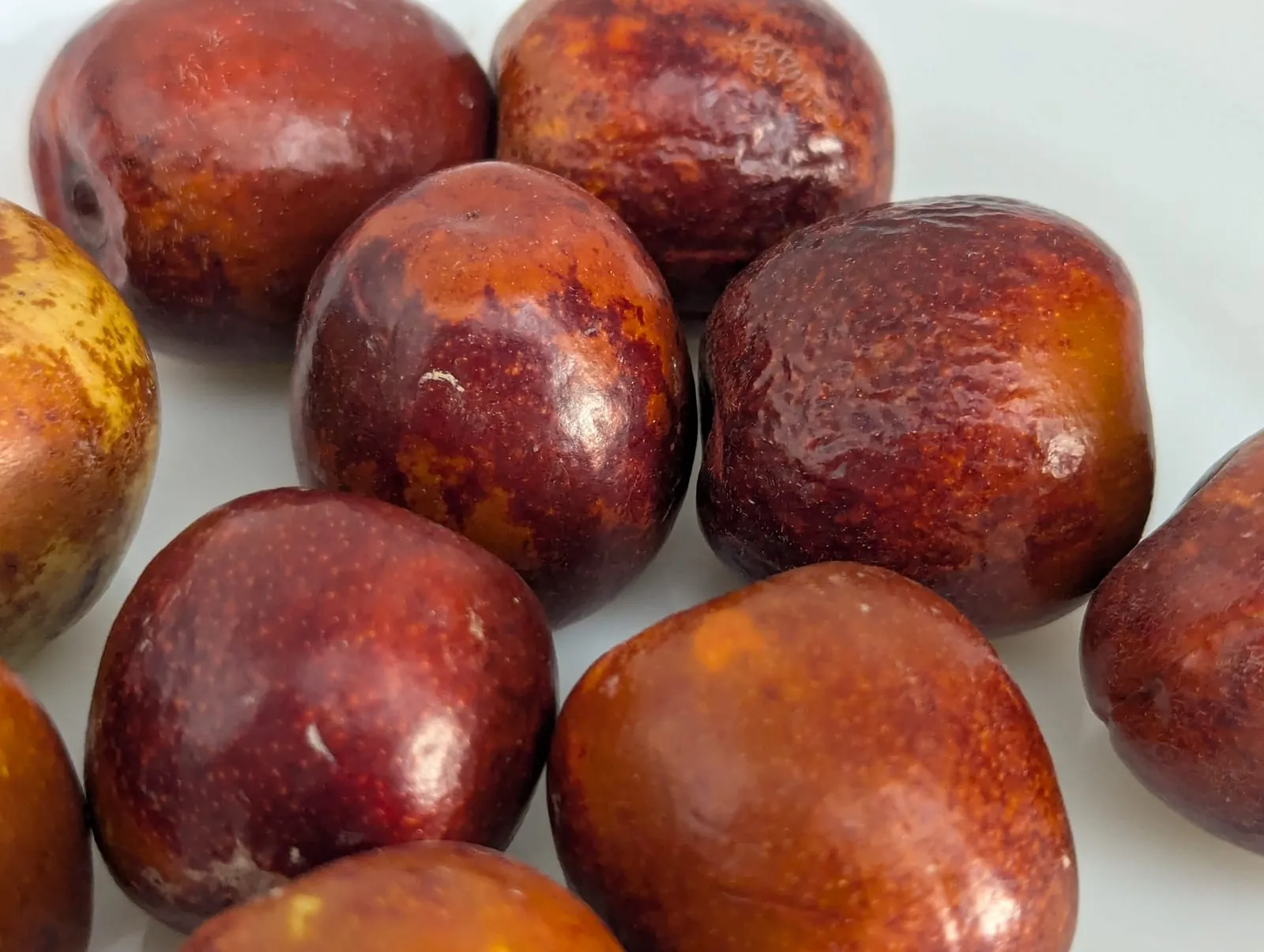
fruit tree in zone 7a
Growing jujube in zone 7a
Ziziphus jujuba
- Zone
- 7a 0°F to 5°F
- Growing season
- 210 days
- Chill needed
- 50 to 200 below 45°F
- Suitable varieties
- 4
- Days to harvest
- 150 to 200
The verdict
Zone 7a is well within jujube's preferred range, not a marginal case. With winter lows between 0 and 5°F and a 210-day growing season, the conditions align closely with what jujube needs to produce reliably. The crop requires only 50 to 200 chill hours annually, a threshold zone 7a exceeds comfortably in most winters without accumulating excess cold that would stress the tree.
Varieties like Li, Lang, Honey Jar, and Sugar Cane all perform well here. Li and Honey Jar are particularly well-documented for the Southeast and mid-Atlantic, where zone 7a is common. The extended warm season matters: jujube fruit needs a long, hot summer to develop full sugar content, and 210 frost-free days provides that margin. Growers in adjacent warmer zones sometimes report better fruit quality, but zone 7a rarely produces under-ripe harvests in normal years.
Recommended varieties for zone 7a
4 cultivars suited to this zone, with disease-resistance and zone-fit annotations.
| Variety | Notes | Zone fit | Disease resistance |
|---|---|---|---|
| Li fits zone 7a | Sweet, crisp like an apple when fresh; large round fruit. Eats out of hand, dries to a date-like sweetness. Most popular fresh-eating jujube. | | none noted |
| Lang fits zone 7a | Sweet, crisp, apple-pear flavor when fresh; pear-shaped fruit. Productive, often the pollinator for Li. Excellent fresh and dried. | | none noted |
| Honey Jar fits zone 7a | Extremely sweet, crisp, intense honey flavor; small fruit (cherry-sized). The connoisseur's jujube, prized variety, eats fresh in handfuls. | | none noted |
| Sugar Cane fits zone 7a | Very sweet, crisp, large fruit; fresh eating champion with high sugar content. Heavy producer. | | none noted |
Critical timing for zone 7a
Jujube breaks dormancy later than most fruit trees, typically mid-spring, which works in its favor in zone 7a. Bloom generally occurs from late May into June, well past the zone's average last frost date of late March to mid-April. Late frosts that damage stone fruit blossoms rarely affect jujube, making it a lower-risk crop for zones with variable spring weather.
Harvest runs from late August through October depending on variety. Honey Jar typically ripens earliest, often in August; Lang and Li follow in September and into October. The 210-day growing season leaves adequate time for full ripening before first fall frost, which in zone 7a typically arrives in late October to early November.
Common challenges in zone 7a
- ▸ Cedar-apple rust
- ▸ Brown rot
- ▸ Fire blight
- ▸ High humidity disease pressure
Modified care for zone 7a
Jujube is notably more disease-resistant than most tree fruits, but zone 7a's high humidity and disease pressure still warrant attention to site selection and airflow. Planting on a slope or in a location with good air movement reduces ambient humidity around the canopy, which matters most during the summer fruiting period when brown rot pressure peaks on susceptible crops nearby.
Cedar-apple rust and fire blight, both listed zone challenges, rarely affect jujube directly. The crop's resistance to both is well-established. However, growers with mixed orchards should monitor neighboring apple or pear trees, since those diseases can affect overall orchard health. No additional winter protection is needed in zone 7a; jujube is cold-hardy well below the zone's minimum temperatures. Summer irrigation during dry spells improves fruit size and sugar development, particularly for Li and Sugar Cane.
Frequently asked questions
- Does jujube need a pollinator in zone 7a?
Most jujube varieties are self-fertile and will produce fruit without a second tree. Planting two different varieties, such as Li and Lang, generally increases yield and fruit size through cross-pollination, but a single tree will still bear fruit reliably.
- How many chill hours does jujube need, and will zone 7a provide enough?
Jujube requires 50 to 200 chill hours (hours below 45°F). Zone 7a routinely accumulates 800 to 1,200 chill hours in a typical winter, which more than satisfies the requirement. Insufficient chilling is not a concern in this zone.
- When does jujube fruit ripen in zone 7a?
Harvest typically runs from late August through October. Honey Jar is one of the earliest varieties to ripen, often in August. Li and Lang generally follow in September. The 210-day growing season in zone 7a provides enough warm weather for full sugar development before first frost.
- Is jujube susceptible to fire blight or cedar-apple rust?
No. Jujube has strong natural resistance to both fire blight and cedar-apple rust, diseases that affect apple and pear trees in the same zone. These pathogens pose little to no direct risk to jujube, which is one reason the crop appeals to growers managing mixed orchards in the humid Southeast and mid-Atlantic.
+−
+−
+−
+−
Jujube in adjacent zones
Image: "Ziziphus jujuba (fruit)", by Ismael Olea, via Wikimedia Commons, licensed under CC-BY Source.
.jpg)
Related