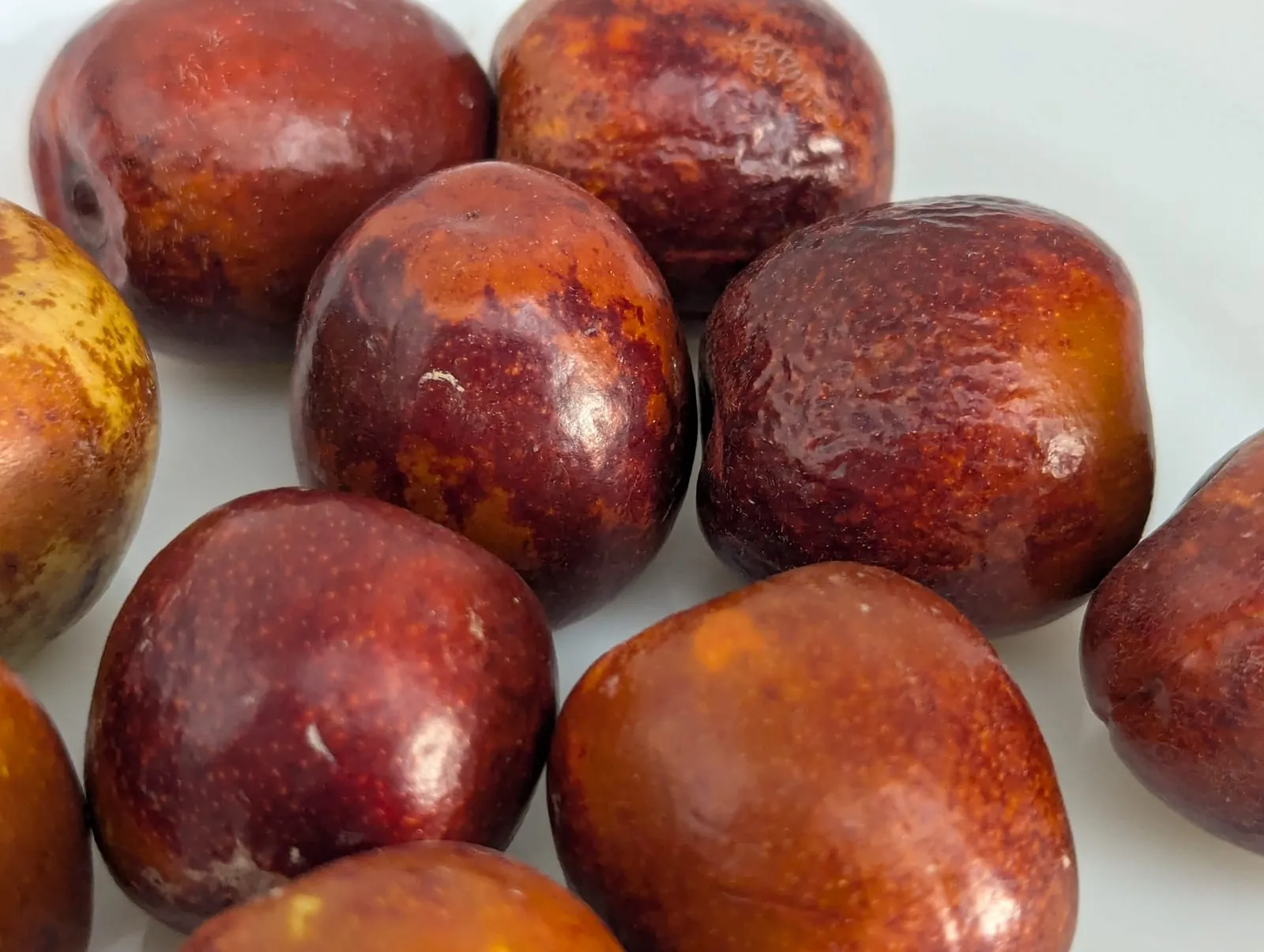
fruit tree in zone 8b
Growing jujube in zone 8b
Ziziphus jujuba
- Zone
- 8b 15°F to 20°F
- Growing season
- 260 days
- Chill needed
- 50 to 200 below 45°F
- Suitable varieties
- 4
- Days to harvest
- 150 to 200
The verdict
Zone 8b is well within the jujube's preferred climate range, and in many respects it is a sweet spot rather than a marginal case. Jujube requires only 50 to 200 chill hours to break dormancy reliably, a threshold that zone 8b clears comfortably in most winters without the surplus that can cause erratic budbreak timing in higher-chill zones. The 260-day growing season provides ample time for fruit to develop full sugar content, which requires sustained summer heat that this zone delivers consistently.
Varieties suited to warm climates, including Li, Lang, Honey Jar, and Sugar Cane, have all performed well in comparable climates. The low-chill-hour constraint that limits apple variety selection in zone 8b is essentially irrelevant for jujube. The binding constraints here are soil type and nematode pressure, not heat accumulation or chilling inadequacy.
Recommended varieties for zone 8b
4 cultivars suited to this zone, with disease-resistance and zone-fit annotations.
| Variety | Notes | Zone fit | Disease resistance |
|---|---|---|---|
| Li fits zone 8b | Sweet, crisp like an apple when fresh; large round fruit. Eats out of hand, dries to a date-like sweetness. Most popular fresh-eating jujube. | | none noted |
| Lang fits zone 8b | Sweet, crisp, apple-pear flavor when fresh; pear-shaped fruit. Productive, often the pollinator for Li. Excellent fresh and dried. | | none noted |
| Honey Jar fits zone 8b | Extremely sweet, crisp, intense honey flavor; small fruit (cherry-sized). The connoisseur's jujube, prized variety, eats fresh in handfuls. | | none noted |
| Sugar Cane fits zone 8b | Very sweet, crisp, large fruit; fresh eating champion with high sugar content. Heavy producer. | | none noted |
Critical timing for zone 8b
Jujube is notably late to break dormancy compared to most deciduous fruit trees, with foliage typically not emerging until late April or early May in zone 8b. This delays any frost-exposure window to a point where late freezes are unlikely. Bloom follows in late May through June, with small, inconspicuous greenish-yellow flowers that produce abundant nectar.
Harvest timing varies by variety and intended use. Li and Honey Jar generally ripen in August through September; Lang typically runs two to four weeks behind. Fresh-eating fruit is harvested at the yellow-green to partial-brown stage. Growers drying fruit on the tree wait for full brown coloration. The 260-day growing season in zone 8b provides a comfortable margin for late-season varieties to reach full maturity before first frost.
Common challenges in zone 8b
- ▸ Low chill hours limit apple variety selection
- ▸ Citrus greening risk
- ▸ Nematodes in sandy soils
Modified care for zone 8b
Nematodes in sandy soils represent the most zone-specific management concern for jujube in zone 8b. Jujube tolerates poor soils well, but tolerance is not immunity. On sandy sites with documented nematode history, incorporating organic matter before planting and avoiding sites previously planted to peaches or other susceptible crops reduces root-zone pressure. Raised beds can help in problematic locations.
Summer heat at zone 8b intensity is a net positive for jujube and requires no mitigation. Winter protection is unnecessary; minimum temperatures of 15 to 20°F sit well above the cold-damage threshold for established trees. Supplemental irrigation during July and August, when fruit is sizing up, reduces cracking and improves uniformity, particularly in years with dry summers. No disease pressure specific to zone 8b is well-documented for jujube.
Jujube in adjacent zones
Image: "Ziziphus jujuba (fruit)", by Ismael Olea, via Wikimedia Commons, licensed under CC-BY Source.
.jpg)
Related