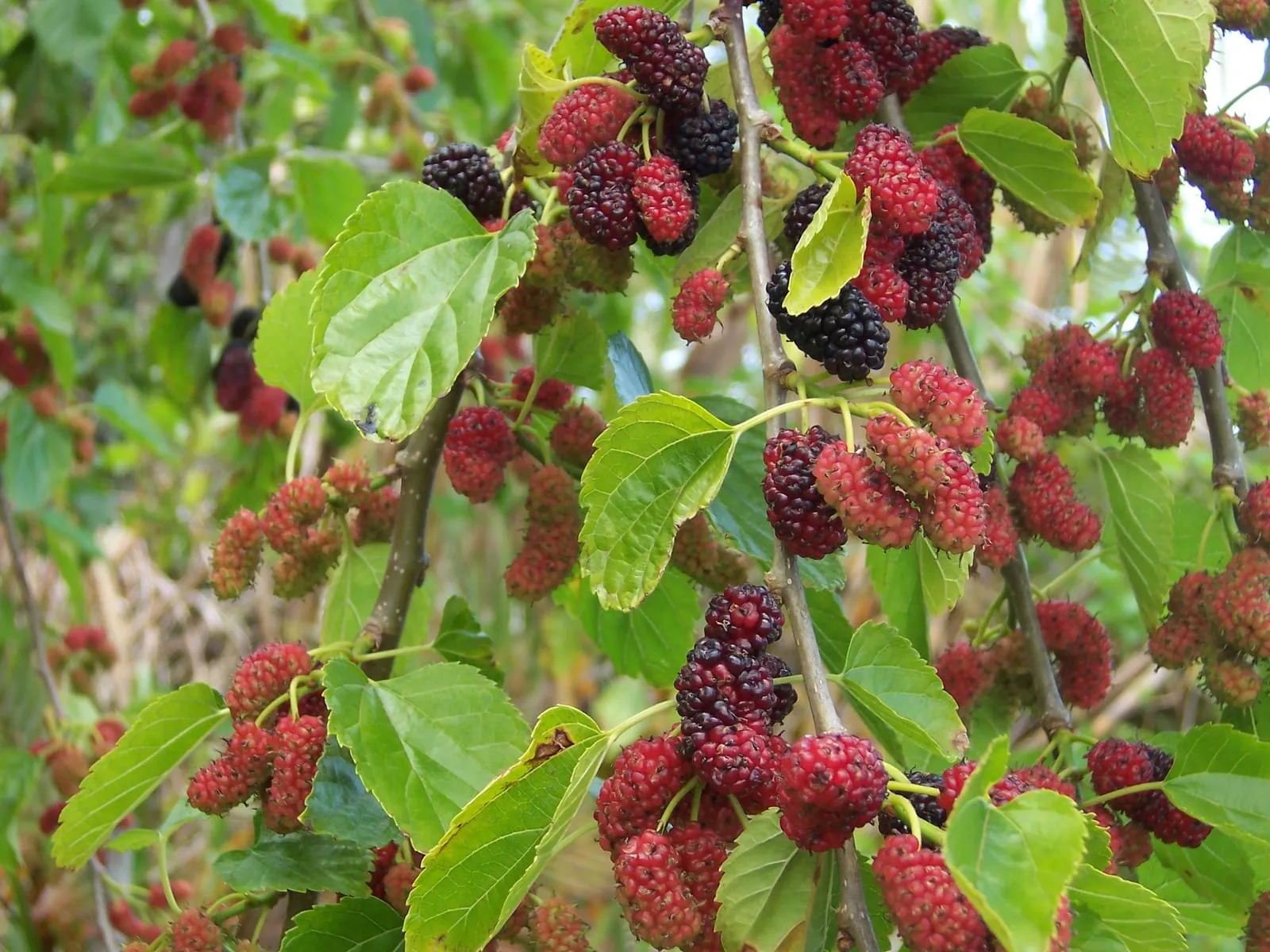
fruit tree in zone 6b
Growing mulberry in zone 6b
Morus species
- Zone
- 6b -5°F to 0°F
- Growing season
- 190 days
- Chill needed
- 400 to 600 below 45°F
- Suitable varieties
- 2
- Days to harvest
- 60 to 90
The verdict
Zone 6b is a reliable fit for mulberry, not a marginal one. The crop's chill-hour requirement of 400 to 600 hours aligns comfortably with what zone 6b winters deliver; most sites in this zone accumulate well above the minimum, so inadequate chilling is rarely a limiting factor.
Minimum temperatures of -5°F to 0°F can occasionally stress young trees, but established mulberry handles this range without significant dieback. Illinois Everbearing is the stronger choice for zone 6b: it tends to leaf out slightly later than some cultivars, which reduces exposure to late-frost events, and its extended fruiting window fits neatly inside a 190-day growing season. Black Beauty is also viable but benefits from a sheltered site in zone 6b to maximize fruit development before cooler fall temperatures arrive.
Overall, growers in zone 6b can expect consistent production from established mulberry trees without the yield variability that appears in zones where chill accumulation is less predictable.
Recommended varieties for zone 6b
2 cultivars suited to this zone, with disease-resistance and zone-fit annotations.
| Variety | Notes | Zone fit | Disease resistance |
|---|---|---|---|
| Illinois Everbearing fits zone 6b | Sweet with a hint of tart, dark purple-black; rich berry flavor. Fresh eating, jam, baking, smoothies. Long fruiting period (6-8 weeks). Productive hybrid. | | none noted |
| Black Beauty fits zone 6b | Sweet, classic dark mulberry flavor; smaller fruit but high quality. Fresh and dried. Compact tree (15 ft), manageable in small yards. | | none noted |
Critical timing for zone 6b
Mulberry breaks dormancy in mid-spring in zone 6b, with leaf-out typically occurring mid-April to early May depending on site exposure and microclimate. Bloom follows closely after leaf-out, generally through late April and into May. This timing works in the crop's favor: mulberry blooms later than many stone fruits, and in zone 6b it usually clears the highest-risk frost window without special protection.
Harvest for Illinois Everbearing runs from late June through August, with the everbearing characteristic extending the window by roughly four to six weeks compared to single-flush varieties. Black Beauty ripens somewhat earlier in the season. Both fall well within the 190-day growing season, and warm July and August temperatures in zone 6b support adequate sugar development before first fall frost arrives, typically mid to late October.
Common challenges in zone 6b
- ▸ Cedar-apple rust
- ▸ Fire blight
- ▸ Stink bugs
Modified care for zone 6b
The primary adjustments for zone 6b involve cold protection for newly planted trees and managing stink bug pressure during harvest. In their first winter, young trees benefit from a 4- to 6-inch mulch layer over the root zone to reduce frost heaving; this is less critical for established trees, which handle zone 6b minimums without significant damage.
Cedar-apple rust and fire blight are documented zone challenges, but mulberry is not a primary host for either pathogen, so no targeted spray program is typically warranted. Stink bugs are a more direct concern: they feed on ripening fruit in July and August, which coincides with peak harvest. Harvesting by spreading a tarp under the canopy and shaking branches reduces handling time and limits insect contact with the crop.
Supplemental irrigation is generally unnecessary in zone 6b under normal rainfall, though newly planted trees need consistent moisture during dry stretches in their first two growing seasons.
Frequently asked questions
- Is zone 6b too cold for mulberry?
No. Mulberry's chill-hour requirement of 400 to 600 hours is met comfortably by most zone 6b winters, and established trees tolerate minimum temperatures of -5°F to 0°F without significant dieback. Illinois Everbearing is the most reliable variety for this zone.
- When does mulberry ripen in zone 6b?
Illinois Everbearing begins ripening in late June and continues through August, giving a harvest window of six to eight weeks. Black Beauty tends to ripen somewhat earlier. Both finish well before first fall frost, which arrives in zone 6b around mid to late October.
- Do mulberry trees in zone 6b need winter protection?
Established trees generally do not need special protection in zone 6b. Newly planted trees in their first winter benefit from a 4- to 6-inch mulch layer around the root zone to prevent heaving during freeze-thaw cycles.
+−
+−
+−
Mulberry in adjacent zones
Image: "Morus alba fruits", by B.navez, via Wikimedia Commons, licensed under CC-BY Source.

Related