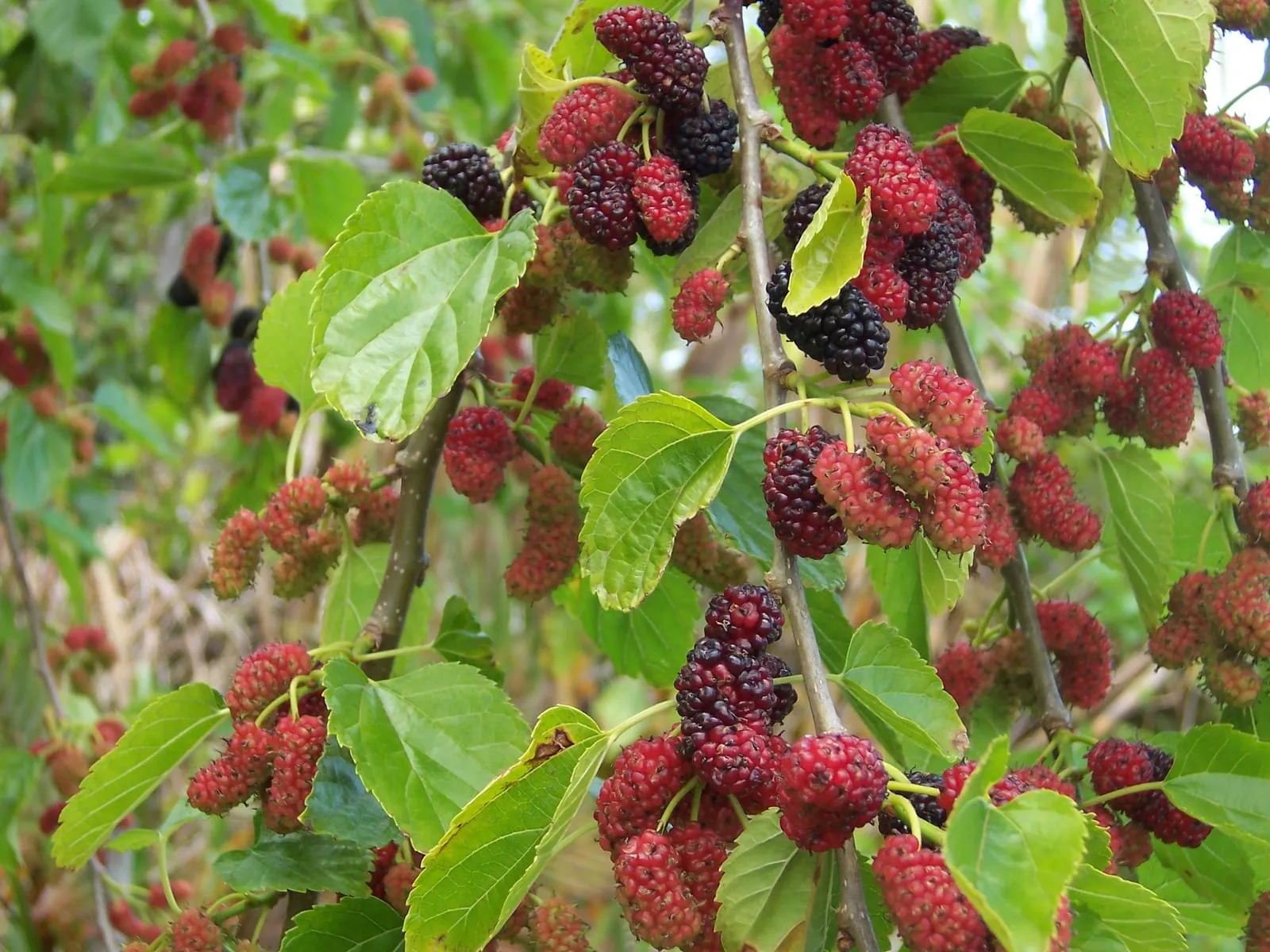
fruit tree
Mulberry
Morus species
USDA hardiness range
- Zones
- 4b–9a
- Chill hours
- 400 to 600 below 45°F
- Days to harvest
- 60 to 90
- Sun
- Full
- Water
- Low
- Lifespan
- 75 years
Growing mulberry
Mulberry is one of the most productive and lowest-maintenance fruit trees available to home growers across zones 4b through 9a. The genus Morus includes white (Morus alba), red (Morus rubra), and black (Morus nigra) species, with most cultivated varieties being hybrids that draw from two or more of these. The practical zone range is broad, but performance varies significantly by species selection at the extremes.
The trees are drought-tolerant once established, require minimal spray programs, and fruit reliably over a long harvest window. Illinois Everbearing, one of the most widely planted cultivars, extends the harvest across six to eight weeks, a meaningful advantage over stone fruits that compress into a narrow window.
Where mulberry struggles: black mulberry selections are more cold-sensitive and less suited to zones below 6. Pakistan mulberry needs warmth to develop its characteristic sweetness and performs best in zone 7b and above. At the cold end, zone 4b sites should evaluate microclimates carefully, as late frosts during bloom can reduce fruit set in warmer-than-average springs. The deep South at the lower end of zone 9 can push trees into heat stress during fruiting.
The most common planning mistake is underestimating tree size. Standard mulberries reach 30 to 35 feet at maturity without pruning, and their aggressive root systems make them poor candidates for foundation plantings or small urban lots. Compact selections like Black Beauty (15 feet) address this constraint but sacrifice some yield. Chill-hour requirements are moderate at 400 to 600 hours, placing zones 6 through 8a in the consistent-performance sweet spot for most cultivated varieties.
Recommended varieties
See all 3 →3 cultivars for home growers, with notes on flavor, ripening, and disease resistance.
| Variety | Notes | Zone fit | Disease resistance |
|---|---|---|---|
| Illinois Everbearing | Sweet with a hint of tart, dark purple-black; rich berry flavor. Fresh eating, jam, baking, smoothies. Long fruiting period (6-8 weeks). Productive hybrid. | | none noted |
| Pakistan | Very sweet, mild, almost candy-like; long red-black fruit (2-3 inches). Fresh eating standout when ripe. Needs warmth. | | none noted |
| Black Beauty | Sweet, classic dark mulberry flavor; smaller fruit but high quality. Fresh and dried. Compact tree (15 ft), manageable in small yards. | | none noted |
Soil and site requirements
Mulberry tolerates a wide range of soil types but performs best in well-drained loams with a pH between 5.5 and 7.0. Heavy clay is not disqualifying if drainage is adequate. Poorly drained sites cause root stress and reduce vigor; avoid low spots that collect standing water after rain events.
Full sun produces the best fruit set and flavor development. Partial shade is tolerable for tree health but reduces yield noticeably. When siting in a home landscape, account for the mature canopy: a standard tree at full size shades out significant ground area, which affects adjacent plantings and lawn areas.
Spacing for standard varieties should be at least 20 to 25 feet from structures and other trees. Compact selections like Black Beauty can be placed at 15 feet. Mulberry roots spread aggressively and are well-documented as a source of sewer line intrusion and sidewalk damage; a 15 to 20 foot buffer from underground infrastructure is a practical minimum, not a conservative one.
Microclimate selection matters most in zones 4b and 5a. A south-facing slope or the thermal mass of a south-facing wall can add enough accumulated warmth to improve fruit set in marginal years. In zones 8 and above, a site that gets afternoon shade can moderate heat stress during the hottest part of the fruiting period.
Common pests
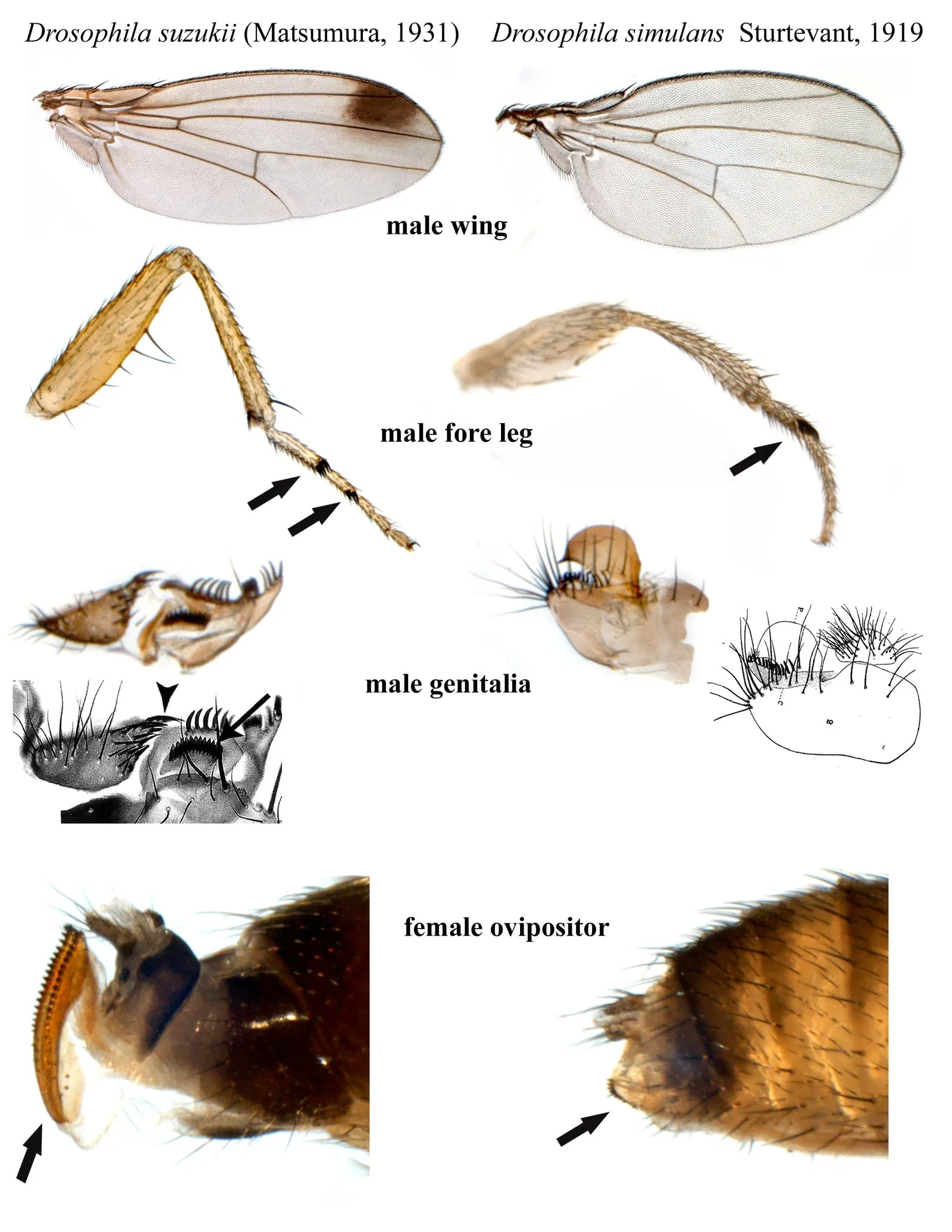
Drosophila suzukii
Invasive vinegar fly that attacks ripening soft fruit, unlike native Drosophila species which target overripe fruit. Now the dominant berry-and-cherry pest across the US.

Odocoileus species
Whitetail and mule deer browse can devastate orchards and gardens, particularly in winter when food is scarce. Antler rub on young trunks kills saplings outright.
Common challenges
Bird pressure is the primary harvesting challenge with mulberry. Trees produce abundant fruit, but birds will strip a canopy rapidly once fruit begins to color. Netting is the only reliable solution; scare devices provide short-term deterrence at best. Harvesting early in the morning, before birds begin active feeding, recovers a meaningful portion of ripe fruit but does not eliminate the problem on productive trees.
Fruit drop and staining catches many first-time growers off guard. Ripe mulberries fall on their own, and the deep purple-black juice stains paving, decking, vehicles, and anything else beneath the canopy. Siting the tree away from high-traffic areas is the most effective mitigation. During peak ripening, laying a tarp or old sheet under the canopy and shaking branches is a simple harvest method that also reduces mess.
Variety-to-zone mismatch is more consequential with mulberry than with more forgiving crops. Pakistan mulberry, for example, grows across a broad zone range on paper, but the sweetness and fruit size that make it worth growing require the warmth of zone 7b and above. Growing it in zone 5 or 6 produces fruit that technically ripens but lacks the quality the variety is known for. Illinois Everbearing is the safer choice for the colder end of the zone range. Checking variety-specific zone data before purchasing is more important with mulberry than many growers realize.
Companion plants
Frequently asked questions
- How many chill hours does mulberry need?
Most cultivated mulberry varieties require 400 to 600 hours of chilling (temperatures at or below 45°F) to break dormancy and set fruit reliably. This places them well within the range for zones 5 through 8a, where chill accumulation is consistent in most years. Growers at the warm end of the zone range should confirm chill-hour averages for their specific location before selecting a variety.
- How long does mulberry take to produce fruit after planting?
Once bloom occurs, fruit develops over 60 to 90 days depending on variety and local temperatures. Container-grown trees typically begin producing in their second or third year after planting. Bare-root trees may take a year longer to establish before reliable fruiting begins.
- What USDA zones does mulberry grow in?
Mulberry grows across zones 4b through 9a, though not all varieties perform equally across that range. White and red mulberry hybrids like Illinois Everbearing handle the widest span. Black mulberry (Morus nigra) is less cold-hardy and is better suited to zones 6 and above. Pakistan mulberry needs the warmth of zone 7b or higher to develop full flavor.
- Does mulberry need a second tree for pollination?
Most cultivated mulberry varieties are self-fertile and produce fruit without a pollinator tree. Illinois Everbearing and Black Beauty both set fruit reliably as single-tree plantings. Some mulberry trees bear separate male and female flowers on the same tree (monoecious), which supports self-fertilization without cross-pollination.
- What diseases commonly affect mulberry?
Mulberry has notably low disease pressure compared to most fruit trees. Home growers across the primary zone range rarely encounter significant fungal or bacterial problems. Bacterial leaf scorch (caused by Xylella fastidiosa) can affect trees in parts of the Southeast but is not widespread. The absence of a regular spray program is one of mulberry's practical advantages over apples, peaches, and cherries.
- When does mulberry fruit ripen?
Mulberry ripens from late spring through midsummer, with exact timing shifting two to four weeks earlier or later depending on zone. In zone 7b, expect harvest from late May into July. Illinois Everbearing extends the window to six to eight weeks; most other varieties concentrate fruit over two to four weeks. Fruit does not ripen off the tree, so daily picking is practical during peak season.
- How large does a mulberry tree get?
Standard mulberry trees reach 30 to 35 feet at maturity without pruning intervention. The canopy spread can match or exceed the height, making site selection important. Compact selections such as Black Beauty top out around 15 feet and are manageable in smaller yards, easier to net against birds, and simpler to harvest without a ladder.
+−
+−
+−
+−
+−
+−
+−
Sources
Image: "Morus alba fruits", by B.navez, via Wikimedia Commons, licensed under CC-BY. Source.

Mulberry by zone
Related