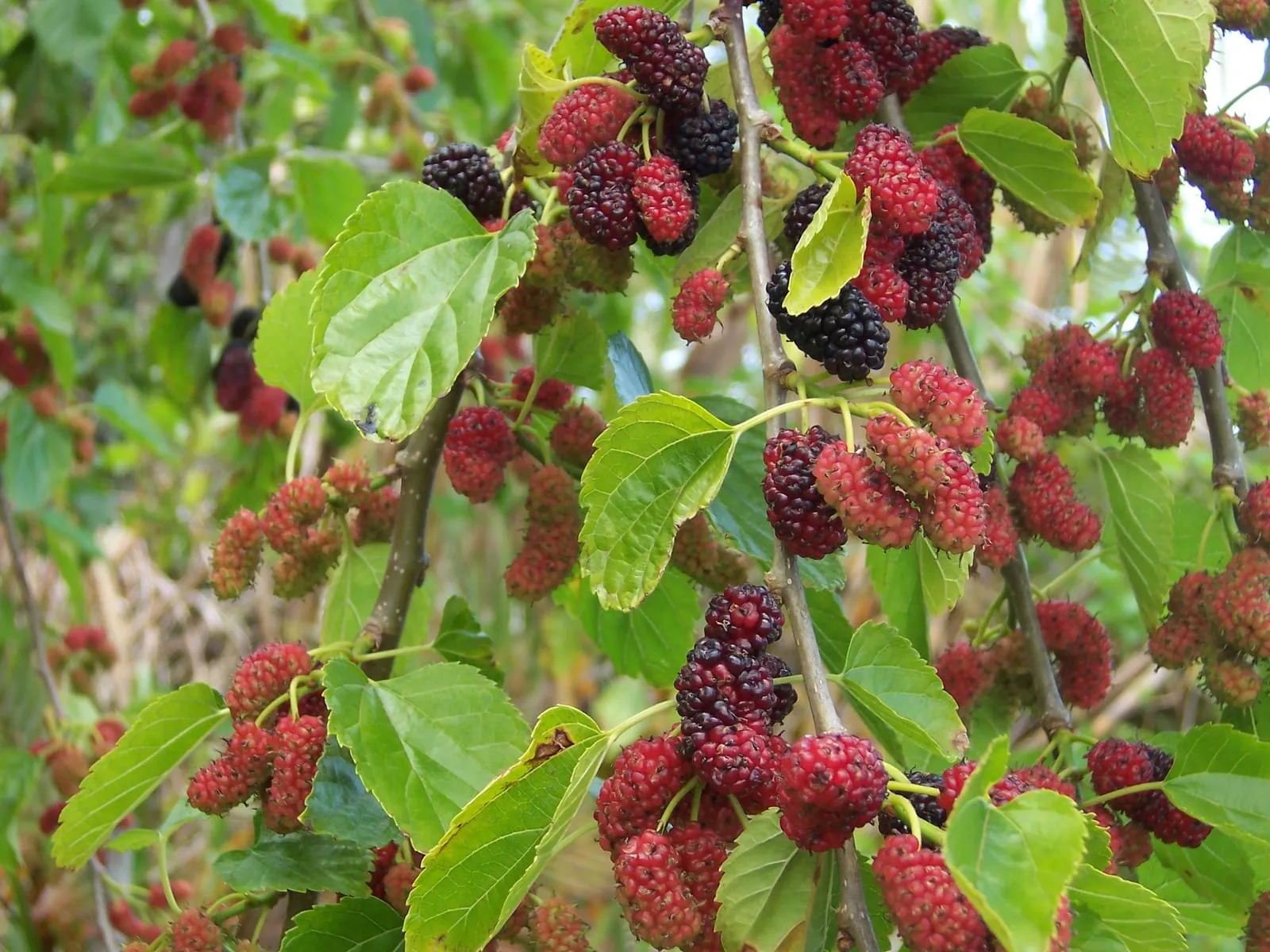
fruit tree in zone 7b
Growing mulberry in zone 7b
Morus species
- Zone
- 7b 5°F to 10°F
- Growing season
- 220 days
- Chill needed
- 400 to 600 below 45°F
- Suitable varieties
- 3
- Days to harvest
- 60 to 90
The verdict
Zone 7b is a strong match for mulberry, not a marginal one. The crop's chill-hour requirement of 400 to 600 hours is comfortably exceeded across most of zone 7b, which typically accumulates 700 to 1,100 hours depending on elevation and local microclimate. Cold hardiness is not a limiting factor here; winter minimums of 5°F to 10°F fall well within the tolerance range of Illinois Everbearing and Black Beauty. Pakistan mulberry, which originates from warmer climates, performs adequately in zone 7b but benefits from a south-facing wall or heat-retaining microclimate to maximize fruit size and full flavor development. The 220-day growing season gives even slower-ripening varieties ample time to bring fruit to full color before temperatures drop in fall. Growers choosing among the three listed varieties should weigh fruit size and flavor preferences rather than zone suitability, since all three are viable in 7b.
Recommended varieties for zone 7b
3 cultivars suited to this zone, with disease-resistance and zone-fit annotations.
| Variety | Notes | Zone fit | Disease resistance |
|---|---|---|---|
| Illinois Everbearing fits zone 7b | Sweet with a hint of tart, dark purple-black; rich berry flavor. Fresh eating, jam, baking, smoothies. Long fruiting period (6-8 weeks). Productive hybrid. | | none noted |
| Pakistan fits zone 7b | Very sweet, mild, almost candy-like; long red-black fruit (2-3 inches). Fresh eating standout when ripe. Needs warmth. | | none noted |
| Black Beauty fits zone 7b | Sweet, classic dark mulberry flavor; smaller fruit but high quality. Fresh and dried. Compact tree (15 ft), manageable in small yards. | | none noted |
Critical timing for zone 7b
Mulberry leafs out and blooms earlier than most fruit crops, typically from late March into early April in zone 7b. Last frost dates across zone 7b commonly fall between late March and mid-April depending on specific location, which creates a genuine overlap between bloom and frost risk. A late frost during the bloom window rarely kills the tree but can reduce fruit set for that season; Illinois Everbearing's extended bloom window offers some resilience against a single frost event compared to varieties that bloom all at once. Harvest begins in late May for early selections and runs into July for Illinois Everbearing, which produces over a multi-week window rather than a single flush. The zone's 220-day season eliminates any concern about fruit failing to ripen before fall.
Common challenges in zone 7b
- ▸ Cedar-apple rust pressure heavy in piedmont
- ▸ Japanese beetles
- ▸ Brown marmorated stink bug
- ▸ Late summer disease pressure
Modified care for zone 7b
The main adjustments in zone 7b center on pest timing rather than climate extremes. Japanese beetles emerge in late June and July, coinciding with peak ripening; a tree carrying overripe or fallen fruit becomes a significant beetle draw, so prompt harvesting reduces pressure. Brown marmorated stink bugs pierce developing fruit and cause internal damage that isn't always visible at harvest. Row cover is impractical on a mature mulberry tree, so the realistic response is harvesting at peak ripeness rather than letting fruit hang. Late summer disease pressure, common in the humid piedmont, is less of a concern for mulberry than for apples or stone fruits on the same property. Mulberry is widely regarded as low-input compared to its orchard neighbors, and no specific winter protection is needed for Illinois Everbearing, Pakistan, or Black Beauty within zone 7b's temperature range.
Mulberry in adjacent zones
Image: "Morus alba fruits", by B.navez, via Wikimedia Commons, licensed under CC-BY Source.

Related