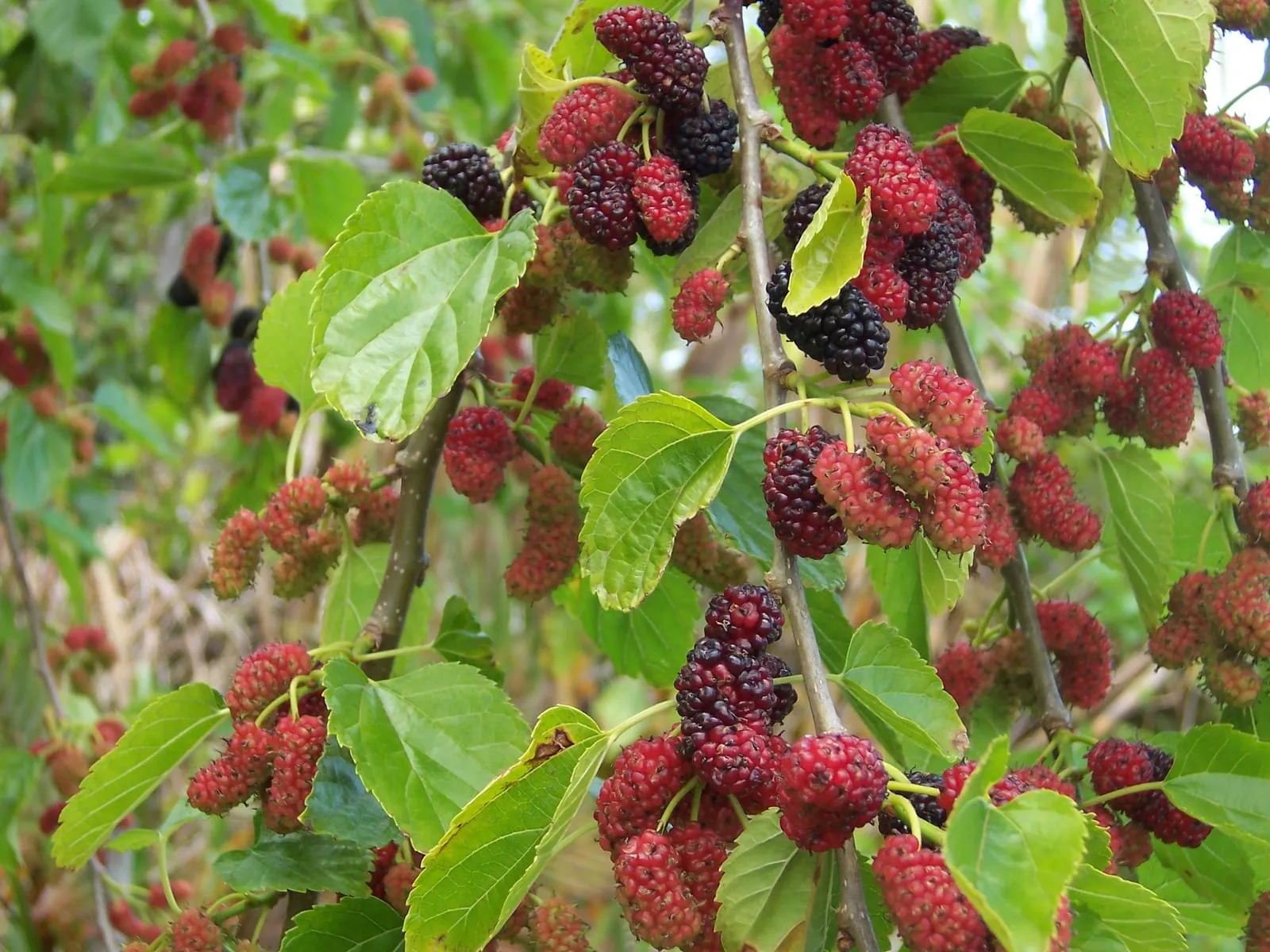
fruit tree in zone 8b
Growing mulberry in zone 8b
Morus species
- Zone
- 8b 15°F to 20°F
- Growing season
- 260 days
- Chill needed
- 400 to 600 below 45°F
- Suitable varieties
- 1
- Days to harvest
- 60 to 90
The verdict
Mulberry is a good fit for zone 8b, not a marginal one. The crop's chill-hour requirement of 400 to 600 hours aligns reasonably well with what much of zone 8b accumulates each winter, though growers in the warmest coastal pockets of the zone may fall short in mild winters. When chill hours do come up short, the result is uneven leaf-out and reduced fruit set rather than outright crop failure, which is a more forgiving failure mode than with stone fruits.
The Pakistan variety stands out as the primary option here. It tolerates heat better than white mulberry selections bred for cooler climates, and it produces large fruit on a long picking window suited to zone 8b's 260-day growing season. The zone's warm winters and long summers favor vigorous vegetative growth, which can make canopy management a recurring task but also means young trees establish quickly.
Recommended varieties for zone 8b
1 cultivar suited to this zone, with disease-resistance and zone-fit annotations.
| Variety | Notes | Zone fit | Disease resistance |
|---|---|---|---|
| Pakistan fits zone 8b | Very sweet, mild, almost candy-like; long red-black fruit (2-3 inches). Fresh eating standout when ripe. Needs warmth. | | none noted |
Critical timing for zone 8b
Mulberry breaks dormancy early in zone 8b, with leaf-out typically occurring in late February and bloom following in March. The zone's average last frost falls in late February to mid-March depending on location, which creates a narrow window where a late frost can damage developing flowers. Fruit set is generally not catastrophic after a single frost event because mulberry blooms across a spread of several weeks, but a hard freeze after bloom has opened can reduce the crop noticeably.
Harvest runs from late April through June in zone 8b. The long, warm growing season extends the ripening window compared to zones 6 and 7, where the entire harvest can compress into two to three weeks. Expect ripe fruit across four to six weeks if conditions stay mild.
Common challenges in zone 8b
- ▸ Low chill hours limit apple variety selection
- ▸ Citrus greening risk
- ▸ Nematodes in sandy soils
Modified care for zone 8b
Summer heat is the main management challenge in zone 8b that growers in cooler zones do not face. Prolonged temperatures above 95°F during ripening can cause fruit to soften and ferment on the tree before it is fully colored. Positioning the tree where it receives afternoon shade, or timing irrigation to keep roots cool during peak heat, reduces this problem.
Sandy soils, common in parts of zone 8b, increase nematode pressure. Mulberry tolerates nematodes better than many fruit trees, but young trees in heavily infested sandy ground may show stunted growth. Planting into amended beds or selecting well-drained loam sites reduces establishment losses. Supplemental irrigation during June and July, when summer heat peaks and rainfall can be unreliable, prevents stress-induced early fruit drop that can strip the tree before harvest is complete.
Frequently asked questions
- Will mulberry reliably meet its chill-hour requirement in zone 8b?
In most of zone 8b, yes. The zone typically accumulates 400 to 600 chill hours in a normal winter, which covers the lower to middle of mulberry's requirement range. Warmer coastal locations within the zone may fall short in unusually mild winters, leading to uneven leaf-out rather than total crop failure.
- Which mulberry variety is best suited to zone 8b?
Pakistan is the variety most widely recommended for zone 8b. It handles heat well, produces large fruit, and has a picking window that suits the long growing season. Other varieties bred for temperate climates tend to perform inconsistently in the warmer parts of the zone.
- Does mulberry have serious disease problems in zone 8b?
Mulberry is notably low-maintenance on the disease front compared to other fruit trees. Popcorn disease (a fungal condition affecting fruit) can appear in humid conditions during ripening, but it rarely causes widespread losses. Nematode pressure in sandy soils is a more practical concern at the root level.
+−
+−
+−
Mulberry in adjacent zones
Image: "Morus alba fruits", by B.navez, via Wikimedia Commons, licensed under CC-BY Source.

Related