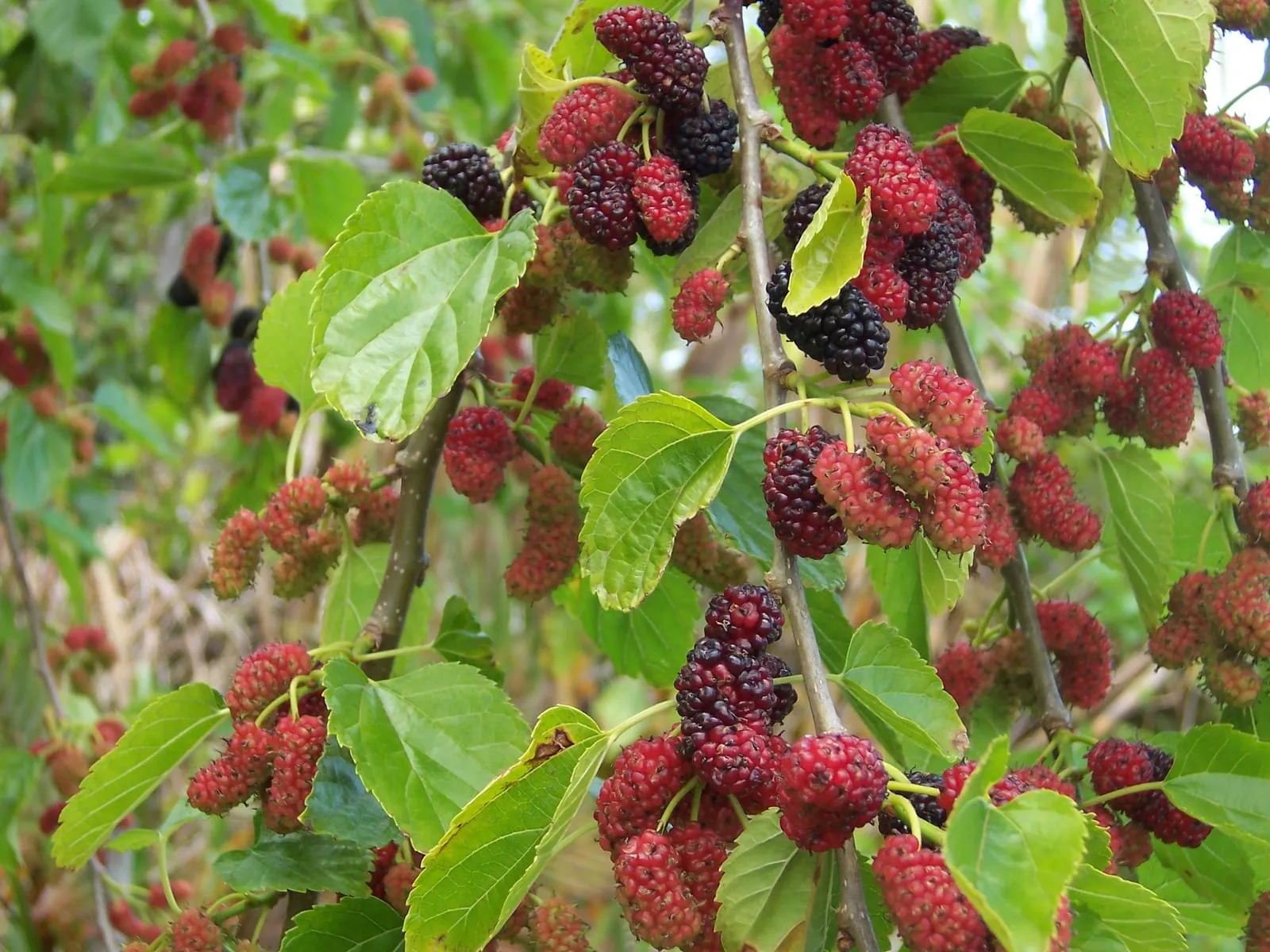
fruit tree in zone 4b
Growing mulberry in zone 4b
Morus species
- Zone
- 4b -25°F to -20°F
- Growing season
- 130 days
- Chill needed
- 400 to 600 below 45°F
- Suitable varieties
- 1
- Days to harvest
- 60 to 90
The verdict
Zone 4b sits at or near the northern edge of mulberry cultivation for most cultivars. Winter lows of -25 to -20°F are severe, and the vast majority of mulberry varieties are not rated for those temperatures. Illinois Everbearing is the exception, with documented hardiness into zone 4. Chill-hour requirements of 400 to 600 hours are reliably met in zone 4b, so dormancy is not a limiting factor here.
What is limiting is the 130-day growing season. Mulberry needs adequate time between last frost and harvest, and that margin is thin this far north. This is a marginal zone for mulberry, not a sweet spot. Growers who succeed here consistently credit microclimate selection: southern or southeastern exposures, proximity to structures or dense windbreaks, and urban heat islands all make a measurable difference. Expect some years to deliver poor harvests after late spring frost events, and size expectations accordingly.
Recommended varieties for zone 4b
1 cultivar suited to this zone, with disease-resistance and zone-fit annotations.
| Variety | Notes | Zone fit | Disease resistance |
|---|---|---|---|
| Illinois Everbearing fits zone 4b | Sweet with a hint of tart, dark purple-black; rich berry flavor. Fresh eating, jam, baking, smoothies. Long fruiting period (6-8 weeks). Productive hybrid. | | none noted |
Critical timing for zone 4b
Mulberry leafs out and blooms after sustained warm temperatures, typically in late May to early June in zone 4b. That late-flowering habit provides some natural buffer against spring frost damage compared to earlier-blooming tree fruit. However, zone 4b's last frost date commonly falls in mid-May, and late frosts into early June are possible in the colder pockets of the zone. A single hard frost during the bloom window can eliminate the crop for the season.
Fruit ripens in late July through August in most zone 4b locations. The 130-day growing season generally provides enough time for Illinois Everbearing to complete ripening before first fall frosts, which typically arrive in September. Cool summers are the main variable; a cold July can delay ripening and compress the harvest window considerably.
Common challenges in zone 4b
- ▸ Spring frost timing
- ▸ Apple scab pressure
- ▸ Cane berry winter dieback
Modified care for zone 4b
Winter protection is the primary management adjustment in zone 4b. Even Illinois Everbearing can sustain significant dieback of current-season wood when temperatures approach -25°F. Heavy mulching around the base after ground freeze provides root insulation. Young trees are especially vulnerable in the first two winters before the root system is established. A wind-sheltered site with southern exposure is worth prioritizing at planting time rather than retrofitting later.
In spring, wait until new growth is clearly active before pruning. Winter-killed wood can be extensive after a hard winter, and cutting too early makes it difficult to distinguish dead from dormant growth. Avoid heavy nitrogen applications in mid-to-late summer, since lush late-season growth is more susceptible to early fall frost injury. The apple scab pressure noted for this zone does not affect mulberry directly, but wet spring conditions warrant general observation for fungal issues on foliage.
Frequently asked questions
- Can mulberry survive zone 4b winters?
Illinois Everbearing is the only mulberry variety consistently rated for zone 4b conditions, with hardiness down to approximately -25°F. Even this cultivar can experience dieback of young wood in the coldest winters. Siting on a protected southern exposure and mulching the root zone reduce cold injury risk substantially.
- Does mulberry accumulate enough chill hours in zone 4b?
Yes. Mulberry requires 400 to 600 chill hours, and zone 4b accumulates well above that threshold in a typical winter. Chill-hour deficiency is not a concern at this latitude.
- What is the harvest window for mulberry in zone 4b?
Fruit typically ripens from late July through August in zone 4b. The exact timing depends on spring warmth and summer temperatures. Cool summers can push harvest later and compress the window before first fall frosts.
- Is spring frost a serious risk for mulberry in zone 4b?
It is a real but reduced risk compared to earlier-blooming fruit. Mulberry flowers in late May to early June in this zone, after most frost events have passed. Late frosts into early June do occur in northern and elevated parts of zone 4b and can eliminate the crop in affected years.
+−
+−
+−
+−
Mulberry in adjacent zones
Image: "Morus alba fruits", by B.navez, via Wikimedia Commons, licensed under CC-BY Source.

Related