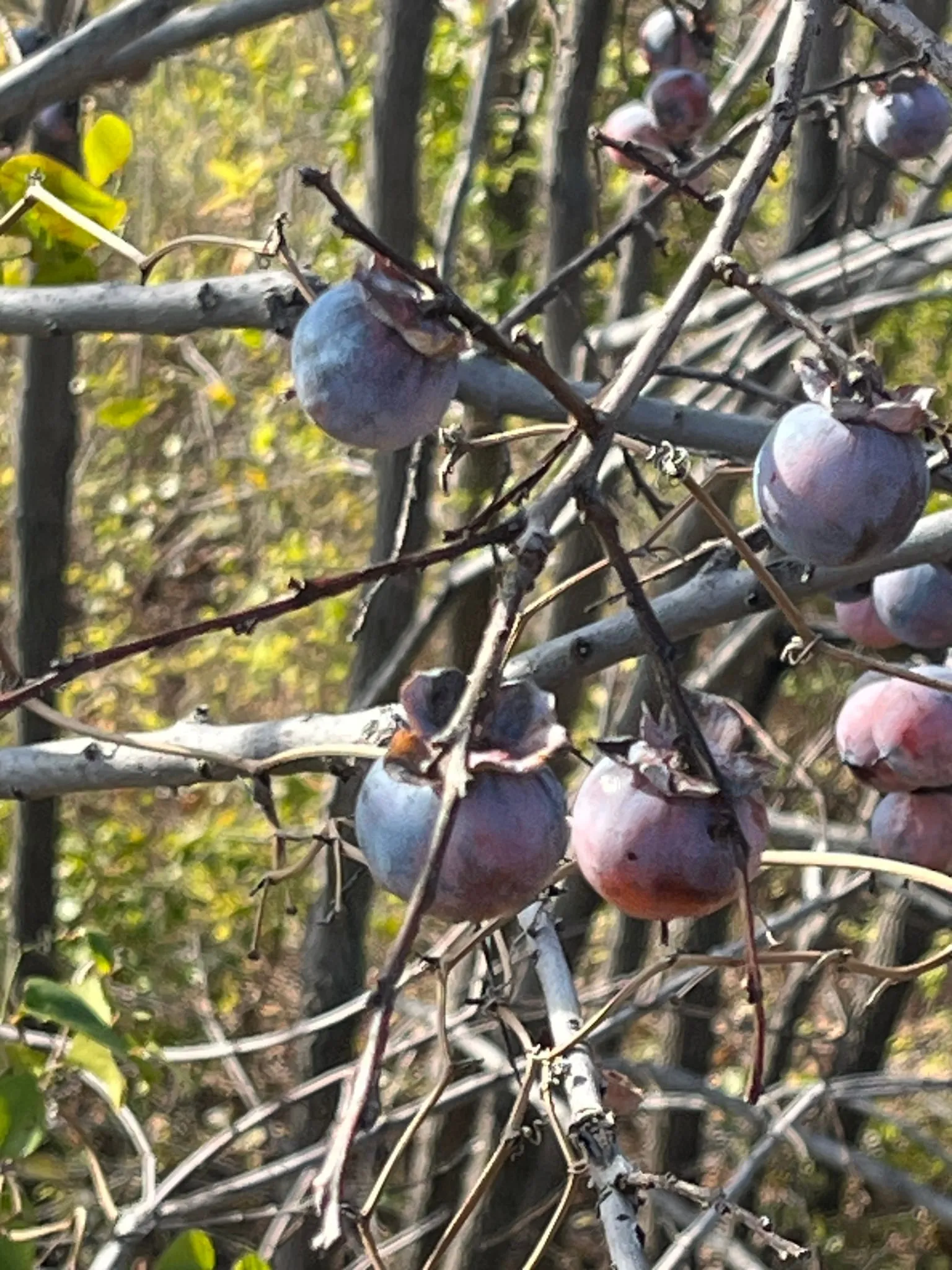
fruit tree
American Persimmon
Diospyros virginiana
USDA hardiness range
- Zones
- 4b–9a
- Chill hours
- 100 to 400 below 45°F
- Days to harvest
- 180 to 240
- Sun
- Full
- Water
- Low
- Lifespan
- 60 to 80 years
Growing american persimmon
American persimmon (Diospyros virginiana) is one of the most cold-tolerant native fruit trees in eastern North America, reliably productive across zones 4b through 9a. The chill-hour requirement ranges from 100 to 400 hours below 45°F, which means trees adapt from the upper South through the Great Lakes without the chilling-deficit problems that affect some imported Asian persimmon varieties.
The fruit is intensely sweet and complex when fully ripe, but aggressively astringent before that point. That distinction divides growers who love the tree from those who write it off as inedible. Fully ripe fruit is very soft, with wrinkled or splitting skin and deep orange to maroon color; it pulls free with almost no resistance. Frost often accelerates softening, but properly tree-ripened fruit will reach the same state without it.
American persimmon establishes slowly in its first two years, prioritizing deep taproot development over top growth. Trees pushed hard with nitrogen before they are well-rooted tend to produce excessive vegetative growth and delayed fruiting. Once established, these trees are remarkably durable and low-maintenance, with a lifespan reaching 60 to 80 years. The 180 to 240 days required from bud break to harvest is a long season commitment, but the payoff is a fruit with essentially no significant disease pressure and only one primary pest concern.
Recommended varieties
See all 3 →3 cultivars for home growers, with notes on flavor, ripening, and disease resistance.
| Variety | Notes | Zone fit | Disease resistance |
|---|---|---|---|
| Meader | Sweet, soft, rich complex flavor reminiscent of dates and apricot when fully ripe; eat soft only, astringent until then. Fresh, baking, drying. Self-fertile cold-hardy native selection. | | none noted |
| Yates | Very sweet, soft when ripe with intense honey flavor; fresh eating and baking (puddings, breads). Productive but needs a pollinator. | | none noted |
| Prok | Sweet, large fruit with rich flavor; fresh and baking. Reliable producer, partially self-fertile. | | none noted |
Soil and site requirements
American persimmon tolerates a broader range of soil conditions than most cultivated fruit trees. A pH between 6.0 and 6.5 is optimal, but trees grow productively in slightly acidic or mildly alkaline soils outside that range. The more critical factor is drainage: persimmon handles drought well once established (low supplemental water needs after year two), but is susceptible to root problems in persistently waterlogged ground. Sandy loams and well-structured loamy soils produce the best results; heavy clay should be avoided or substantially amended before planting.
Full sun, at least six hours of direct light daily, produces the heaviest crops and best fruit quality. Trees in partial shade will grow but typically underperform on fruit set and flavor development.
Spacing for a managed planting should be 20 to 30 feet between trees to allow air circulation and harvest access. Hedgerow or wildlife plantings can be tighter. The most important site consideration is permanence: American persimmon develops an extensive taproot that makes established trees nearly impossible to transplant successfully. Select the permanent location before planting.
In zones 4b and 5a, avoid low-lying frost pockets where late-spring freezes can damage emerging flowers. A gentle slope with good cold-air drainage reduces frost risk more reliably than any corrective measure after the fact.
Common pests
Common challenges
Three problems account for most American persimmon failures in home plantings.
The first is harvesting too early. Unripe American persimmon contains soluble tannins that produce an intense astringency making the fruit inedible. Ripe fruit is very soft, deeply colored, with skin that is often wrinkled or beginning to split. A practical test: if the fruit resists thumb pressure, it is not ready. Many growers harvest after the first hard frost, which accelerates softening, but tree-ripened fruit will eventually reach the same state without frost. Picking firm and ripening indoors rarely replicates the result.
The second is mismatched pollination. Yates requires a pollinator for reliable production. Prok is partially self-fertile but sets more heavily with a second variety nearby. Only Meader is considered reliably self-fertile, making it the safest choice for a single-tree planting. If adding Yates to an existing planting, confirm a second American persimmon (or wild seedling) is within 100 feet.
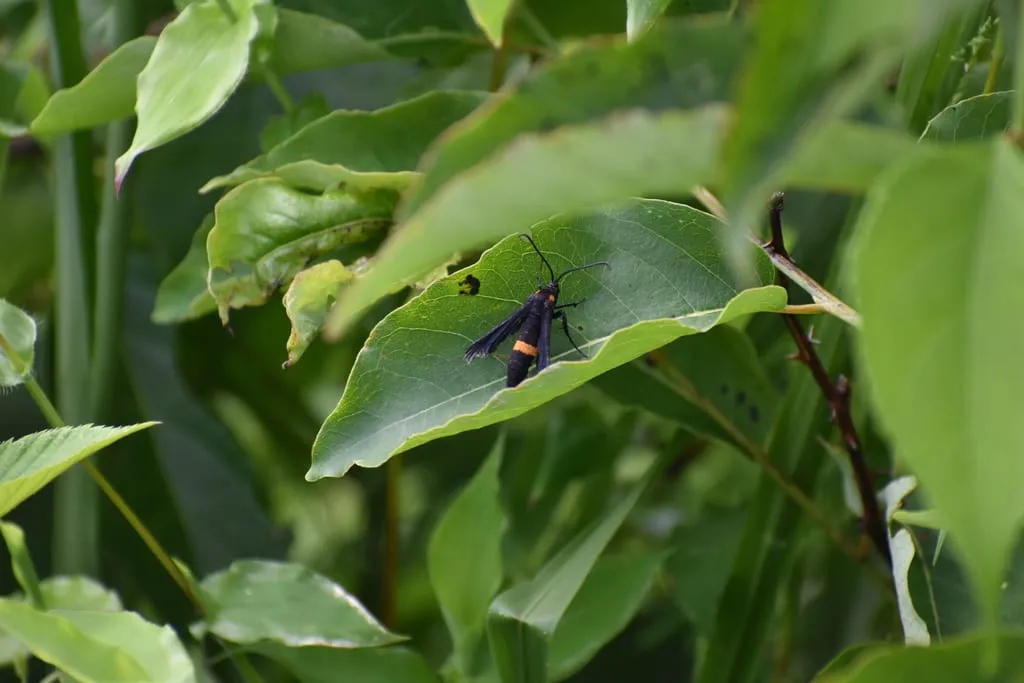
The third is persimmon borer (Sannina uroceriformis), the primary pest concern for this species. Larvae tunnel into the crown and root zone, weakening trees and occasionally killing young plantings outright. Inspect the trunk base in late summer for frass or sap exudate. Young trees with thin bark are most vulnerable; well-established trees with intact bark generally tolerate minor infestations without significant crop loss.
Companion plants
Frequently asked questions
- How many chill hours does American persimmon require?
American persimmon requires 100 to 400 chill hours (hours below 45°F), one of the widest tolerance ranges among temperate fruit trees. This flexibility is why the species grows reliably from zone 4b through zone 9a without the bloom-timing problems that affect higher-chill varieties planted in warmer climates.
- How long does it take American persimmon to produce fruit?
From bud break to harvest, American persimmon requires 180 to 240 days. Most harvests fall in October through November in zones 5 through 7. Grafted named varieties typically begin bearing in three to five years; seedlings can take considerably longer.
- What USDA zones does American persimmon grow in?
American persimmon is reliably productive in zones 4b through 9a. Zone 4b represents the practical northern limit, where the long season requirement (180 to 240 days) can be more of a constraint than cold hardiness. At the warm end, low chill-hour needs (as low as 100 hours) allow the species to perform where most other stone and pome fruits struggle.
- Does American persimmon need a pollinator?
It depends on the variety. Meader is self-fertile and the best single-tree choice for a small yard. Prok is partially self-fertile but produces more reliably with a second tree nearby. Yates requires a pollinator for consistent crops. Planting at least two named varieties, or keeping a wild seedling within 100 feet, is the safest approach wherever space allows.
- Why is American persimmon fruit so astringent before it is ripe?
Unripe American persimmon contains high concentrations of soluble tannins. These break down only when the fruit reaches full physiological ripeness, indicated by very soft texture, wrinkled or splitting skin, and deep color. Any firmness is a reliable indicator the fruit is not yet ready. Frost accelerates the process but is not required if fruit is left to ripen fully on the tree.
- What is the main pest concern for American persimmon?
Persimmon borer (Sannina uroceriformis) is the primary pest. Larvae tunnel into the crown and root zone, most destructively on young trees. Check the base of the trunk in late summer for frass or sap exudate. Relative to other fruit trees, American persimmon has very few pest and disease problems overall.
- How long does an American persimmon tree live?
American persimmon is a long-lived tree with a typical lifespan of 60 to 80 years under good growing conditions. Slow establishment in the first two years is followed by decades of reliable production with minimal inputs once the deep taproot system is fully developed.
+−
+−
+−
+−
+−
+−
+−
Sources
Image: "Diospyros virginiana 450936388", by pynklynx, via Wikimedia Commons, licensed under CC0. Source.

American Persimmon by zone
Related