Grafting pair
excellent compatibilityBing
on Mazzard rootstock
- Compatibility
- Excellent
- Tree size
- Standard
- Mature height
- 20–30 ft
- Crop
- Sweet Cherry
Compatibility and disease notes
Mazzard (Prunus avium seedling) is the standard sweet cherry rootstock. Vigorous, deep-rooted, tolerates a wide range of soils.
Overview
Bing on Mazzard is the traditional pairing for standard sweet cherry production in North America. Mazzard (Prunus avium seedling) brings a deep, anchoring root system and broad soil tolerance, from well-drained loams to the heavier clay soils that would stress more sensitive rootstocks. The resulting tree is vigorous and long-lived, reaching 20 to 30 feet at maturity, making it the right choice for growers who have the space and patience for a productive full-size orchard tree.
The combination performs best in the Pacific Northwest, Great Lakes, and Northeast, where cool, moist springs support successful graft take and summer heat accumulates the sugar load Bing is known for. Commercial orchards in the Willamette Valley and western Michigan have grown Bing on Mazzard for generations, making it one of the most thoroughly documented sweet cherry pairings available. The WSU Cherry Rootstock Guide rates the combination as excellent for compatibility and long-term productivity.
Home orchardists who want a single long-term tree rather than a managed high-density system will find this pairing rewarding, though the eventual tree size demands thoughtful site selection from the start.
Best regions
Step-by-step grafting guide
Dormant grafting in late winter (late February through March in zones 6 to 8) produces the best results for Bing on Mazzard. The window is after the coldest temperatures have passed but before rootstock buds break. Scion wood should be collected while fully dormant, ideally in January or early February, and stored wrapped in slightly damp paper towels inside a sealed plastic bag in a refrigerator at 34 to 38 degrees F until grafting time.
Whip-and-tongue graft is the standard approach when scion and rootstock are close in diameter (3/8 to 3/4 inch). Make a smooth, angled cut of approximately 1.5 inches on both pieces, then cut interlocking tongues to stabilize the union under tension. Align the cambium layers on at least one side, ideally both. Wrap the union tightly with grafting tape or budding rubber to exclude air and hold alignment. Cover the entire union and wrap up over the top of the scion cut.
For rootstock stems over 1 inch in diameter, a cleft graft is more reliable. Split the rootstock straight down the center 1.5 to 2 inches, insert two scions with cambium aligned on the outer edge of each split face, and seal immediately with grafting wax or parafilm.
Success criteria: scion buds begin to swell and push new growth within 4 to 6 weeks. Do not disturb the wrapping until growth is clearly established, typically 6 to 8 weeks after grafting. Remove any rootstock suckers flush with the stem as soon as they appear.
Common failure modes
Three failure modes account for most losses with Bing on Mazzard.
Poor cambium alignment is the most common. Sweet cherry calluses more slowly than apple or pear, which leaves a wider window for desiccation before the union seals. Even a slight offset between the green cambium layers on scion and rootstock dramatically reduces take rate. This is the leading cause of failure in novice grafts and is worth taking extra time to get right.
Bacterial canker (Pseudomonas syringae) poses a significant risk in wet-spring regions. Mazzard is susceptible, and the pathogen enters readily through fresh graft wounds left exposed to rain. In the Pacific Northwest especially, grafting under cover and sealing wounds immediately after cutting reduces incidence. An established infection can kill the scion, the rootstock, or both.
Rootstock suckering is the third persistent issue. Mazzard is a vigorous species and will send up suckers from below the graft union throughout the growing season. Left unchecked, they shade and eventually outcompete the Bing scion. Remove them flush with the rootstock bark as soon as they appear.
Sources
Related
Related grafts
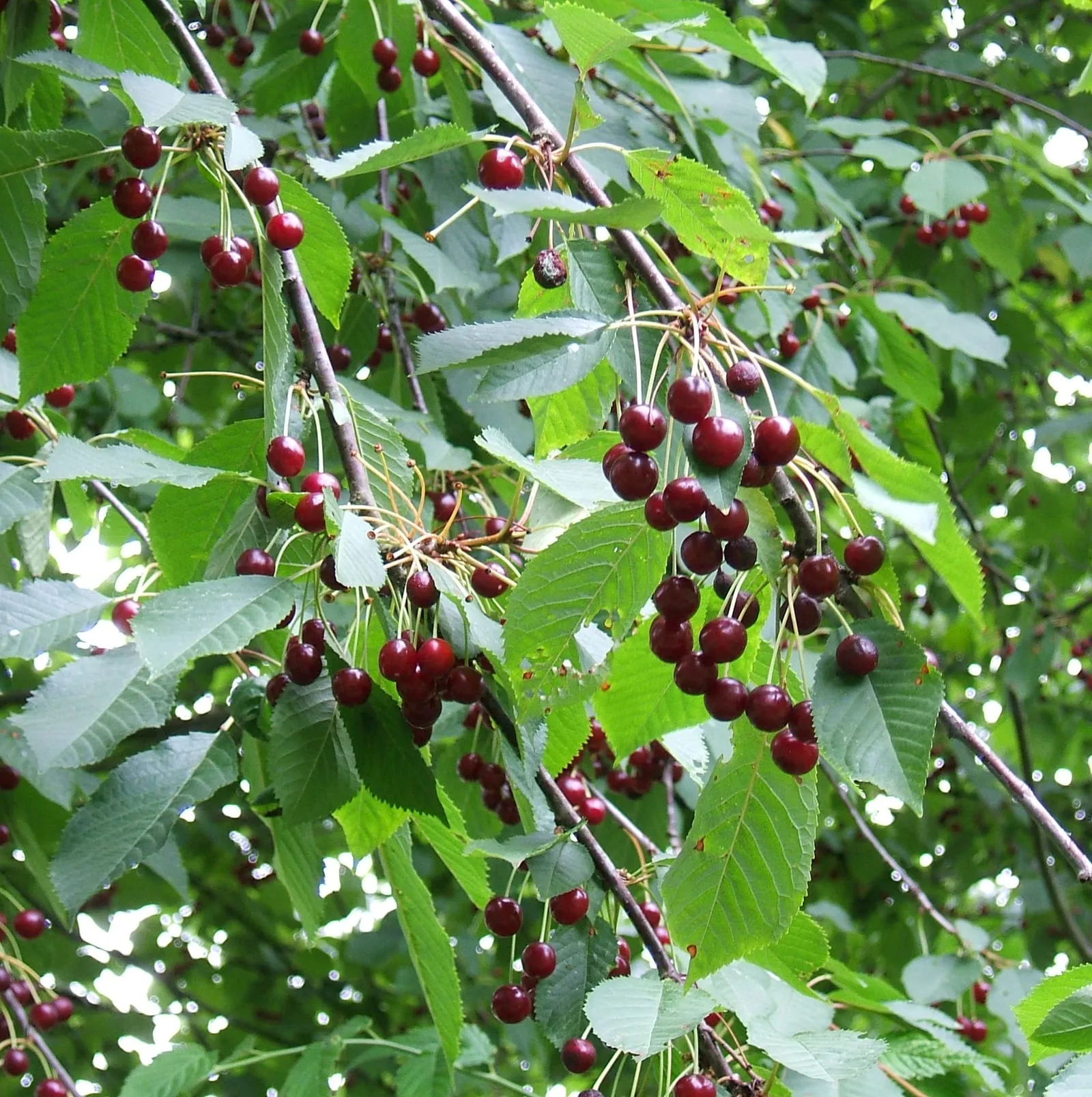
Image: "Prunus avium fruit", by MPF, via Wikimedia Commons, licensed under CC-BY. Source.
