vegetable in zone 3b
Growing asparagus in zone 3b
Asparagus officinalis
- Zone
- 3b -35°F to -30°F
- Growing season
- 100 days
- Suitable varieties
- 2
- Days to harvest
- 730 to 1095
The verdict
Asparagus is a strong candidate for zone 3b, and in some respects the climate is a better fit than many gardeners expect. Established crowns are hardy to around -40°F, so the zone's winter lows of -35°F to -30°F fall within the crop's tolerance range. Cold winters are not a threat here; they are a requirement. Asparagus needs a sustained dormancy period to perform well, and zone 3b delivers that reliably.
The real constraint is the 100-day growing season. Asparagus fern must accumulate enough photosynthate each summer to fuel the following year's spear production, and a compressed season limits how much canopy time crowns get. Growers need to be disciplined about ending harvest early enough to let ferns run fully before frost. Jersey Knight and Mary Washington are both well-matched to this climate, with Jersey Knight offering somewhat better disease resistance against Fusarium Wilt, which can persist in poorly drained soils.
Recommended varieties for zone 3b
2 cultivars suited to this zone, with disease-resistance and zone-fit annotations.
| Variety | Notes | Zone fit | Disease resistance |
|---|---|---|---|
| Jersey Knight fits zone 3b | Tender, sweet, large green spears; all-male hybrid. Steamed, grilled, roasted, fresh. Productive male hybrid puts energy into spears not seeds. Disease-resistant Rutgers release. | | none noted |
| Mary Washington fits zone 3b | Mild, classic asparagus flavor; thin to medium green spears. Heritage 1949 USDA release. Productive open-pollinated, has both male and female plants (some seed-set reduces yield). | | none noted |
Critical timing for zone 3b
Spear emergence in zone 3b typically begins in late May to early June, once soil temperatures at crown depth reach around 50°F. The last frost can fall anywhere from mid-May to early June depending on the specific site, so a late cold snap is a realistic risk during peak emergence. Spears exposed to a hard freeze at this stage sustain tip damage but usually recover from lower portions of the spear.
A practical harvest window in zone 3b runs roughly four to six weeks, ending by late June in most years. Cutting must stop earlier than growers in warmer zones would, leaving adequate time for fern growth before the first fall frost. Sites with a south-facing aspect and good air drainage will see earlier emergence and a somewhat longer usable window.
Common challenges in zone 3b
- ▸ Short season
- ▸ Winter desiccation
- ▸ Site selection critical for fruit trees
Disease pressure to watch for
Modified care for zone 3b
Winter desiccation is the most underappreciated threat in zone 3b. Applying 4 to 6 inches of straw mulch over the crowns after the ferns die back protects against freeze-thaw cycles and drying winds. Remove the mulch gradually in spring as spears begin to push.
Fusarium Wilt pressure makes drainage non-negotiable. Raised beds or a naturally sloped site are strongly preferred; low spots where water pools in spring are the wrong location regardless of variety selection.
Because the growing season is only around 100 days, the post-harvest fern phase is proportionally short. Resist harvesting into July. Crowns that do not accumulate sufficient carbohydrate reserves over summer will produce thin, weak spears the following spring, and recovery in a cold climate is slow. Fertilize with a balanced application after harvest ends rather than in spring, when soil in zone 3b is often still cold enough to limit uptake.
Frequently asked questions
- Can asparagus crowns survive zone 3b winters without extra protection?
Established crowns can tolerate temperatures to around -40°F, so zone 3b winters are within the crop's hardiness range. That said, winter desiccation from drying winds is a real risk. A 4 to 6 inch straw mulch applied after fern die-back significantly reduces crown damage without trapping excess moisture.
- Which asparagus variety performs better in zone 3b, Jersey Knight or Mary Washington?
Both are cold-hardy enough for zone 3b. Jersey Knight generally shows better resistance to Fusarium Wilt, which is worth considering in heavier or lower-lying soils. Mary Washington is widely available and performs reliably, but it carries more Fusarium susceptibility than the Jersey hybrids.
- How many years before a zone 3b asparagus bed produces a full harvest?
The standard recommendation is to wait three years from crown planting before taking a full harvest. In zone 3b's short season, some growers extend light harvesting in year three rather than pushing hard, on the rationale that crowns need maximum fern time to build reserves in a compressed climate.
- When should harvest stop in zone 3b?
End harvest by late June in most zone 3b locations. Ferns need at minimum eight to ten weeks of growth before the first fall frost to adequately recharge crowns. Harvesting too late is one of the most common reasons zone 3b asparagus beds decline after a few productive years.
+−
+−
+−
+−
Asparagus in adjacent zones
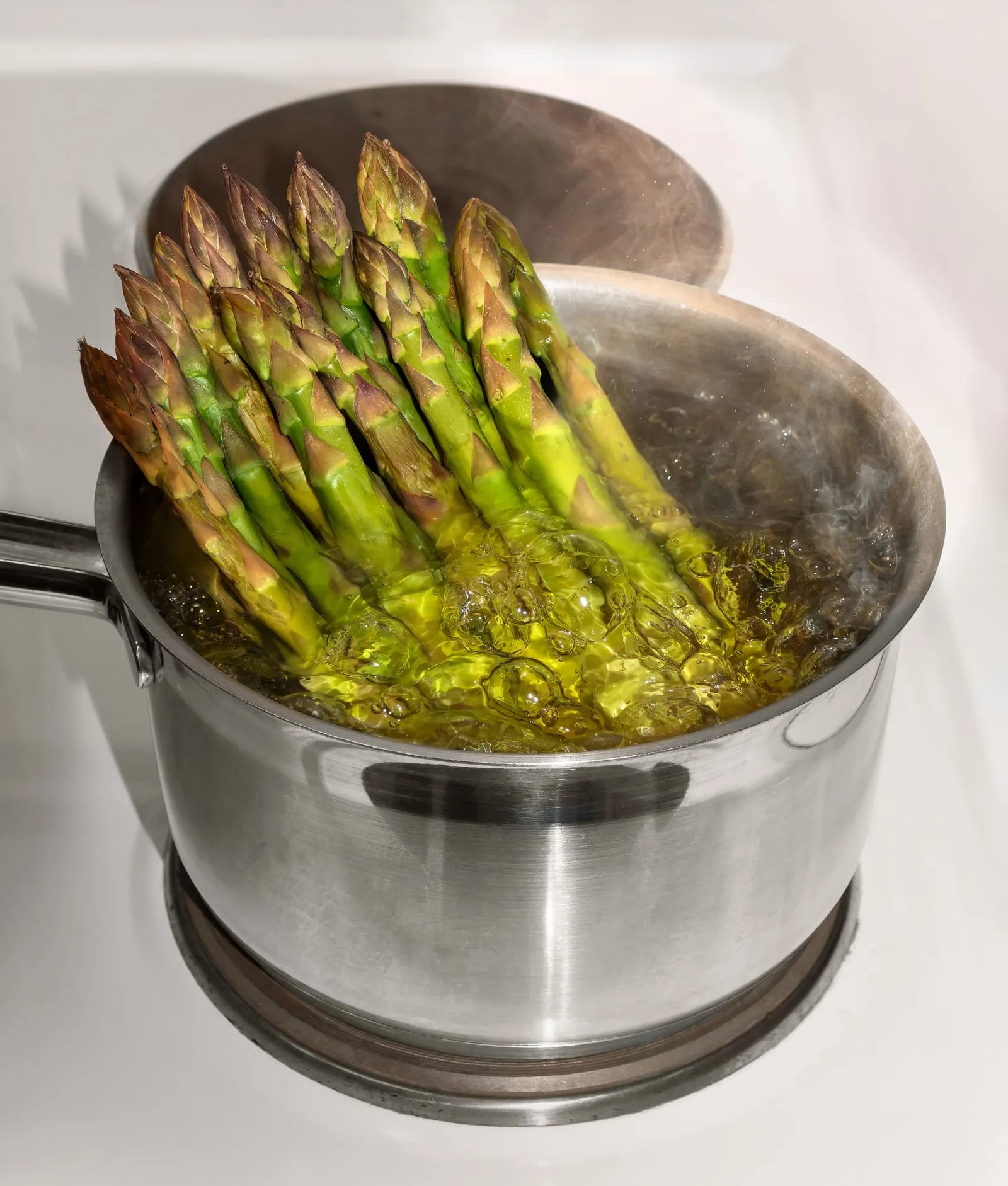
Image: "Steam-boiling green asparagus", by W.carter, via Wikimedia Commons, licensed under CC0 Source.

Related