vegetable in zone 5b
Growing asparagus in zone 5b
Asparagus officinalis
- Zone
- 5b -15°F to -10°F
- Growing season
- 165 days
- Suitable varieties
- 3
- Days to harvest
- 730 to 1095
The verdict
Zone 5b is a strong fit for asparagus, not a marginal one. Asparagus is a cold-hardy perennial that requires genuine winter dormancy to perform well the following spring, and the zone's minimum temperatures of -15°F to -10°F are well within the range established crowns can tolerate when mulched adequately. Zones 4 through 7 represent the core of asparagus production in North America; zone 5b sits near the center of that band.
The 165-day growing season is more than sufficient for fern development after the harvest window closes. That post-harvest fern stage is what rebuilds carbohydrate reserves in the crown and drives the following spring's production, so having five to six months between last harvest and first frost matters.
Jersey Knight and Mary Washington are both bred for cold climates and carry solid resistance to Fusarium wilt, the disease most likely to shorten a bed's productive life in this zone. Purple Passion performs well in zone 5b but benefits more from consistent fall mulching than the green varieties do.
Recommended varieties for zone 5b
3 cultivars suited to this zone, with disease-resistance and zone-fit annotations.
| Variety | Notes | Zone fit | Disease resistance |
|---|---|---|---|
| Jersey Knight fits zone 5b | Tender, sweet, large green spears; all-male hybrid. Steamed, grilled, roasted, fresh. Productive male hybrid puts energy into spears not seeds. Disease-resistant Rutgers release. | | none noted |
| Purple Passion fits zone 5b | Sweet, tender, distinctive deep purple spears that turn green when cooked; higher sugar content than green types. Steamed, grilled, fresh raw on platters. Productive heritage selection. | | none noted |
| Mary Washington fits zone 5b | Mild, classic asparagus flavor; thin to medium green spears. Heritage 1949 USDA release. Productive open-pollinated, has both male and female plants (some seed-set reduces yield). | | none noted |
Critical timing for zone 5b
Asparagus spears in zone 5b typically push through once soil temperatures reach 50°F, which generally falls in mid-to-late April depending on the season and microclimate. The harvest window runs approximately six to eight weeks from first emergence, closing in late May to early June. Beds in their third year or beyond support full harvest; younger plantings should be harvested lightly or not at all to avoid depleting crowns before they are fully established.
Once harvest ends, ferns should remain standing until the first fall frost, which arrives in zone 5b roughly in mid to late October. Those ferns are functional, not ornamental: they photosynthesize through the remainder of the growing season and reload the crown with the reserves that produce next spring's spears. Cutting ferns back at or before frost is a widely repeated practice that consistently reduces the following year's yield.
Common challenges in zone 5b
- ▸ Plum curculio
- ▸ Codling moth
- ▸ Cedar-apple rust
Disease pressure to watch for
Modified care for zone 5b
Fusarium wilt is the primary disease concern for asparagus in zone 5b. The fungus persists in soil and colonizes crowns and feeder roots, particularly in beds with poor drainage or compacted subsoil. Resistant varieties, especially Jersey Knight, significantly reduce risk, but site preparation matters as much as variety selection: raised or well-drained planting areas limit the saturated conditions the pathogen favors. There is no effective in-season treatment once the fungus is established in a crown.
Winter mulching with 3 to 4 inches of straw or shredded leaves, applied after the ground freezes, moderates soil temperature swings and reduces crown heaving from freeze-thaw cycles that are common in zone 5b's transitional winters. The mulch should be pulled back in early spring before spears emerge. Ferns should be left standing through winter rather than cut at season's end; standing ferns catch snow and provide meaningful additional insulation over the crown zone.
Asparagus in adjacent zones
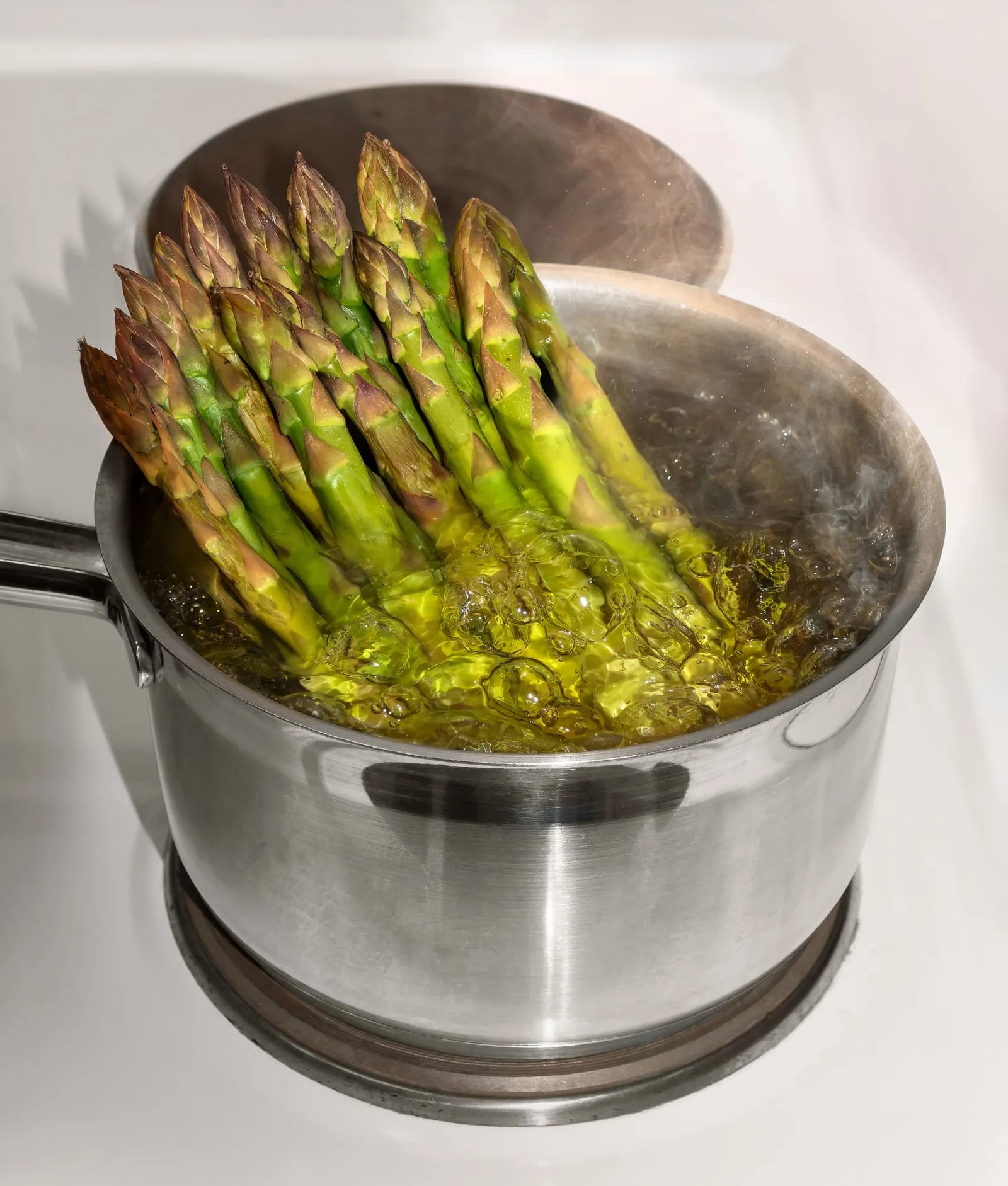
Image: "Steam-boiling green asparagus", by W.carter, via Wikimedia Commons, licensed under CC0 Source.

Related