fruit tree in zone 9b
Growing banana in zone 9b
Musa acuminata
- Zone
- 9b 25°F to 30°F
- Growing season
- 310 days
- Chill needed
- 0 below 45°F
- Suitable varieties
- 2
- Days to harvest
- 270 to 365
The verdict
Zone 9b is a genuine sweet spot for banana production in the continental United States. Bananas require zero chill hours, and zone 9b's minimum winter temperatures of 25 to 30°F sit right at the edge of what most cultivars can tolerate without significant dieback. The 310-day growing season is long enough to bring many varieties from emergence to harvest in a single cycle, provided rhizomes are established early and summers stay productive.
The main limiting factor is not cold accumulation but cold damage. A hard freeze below 28°F will kill banana foliage and can damage pseudostems to the ground, forcing the plant to regenerate from the corm. In most zone 9b locations, this happens occasionally rather than annually, so established plants with healthy corms typically recover. Varieties like Apple Banana (Manzano) and Ice Cream (Blue Java) carry better cold tolerance than the commercial Cavendish type and are the practical choices for this zone.
Recommended varieties for zone 9b
2 cultivars suited to this zone, with disease-resistance and zone-fit annotations.
| Variety | Notes | Zone fit | Disease resistance |
|---|---|---|---|
| Apple Banana (Manzano) fits zone 9b | Short fat fruit with a tangy apple-strawberry note; eaten when skin is fully blackened. Hardy and productive in marginal subtropical sites. | | none noted |
| Ice Cream (Blue Java) fits zone 9b | Silvery-blue peel and creamy vanilla flesh that earns the name; eaten fresh or frozen for soft-serve texture. Cold-hardier than most for a banana. | | none noted |
Critical timing for zone 9b
In zone 9b, bananas break dormancy and push new growth in March or April once soil temperatures climb past 60°F. Pseudostems on established clumps reach flowering stage roughly 9 to 15 months after the sucker emerges, which means plants that wake up in spring and escape frost damage can flower the following spring or summer. Fruit development from flowering to harvest typically runs 3 to 5 months depending on variety and summer heat load.
The frost risk window in zone 9b generally runs from late November through late February. Fruit set that occurs in autumn on late-emerging pseudostems can be caught by early frost before harvest. Timing new sucker selection to favor spring emergence over late-summer growth reduces that collision.
Common challenges in zone 9b
- ▸ Heat stress in summer
- ▸ Insufficient chill for most apples
- ▸ Salt spray near coasts
Disease pressure to watch for
Modified care for zone 9b
The primary adjustment in zone 9b is winter protection of the corm and lower pseudostem. Mulching the base with 6 to 8 inches of wood chips or straw before the first frost keeps soil temperatures stable and protects the corm from brief freezes that air temperatures alone would damage. Wrapping pseudostems with burlap or frost cloth during hard freeze events can preserve enough living tissue to accelerate spring recovery.
Summer heat stress is a real secondary concern, particularly in inland zone 9b locations where temperatures regularly exceed 100°F. Deep, consistent irrigation during peak heat prevents leaf scorch and pseudostem stunting. Sooty mold, which appears on honeydew left by aphids and whiteflies, tends to intensify in warm humid periods; controlling the insect pressure upstream keeps the mold problem manageable without fungicide application. Near-coastal sites should avoid planting in direct salt wind corridors, as banana foliage is noticeably salt-sensitive.
Banana in adjacent zones
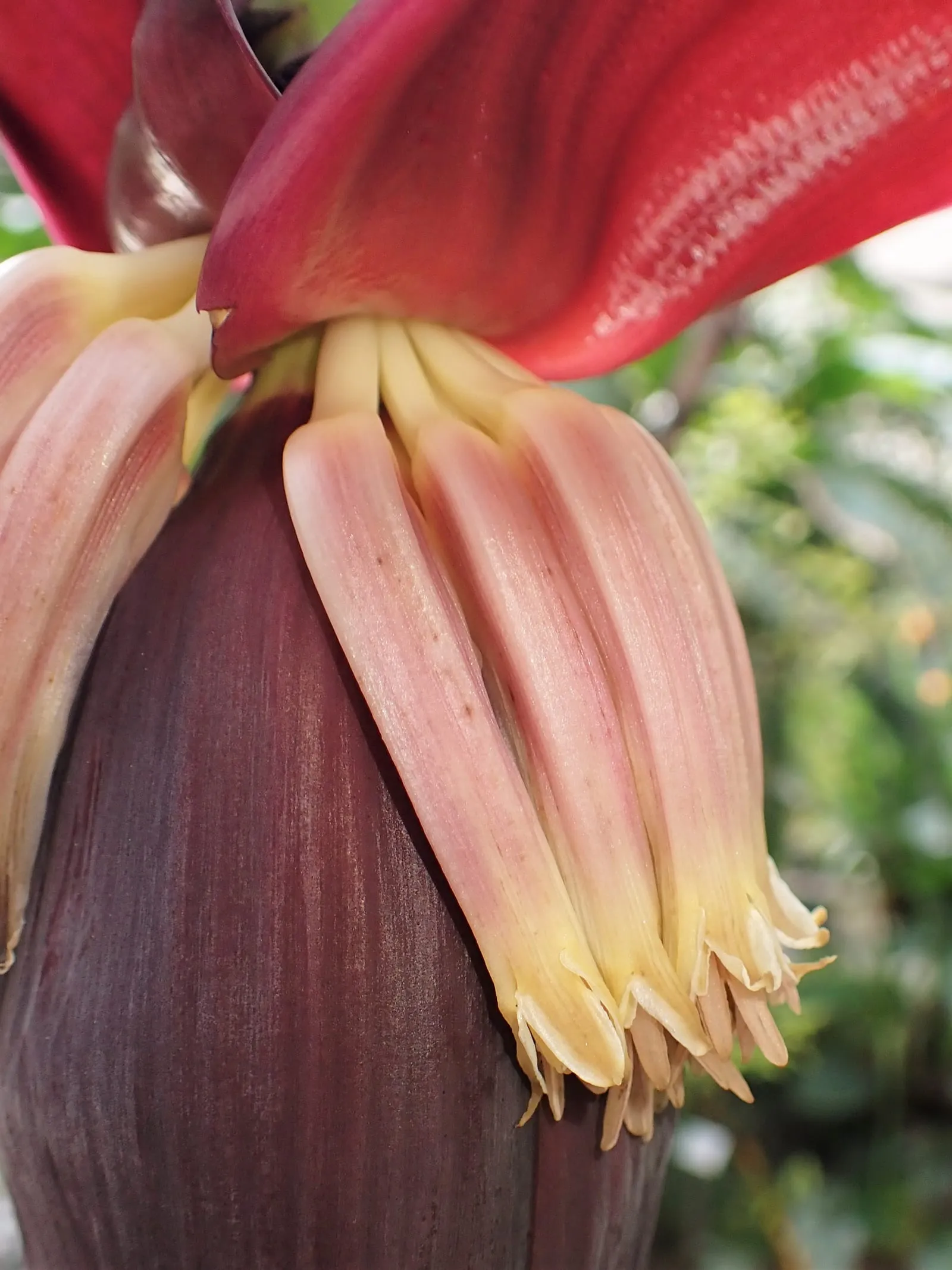
Image: "Musa acuminata kz01", by Krzysztof Ziarnek, Kenraiz, via Wikimedia Commons, licensed under CC-BY Source.

Related