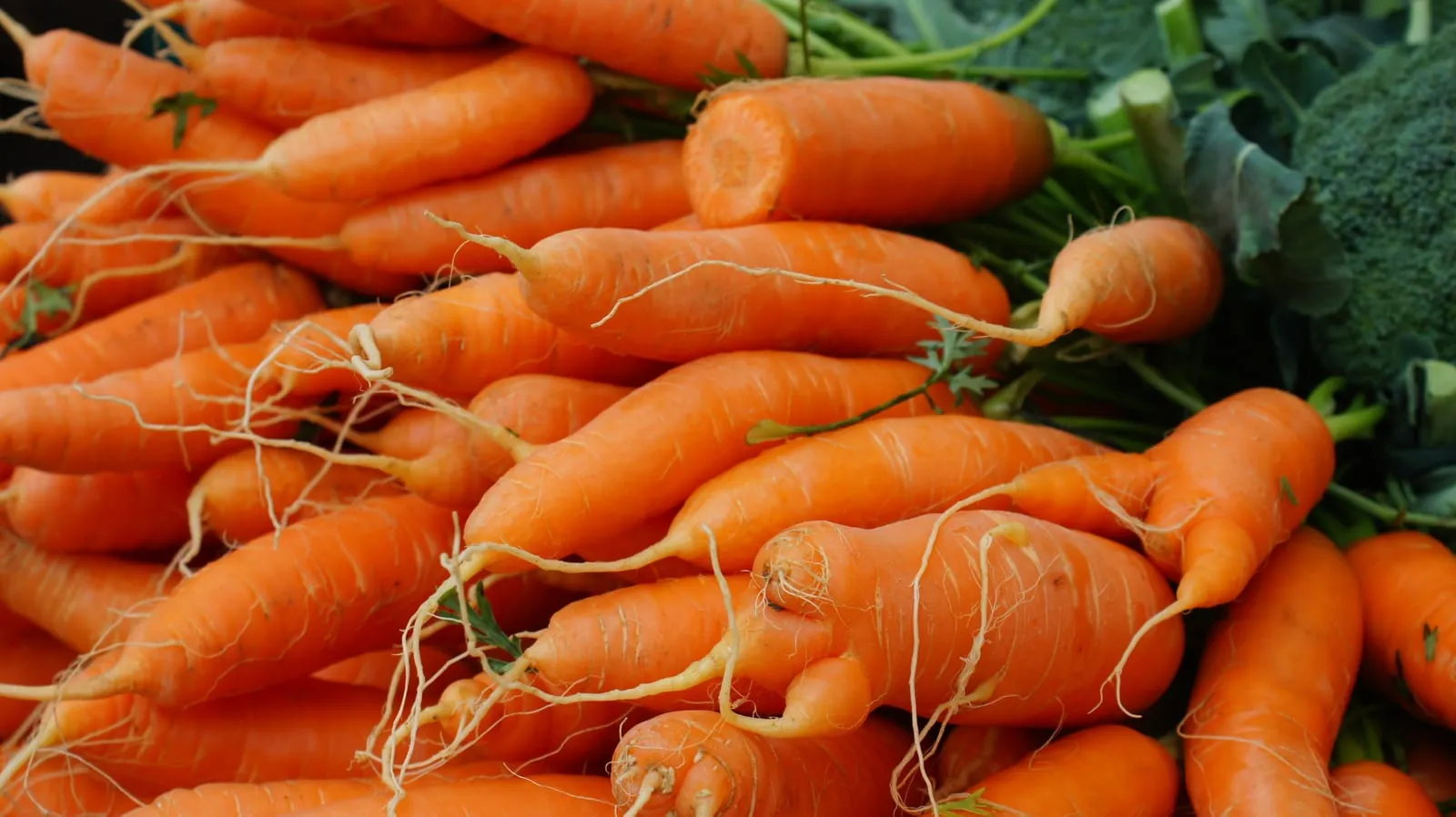
vegetable in zone 3b
Growing carrot in zone 3b
Daucus carota subsp. sativus
- Zone
- 3b -35°F to -30°F
- Growing season
- 100 days
- Suitable varieties
- 5
- Days to harvest
- 60 to 80
The verdict
Carrots are a natural fit for zone 3b growing conditions. Unlike fruit trees, carrots have no chill-hour requirement, so winter cold is not a limiting factor for variety selection. The more relevant constraint is season length: at roughly 100 frost-free days, zone 3b sits at the lower edge of what most carrot varieties need, but well within reach. Most common varieties mature in 65 to 80 days from direct seeding, which leaves a comfortable margin if seeds go in promptly after the last frost.
The varieties listed for this zone reflect sensible choices for a short-season climate. Nantes and Danvers Half Long are reliable 70-day performers. Chantenay Red Core is particularly forgiving, tolerating clay-heavy soils and producing stocky roots that finish quickly. Cosmic Purple and Atomic Red add visual interest with similar performance windows. Zone 3b is not marginal for carrots; it is well-suited, provided timing is precise.
Recommended varieties for zone 3b
5 cultivars suited to this zone, with disease-resistance and zone-fit annotations.
| Variety | Notes | Zone fit | Disease resistance |
|---|---|---|---|
| Nantes fits zone 3b | Sweet, crisp, very low bitterness; cylindrical orange roots with blunt tips. Fresh, juicing, salads, the snacking carrot standard. Heritage French variety, sweetens with frost. | | none noted |
| Danvers Half Long fits zone 3b | Sweet, slightly stronger flavor; tapered orange roots that handle heavier soil. Fresh, cooking, storage. Heritage 1870s American variety, the root-cellar standard. | | none noted |
| Chantenay Red Core fits zone 3b | Sweet, juicy, broad shoulders tapering to a stubby point; copes with shallow or rocky soil. Fresh, juicing, soups. Heritage stocky variety good for difficult soils. | | none noted |
| Cosmic Purple fits zone 3b | Sweet, mild, novelty deep purple skin with orange core; holds purple when cooked briefly. Fresh, salads. Anthocyanin-rich, ornamental, kid-friendly. | | none noted |
| Atomic Red fits zone 3b | Mild, slightly bitter raw, sweet when cooked; deep red roots that turn brighter with cooking. Roasting, soups. Lycopene-rich, novelty for color. | | none noted |
Critical timing for zone 3b
Last frost in zone 3b typically falls between mid-May and early June, depending on location and elevation. Direct sow carrots as soon as the soil can be worked and has warmed to at least 50°F, which generally aligns with that late-May window. Germination slows significantly in cold soil, so patience is warranted in early cool spells.
At 65 to 80 days to maturity, a late-May planting puts harvest in mid-August to early September, well ahead of the first fall freeze, which arrives in zone 3b as early as mid-September. A second sowing in mid-June can extend the harvest into October if desired, though roots left in the ground past a hard freeze will require mulching to prevent damage.
Common challenges in zone 3b
- ▸ Short season
- ▸ Winter desiccation
- ▸ Site selection critical for fruit trees
Modified care for zone 3b
The primary adaptation in zone 3b is timing discipline. Delaying seeding even two weeks can compress the harvest window uncomfortably close to first frost, so direct sow at the earliest opportunity after soil temperatures stabilize above 50°F.
Soil preparation matters more here than in longer-season zones. Rocky or heavily compacted soils slow root development, and with a 100-day window there is little buffer to recover from poor germination or stunted early growth. Raised beds or double-dug rows with loose, amended soil give seedlings the fastest possible start.
Winter desiccation is listed as a zone challenge, but for carrots this applies primarily to storage rather than in-ground overwintering. Roots pulled in fall store well in cool, moist conditions; do not store in conditions that allow drying. Mulching rows with 6 to 8 inches of straw in late September can extend harvest by several weeks if a light freeze arrives before roots are fully sized.
Carrot in adjacent zones
Image: "Carrots at Ljubljana Central Market", by domdomegg, via Wikimedia Commons, licensed under CC-BY Source.

Related