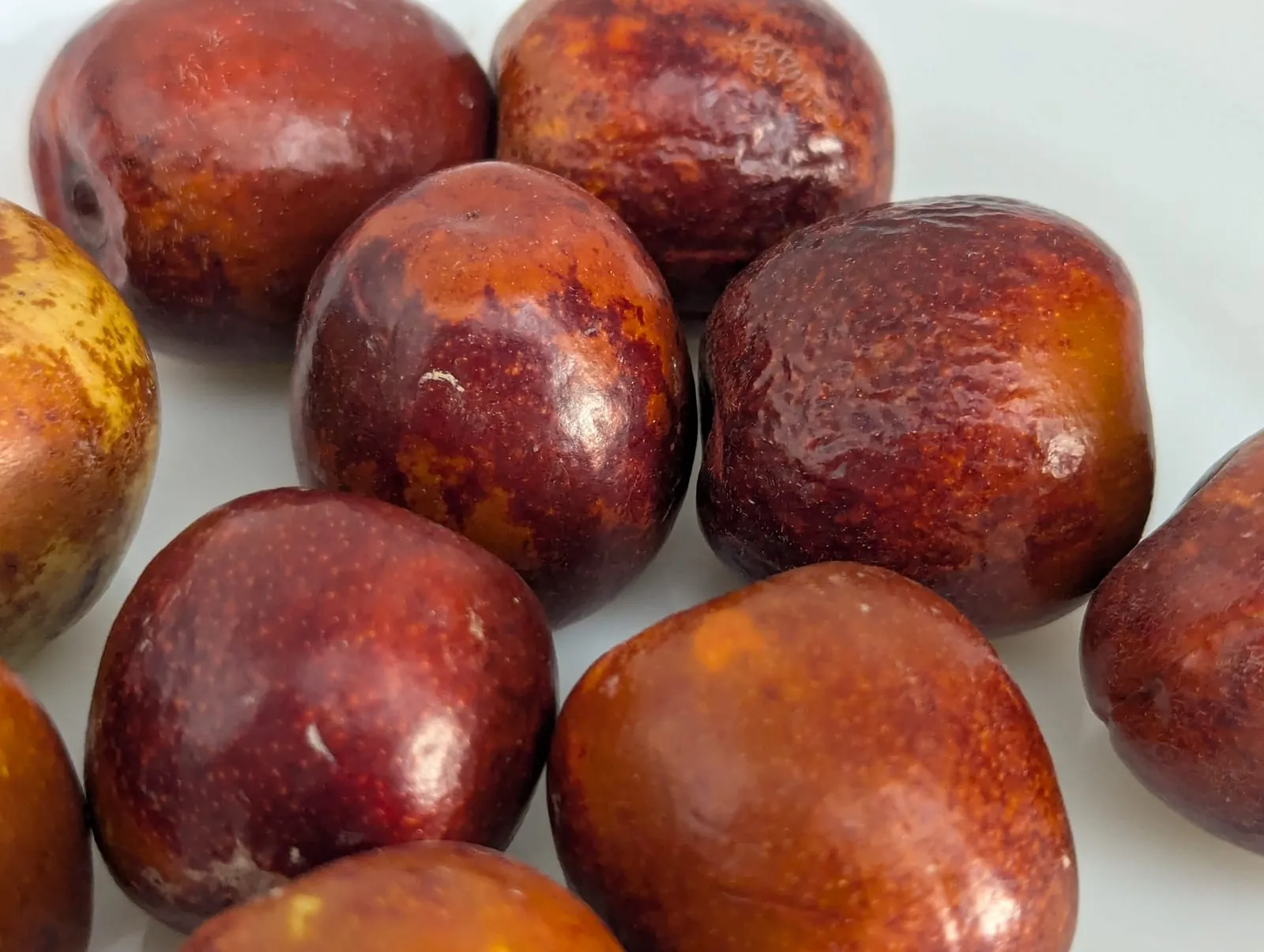
fruit tree in zone 6a
Growing jujube in zone 6a
Ziziphus jujuba
- Zone
- 6a -10°F to -5°F
- Growing season
- 180 days
- Chill needed
- 50 to 200 below 45°F
- Suitable varieties
- 4
- Days to harvest
- 150 to 200
The verdict
Zone 6a is a reliable growing zone for jujube, not a marginal one. The crop's chill-hour requirement of 50 to 200 hours is easily satisfied across zone 6a winters, and established jujube trees tolerate temperatures well below the zone's minimum of -10°F without significant dieback. The 180-day growing season provides enough heat accumulation for most varieties to ripen fully before first fall frost.
The four varieties listed for this zone, Li, Lang, Honey Jar, and Sugar Cane, are all documented performers in climates with comparable winter severity. Honey Jar tends to ripen earliest and is the safest bet for sites at the cooler, shorter end of zone 6a. Li and Lang are larger-fruited and may need a few more weeks of warmth; sites with good southern exposure and urban heat retention tend to produce better results with those two.
Overall, zone 6a sits comfortably within the jujube's productive range.
Recommended varieties for zone 6a
4 cultivars suited to this zone, with disease-resistance and zone-fit annotations.
| Variety | Notes | Zone fit | Disease resistance |
|---|---|---|---|
| Li fits zone 6a | Sweet, crisp like an apple when fresh; large round fruit. Eats out of hand, dries to a date-like sweetness. Most popular fresh-eating jujube. | | none noted |
| Lang fits zone 6a | Sweet, crisp, apple-pear flavor when fresh; pear-shaped fruit. Productive, often the pollinator for Li. Excellent fresh and dried. | | none noted |
| Honey Jar fits zone 6a | Extremely sweet, crisp, intense honey flavor; small fruit (cherry-sized). The connoisseur's jujube, prized variety, eats fresh in handfuls. | | none noted |
| Sugar Cane fits zone 6a | Very sweet, crisp, large fruit; fresh eating champion with high sugar content. Heavy producer. | | none noted |
Critical timing for zone 6a
Jujube blooms unusually late for a tree fruit, typically in June across zone 6a, well after the last spring frost dates that create problems for stone fruit and early-blooming pome fruit in the zone. This is a genuine advantage: spring frost damage to blossoms is rarely a concern.
Harvest falls from late August through October depending on variety. Honey Jar typically finishes in September. Li and Lang may need into October to reach full ripeness. In zone 6a, a first frost in mid to late October is common, so later-ripening varieties should be planted on warmer microsites to ensure they complete ripening before hard frost terminates the season.
The 180-day growing season is generally sufficient, but growers at the lower end of that range should prioritize early-ripening selections.
Common challenges in zone 6a
- ▸ Brown rot in stone fruit
- ▸ Japanese beetles
- ▸ Spring frost damage to peach buds
Modified care for zone 6a
Established jujube trees need little special handling in zone 6a. Young trees in their first winter are more vulnerable to cold injury at the graft union; a ring of mulch kept a few inches from the trunk base helps moderate soil temperature through freeze-thaw cycles in late winter.
Japanese beetles, a noted zone 6a pressure, will feed on jujube foliage in July. Defoliation from a heavy infestation can reduce fruit quality and slow hardening into fall. Hand-picking and targeted row cover during peak beetle emergence (typically two to three weeks in July) are the lowest-input responses. Avoid traps near the tree, as they attract more beetles than they capture.
No disease adjustments are required beyond standard site hygiene. Jujube is largely free of the fungal pressures that drive spray programs for stone fruit in this zone. Good airflow around the canopy is sufficient.
Frequently asked questions
- Will jujube survive zone 6a winters?
Yes. Established jujube trees tolerate temperatures below -10°F, which is the zone 6a minimum. First-year trees are more susceptible to cold injury at the graft union and benefit from light mulching in their first winter.
- Which jujube variety is best for zone 6a?
Honey Jar is the most reliable choice for zone 6a because it ripens earliest, reducing the risk that fall frost ends the season before fruit matures. Li and Lang are worth planting on warmer south-facing or urban sites where the effective season runs longer.
- Does jujube bloom early enough to risk spring frost damage in zone 6a?
No. Jujube blooms in June, well after the last spring frost dates typical of zone 6a. Late-bloom is one of the crop's consistent advantages in climates with unpredictable spring weather.
- How many chill hours does jujube need, and does zone 6a provide enough?
Jujube requires only 50 to 200 chill hours, one of the lowest requirements among deciduous fruit trees. Zone 6a winters reliably deliver far more than 200 hours, so inadequate chilling is not a concern.
+−
+−
+−
+−
Jujube in adjacent zones
Image: "Ziziphus jujuba (fruit)", by Ismael Olea, via Wikimedia Commons, licensed under CC-BY Source.
.jpg)
Related