vegetable in zone 5b
Growing onion in zone 5b
Allium cepa
- Zone
- 5b -15°F to -10°F
- Growing season
- 165 days
- Suitable varieties
- 4
- Days to harvest
- 90 to 130
The verdict
Zone 5b sits squarely in long-day onion territory, making it a reliable growing zone rather than a marginal one. The 165-day frost-free window comfortably accommodates onion development from transplant through full bulb cure, with room to spare. Long-day varieties that require 14 or more hours of daylight to initiate bulbing perform predictably here, where midsummer day lengths regularly reach 15 hours or more. Walla Walla, Yellow Sweet Spanish, Red Burgundy, and Copra are all well-matched to zone 5b conditions; Copra in particular, a high-yield storage type, performs consistently through the zone.
Onions have no chill-hour requirements in the way tree fruits do, so cold dormancy is not a factor in variety selection. The main suitability concern is timing: transplants need to go in early enough to exploit the full bulbing window before fall day length drops and triggers premature maturity. Miss the early-April transplant window and bulb size suffers noticeably, even in a sufficient season.
Recommended varieties for zone 5b
4 cultivars suited to this zone, with disease-resistance and zone-fit annotations.
| Variety | Notes | Zone fit | Disease resistance |
|---|---|---|---|
| Walla Walla fits zone 5b | Very sweet, juicy, mild; large flat-topped pale yellow onion. Fresh, salads, burgers, onion rings. Short-day storage minimal (2-3 months); eat early. Classic Pacific Northwest variety. | | none noted |
| Yellow Sweet Spanish fits zone 5b | Mildly sweet, large globes, classic golden-skinned onion; the all-purpose home-garden onion. Cooking, slicing, storage 4-6 months. | | none noted |
| Red Burgundy fits zone 5b | Sweet-mild, deep magenta rings; the classic red salad onion. Fresh, burgers, pickling, salsa. Stores 3-4 months when cured properly. | | none noted |
| Copra fits zone 5b | Pungent, dense, dependable storage onion; small to medium yellow globes. Cooking, soups, sauteing. Stores 8-10 months, the longest-keeping yellow onion for the home garden. | | none noted |
Critical timing for zone 5b
In zone 5b, onion seeds are started indoors 10 to 12 weeks before last expected frost, which falls in the late April to early May range for most of the zone. Transplants go out as soon as the soil is workable, often mid to late April, since onions tolerate light frost and benefit from early establishment. Bulbing initiates when day length reaches the variety's threshold (typically 14 to 16 hours for long-day types), which in zone 5b occurs in June.
Harvest timing depends on variety. Sweet types like Walla Walla mature in 90 to 110 days from transplant, putting harvest in July through early August. Storage types like Copra run longer, reaching maturity in August to early September. Tops falling over naturally is the reliable signal to begin the curing process before first fall frost.
Common challenges in zone 5b
- ▸ Plum curculio
- ▸ Codling moth
- ▸ Cedar-apple rust
Disease pressure to watch for
Modified care for zone 5b
The primary zone 5b adjustment is aggressive early-season establishment. Transplants set into cold, wet soil are vulnerable to slow root development and damping off; warming beds with black plastic mulch before planting can advance soil temperature by two to three weeks and meaningfully improve early vigor.
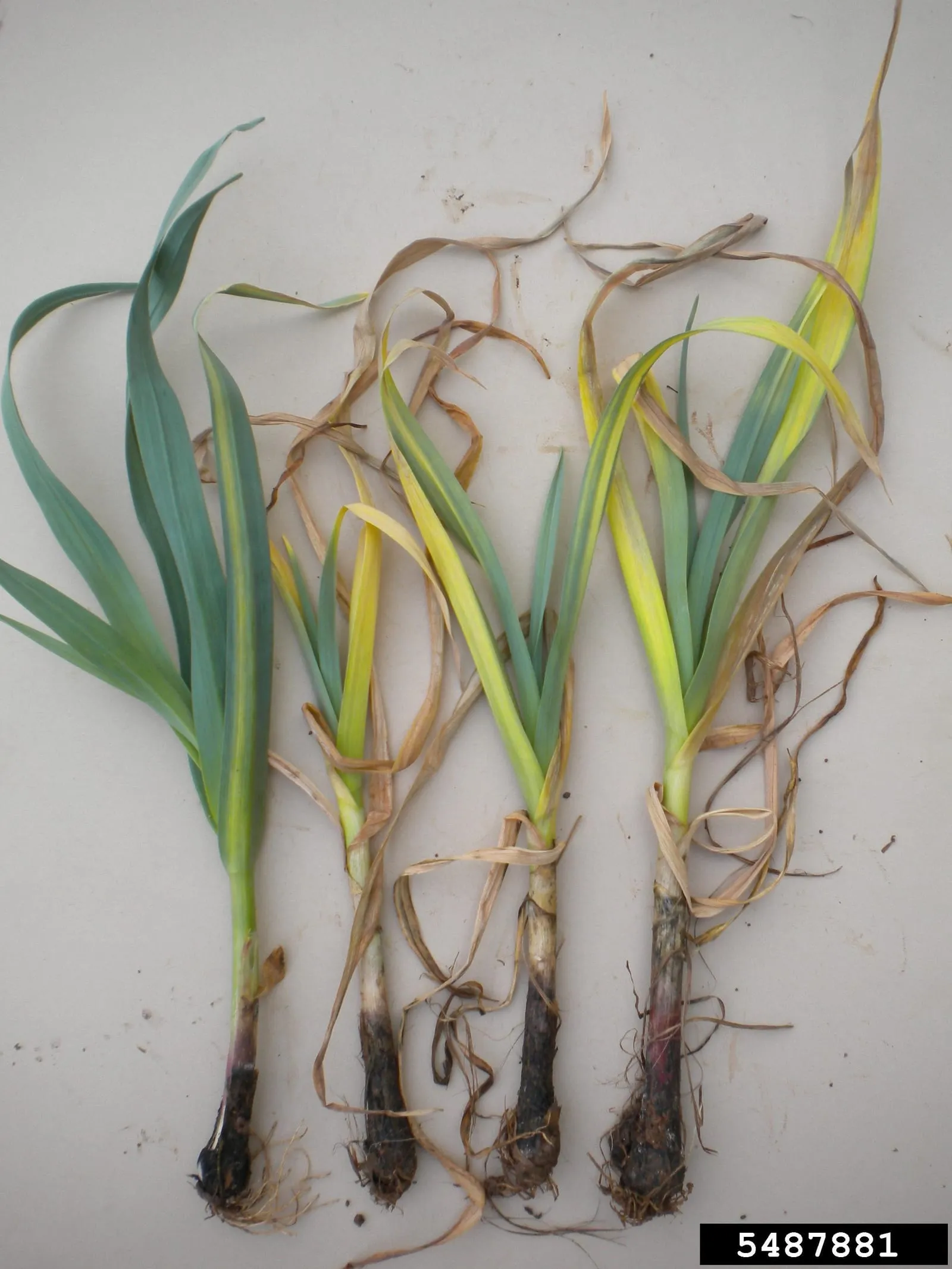
Onion White Rot (Sclerotium cepivorum) is the most consequential disease risk in this zone. The soilborne fungus persists for decades and has no cure once established. A strict four-year minimum rotation away from all alliums (onion, garlic, leek, chive) is essential. Avoid importing untrusted transplants or soil from affected beds.
Zone 5b's late-season day-length drop can push storage varieties like Copra to early maturity if transplants went in late. Hitting the mid-April transplant window is more consequential here than in longer-season zones to the south, where a few weeks of slack still produces acceptable bulbs.
Frequently asked questions
- Can onions be direct-seeded outdoors in zone 5b?
Direct seeding is possible but uncommon in zone 5b, because the seed-to-harvest window is tight for most varieties under field conditions. Starting transplants indoors 10 to 12 weeks before last frost is the standard approach and reliably produces larger bulbs than outdoor-seeded crops.
- What is the difference between Walla Walla and Copra for zone 5b growers?
Walla Walla is a sweet onion with poor storage life (2 to 4 weeks) and is best eaten fresh at harvest in July or August. Copra is a pungent yellow storage onion that keeps 6 to 9 months when properly cured, making it the better choice for extending the harvest through winter.
- How serious is onion white rot in zone 5b, and how do I prevent it?
Onion White Rot is a long-term soil threat: once present, the fungus can persist for 20 or more years with no effective chemical remediation. Prevention is the only practical tool. Rotate all alliums on a four-year minimum cycle, and source transplants only from reputable suppliers to avoid introducing the fungus.
- Do I need to mulch onions over winter in zone 5b?
Onions are an annual crop harvested before fall frost in zone 5b, so winter mulching is not applicable. Mulching during the growing season to suppress weeds and retain moisture is useful, but keep mulch pulled back from the neck of the bulb as it begins to size up.
+−
+−
+−
+−
Onion in adjacent zones
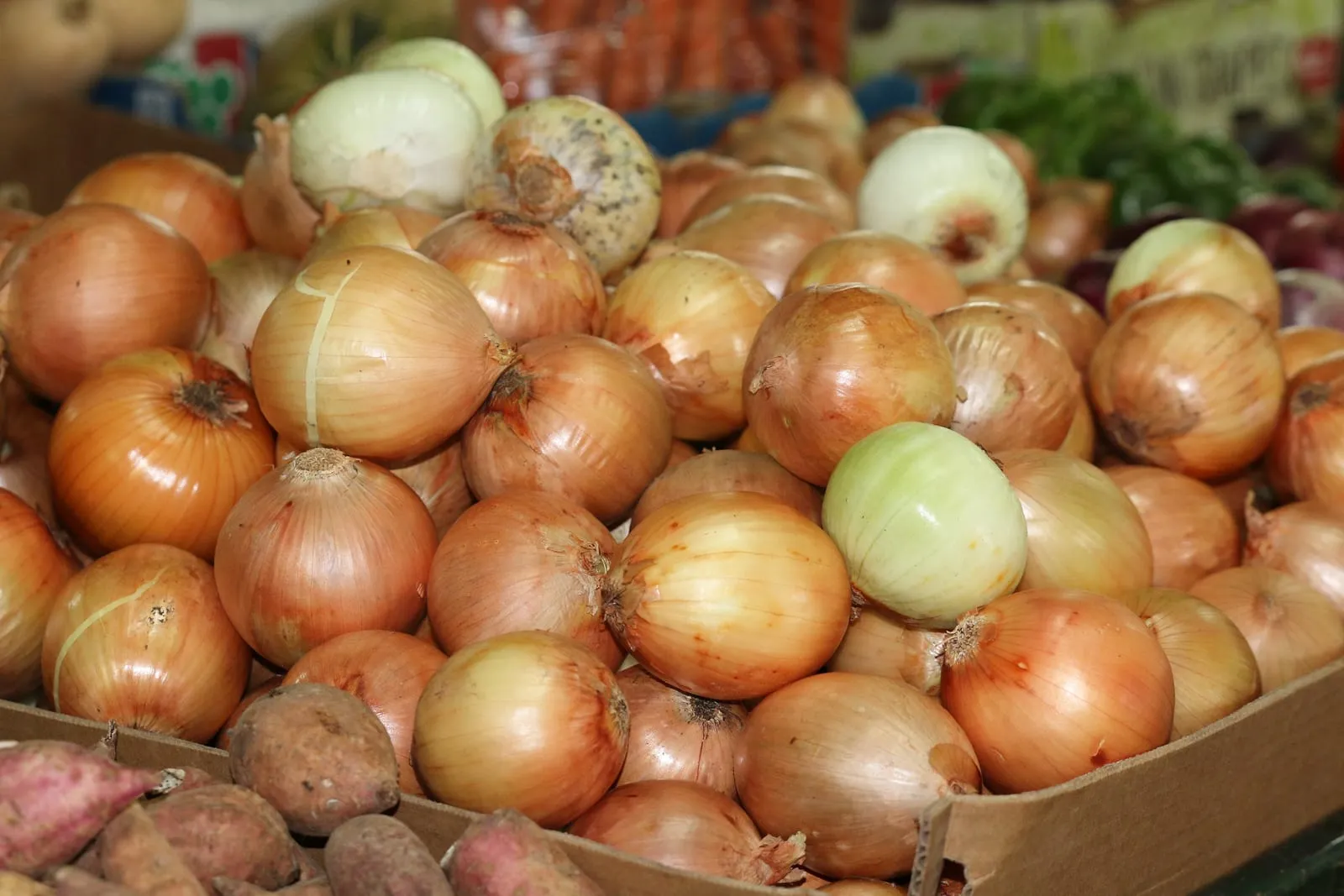
Image: "Zwiebeln auf Antigua", by CHK46, via Wikimedia Commons, licensed under CC-BY Source.

Related