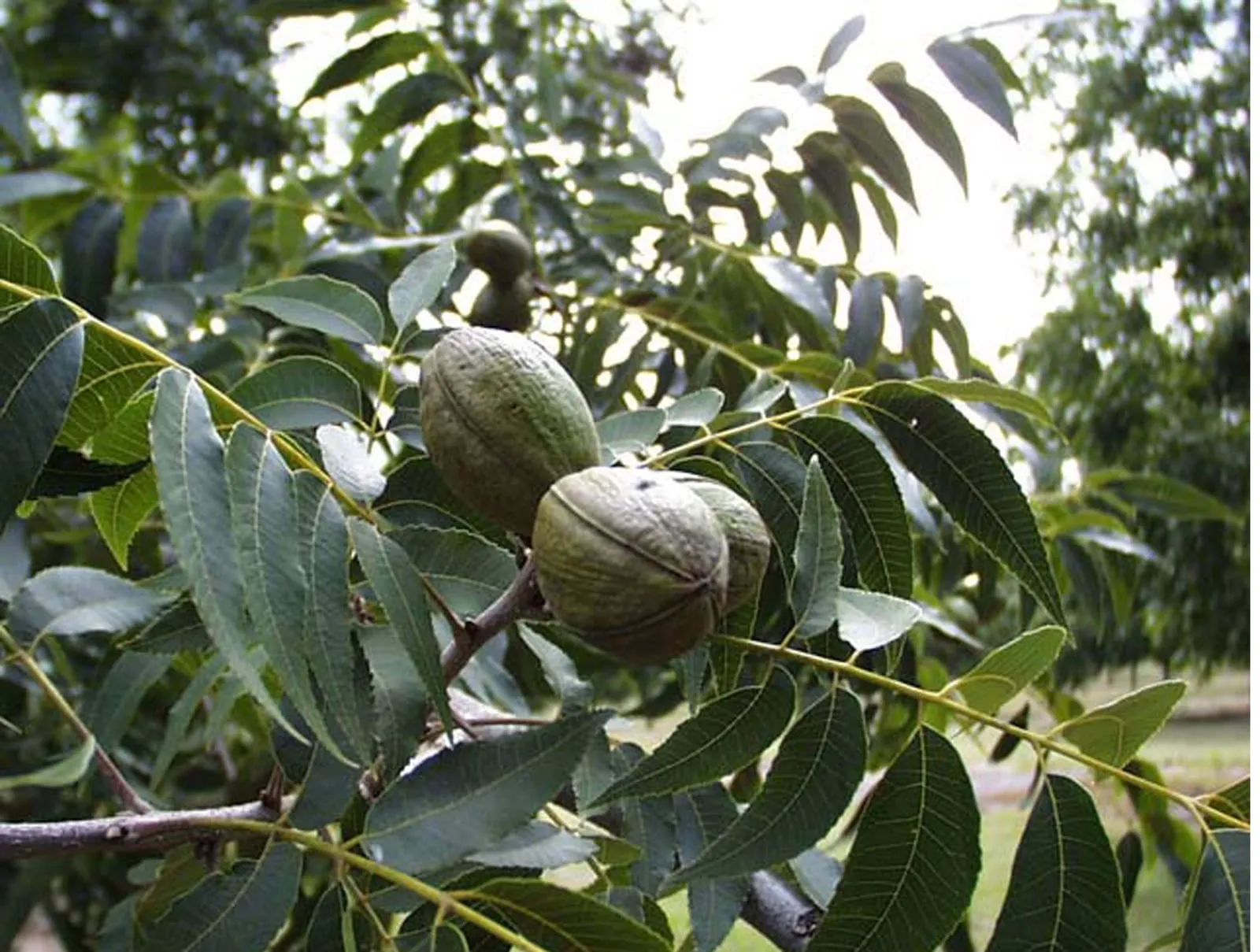
nut in zone 9a
Growing pecan in zone 9a
Carya illinoinensis
- Zone
- 9a 20°F to 25°F
- Growing season
- 290 days
- Chill needed
- 400 to 700 below 45°F
- Suitable varieties
- 2
- Days to harvest
- 200 to 260
The verdict
Zone 9a sits at the warm edge of pecan's viable range, not the sweet spot. Pecans require 400 to 700 chill hours depending on variety, and zone 9a locations typically accumulate 400 to 600 hours in most winters, with warmer years falling short. This makes variety selection the decisive factor: standard high-chill cultivars will produce erratically, but lower-chill selections bred for Gulf Coast conditions can perform reliably. Stuart and Elliott are the two varieties with documented performance in this zone. Both tolerate reduced winter chill without the poor nut fill and delayed leafout that higher-chill cultivars show when chilled inadequately.
The 290-day growing season is a genuine asset. Pecans need a long season to fill and ripen the kernel fully, and most of the range is limited by season length rather than heat. Zone 9a has no such constraint. The binding question is whether chill accumulation is consistent enough year to year to support regular crops, which varies considerably by specific location within the zone.
Recommended varieties for zone 9a
2 cultivars suited to this zone, with disease-resistance and zone-fit annotations.
| Variety | Notes | Zone fit | Disease resistance |
|---|---|---|---|
| Stuart fits zone 9a | Sweet, mild, oily; the historic Southern commercial standard, baking and shelling quality. Heavy producer at maturity but scab-susceptible in the humid Southeast. | | none noted |
| Elliott fits zone 9a | Sweet, rich, very oily; smaller nuts but premium flavor. Excellent scab resistance, the safest choice for low-spray Southern home plantings. | |
|
Critical timing for zone 9a
Pecan breaks dormancy and begins bloom in March in zone 9a, roughly two to four weeks earlier than trees in zones 7 or 8. The last frost in zone 9a typically falls between late January and mid-February, so bloom generally clears the frost window with some margin. Late cold snaps are not a persistent threat, though an unusually cold March can affect catkin development in early-leafing years.
Kernel fill runs through summer and harvest falls in October through early November for Stuart and Elliott. The combination of early bloom and a 290-day season provides enough heat accumulation to ripen both varieties fully in most years. In years with poor winter chill, delayed or uneven leafout can compress the effective ripening window slightly, which occasionally affects kernel fill percentage.
Common challenges in zone 9a
- ▸ Limited stone fruit options due to insufficient chill
- ▸ Hurricane and tropical storm exposure
- ▸ Citrus disease pressure
Disease pressure to watch for
Modified care for zone 9a
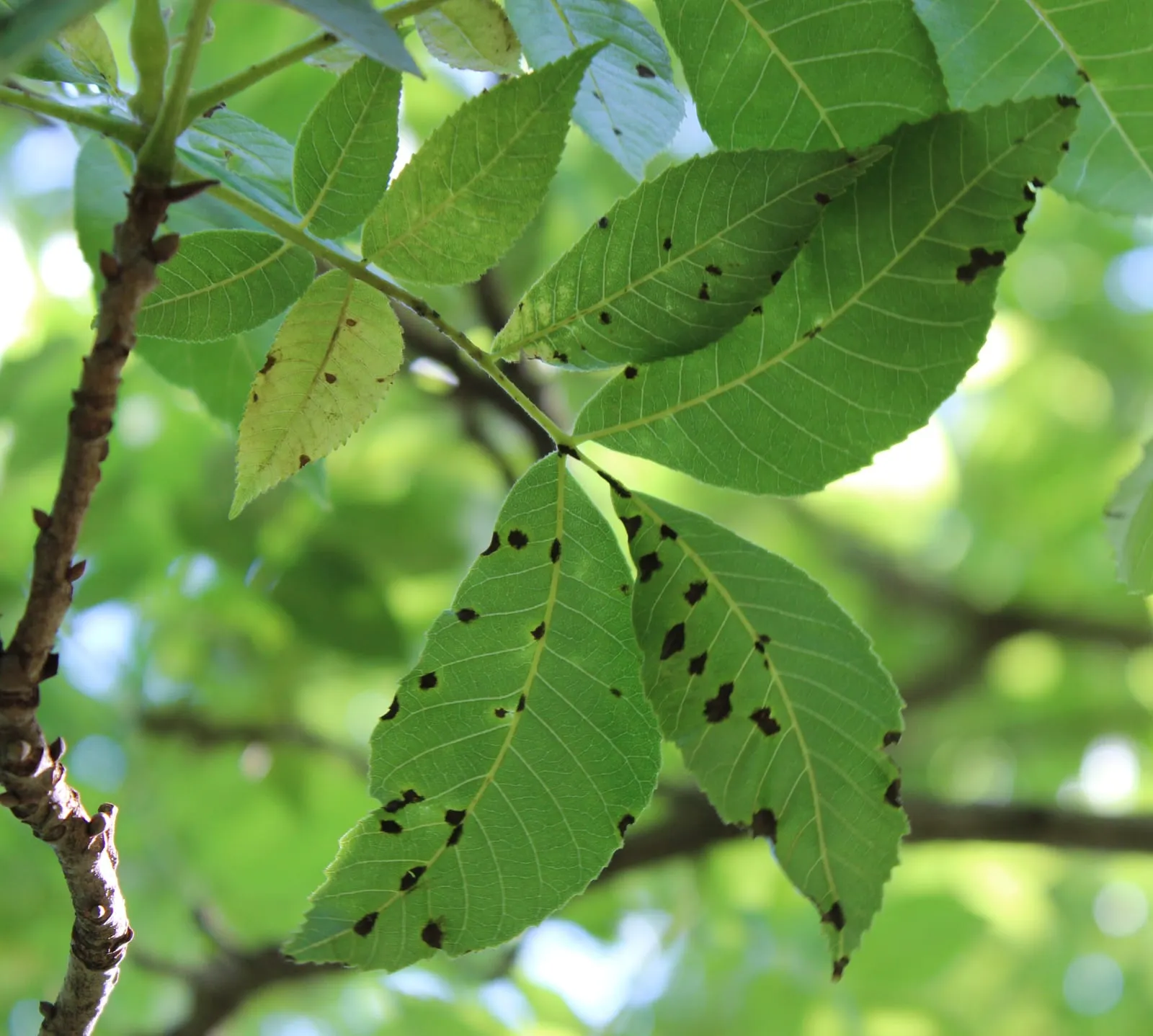
Pecan scab is the primary disease management challenge in zone 9a. The warm, wet spring conditions that characterize much of this zone create high scab pressure from bloom through shell hardening. Stuart has moderate scab susceptibility; Elliott has stronger resistance and is the lower-risk choice where scab pressure is historically severe. Fungicide applications timed to early shoot growth and continued through mid-summer are standard practice across the Gulf Coast region.
Zinc deficiency is endemic in Gulf Coast pecans on sandy or high-pH soils. Foliar zinc sprays beginning at bud break and repeated several times through midsummer are routine maintenance, not optional. Trees under zinc stress show small, mottled leaves and reduced nut size before other symptoms appear.
Hurricane and tropical storm exposure is a structural concern. Young trees benefit from staking in the first two to three seasons. Siting trees where existing windbreaks or structures buffer prevailing storm tracks reduces the risk of scaffold limb loss in mature trees.
Frequently asked questions
- Can pecans produce a reliable crop in zone 9a?
Yes, with the right variety. Stuart and Elliott are proven performers in zone 9a because they need fewer chill hours than most cultivars. In warmer winters when chill accumulation falls short of 400 hours, even these varieties may produce a reduced or uneven crop.
- How serious is pecan scab in zone 9a?
Very serious. Zone 9a's warm, humid springs create conditions where pecan scab can devastate an unprotected crop. Elliott has better resistance than Stuart. Growers without a fungicide program should prioritize Elliott or other scab-resistant selections for this zone.
- How long does it take a pecan tree to produce in zone 9a?
Most grafted pecan trees begin producing a meaningful crop in years 5 to 7 after planting. Seedling trees take considerably longer, often 10 to 12 years. The long growing season in zone 9a does not meaningfully accelerate this timeline.
+−
+−
+−
Pecan in adjacent zones
Image: "Carya illinoinensis foliagenuts", by Brad Haire, University of Georgia, USA, via Wikimedia Commons, licensed under CC-BY Source.

Related