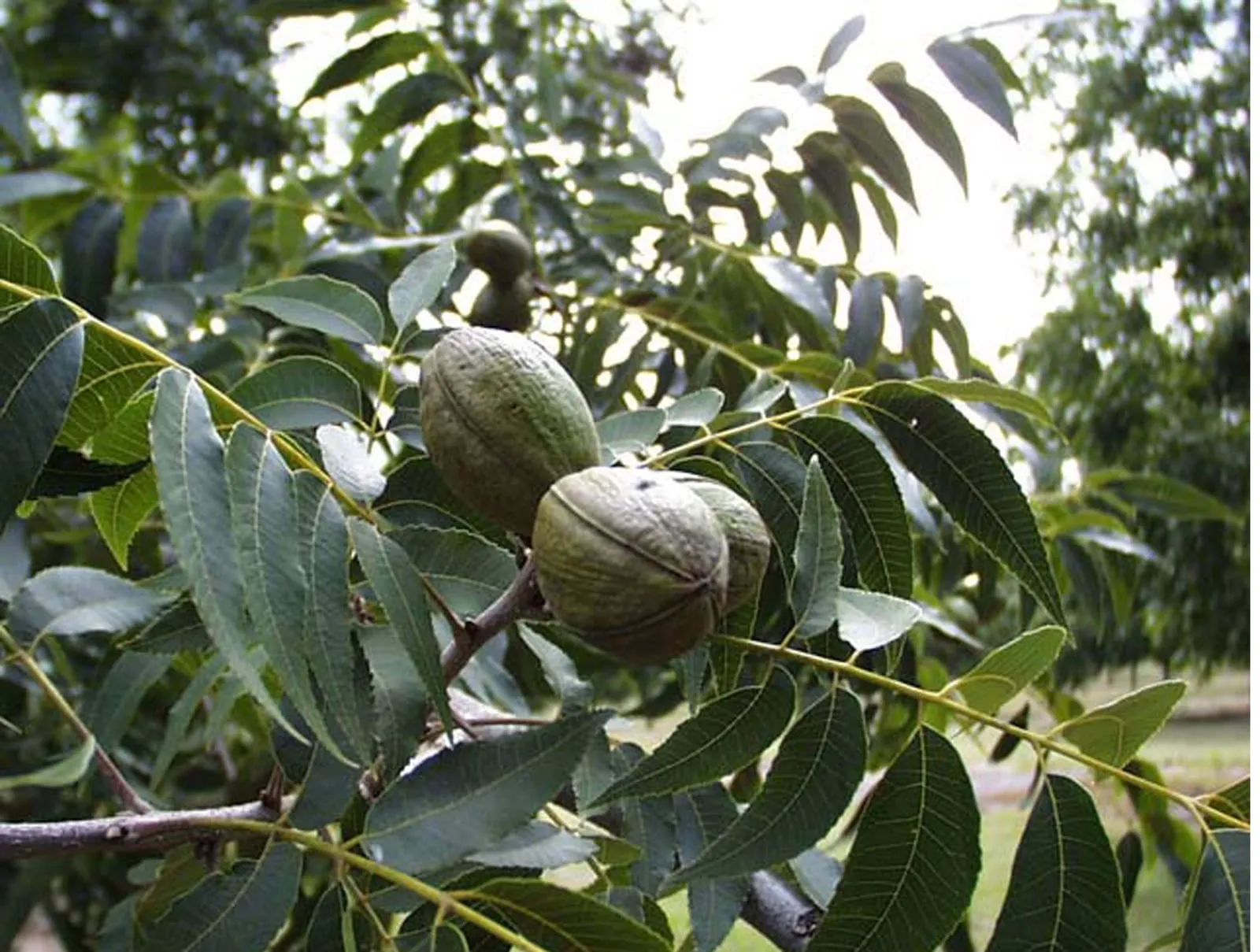
nut
Pecan
Carya illinoinensis
USDA hardiness range
- Zones
- 6a–9a
- Chill hours
- 400 to 700 below 45°F
- Days to harvest
- 200 to 260
- Sun
- Full
- Water
- Moderate
- Lifespan
- 100 to 300 years
Growing pecan
Pecan (Carya illinoinensis) is the largest member of the hickory family and one of the few tree nuts native to North America. Suited to USDA zones 6a through 9a, it performs best where hot summers provide the 200 to 260 days needed to fully develop and fill nuts. The consistent sweet spot is zones 7 through 8b, where long growing seasons, adequate heat accumulation, and 400 to 700 chill hours align well with the widest range of productive cultivars.
The species struggles at both ends of its range. In zone 6, only early-ripening Northern cultivars like Pawnee are reliable; standard Southern varieties will not mature before first frost. In the humid Southeast (zones 8 through 9), pecan scab pressure climbs sharply, and unsprayed plantings on susceptible varieties rarely produce a commercial crop.
What separates a productive planting from a failed one is typically a combination of cultivar-to-zone matching, deliberate pollination planning, and realistic expectations about timing. Pecan requires cross-pollination between Type I and Type II pollinizer trees, so at least two compatible varieties are necessary for reliable nut set. Grafted cultivars begin producing in 6 to 8 years but yield heavily only at 10 to 12. Trees grown from seed extend that timeline to 10 to 15 years before first production. Site and variety decisions made at planting shape decades of yield.
Recommended varieties
See all 5 →5 cultivars for home growers, with notes on flavor, ripening, and disease resistance.
| Variety | Notes | Zone fit | Disease resistance |
|---|---|---|---|
| Pawnee | Sweet, rich, buttery, oily; fresh, baking, pralines. Early-ripening Northern type, harvests before first frost in zone 6. Scab-resistant in northern range, productive young. | |
|
| Kanza | Sweet, oily, classic pecan flavor; baking, fresh, pies. Northern type with strong scab resistance, the recommended choice for the Midwest and upper South. Reliable cropper. | |
|
| Stuart | Sweet, mild, oily; the historic Southern commercial standard, baking and shelling quality. Heavy producer at maturity but scab-susceptible in the humid Southeast. | | none noted |
| Elliott | Sweet, rich, very oily; smaller nuts but premium flavor. Excellent scab resistance, the safest choice for low-spray Southern home plantings. | |
|
| Hardy | Sweet, mild, oily; small nuts, productive. Cold-hardiest pecan, extends the range into zone 5b sites with full-sun exposure. | | none noted |
Soil and site requirements
Pecan performs best in deep, well-drained loam or sandy loam with a pH between 6.0 and 6.5. It tolerates slight acidity but becomes zinc-deficient at pH values above 7.0, a frequent problem in the alkaline soils of the Southern Plains. Rooting depth matters: soils shallower than 4 feet restrict vigor and reduce nut fill, making shallow rocky ground or dense clay subsoils poor sites regardless of surface conditions.
Full sun is non-negotiable. At least 8 hours of direct sunlight daily is needed to ripen a full nut load; trees planted in partial shade produce significantly fewer and smaller nuts as the season progresses. Low-lying frost pockets introduce additional risk, since late spring frosts can damage emerging shoots and reduce the season's nut set even in otherwise suitable zones.
Spacing is one of the most common planning errors in home plantings. Mature pecans reach 70 to 100 feet in spread. Minimum spacing of 40 to 60 feet between trees is standard in most extension recommendations, including Oklahoma State Pecan Cultivars. Canopies that interlock suppress interior light and reduce nut production rapidly; a properly spaced planting outperforms any thinning program attempted after crowding becomes apparent.
Common diseases
Common pests
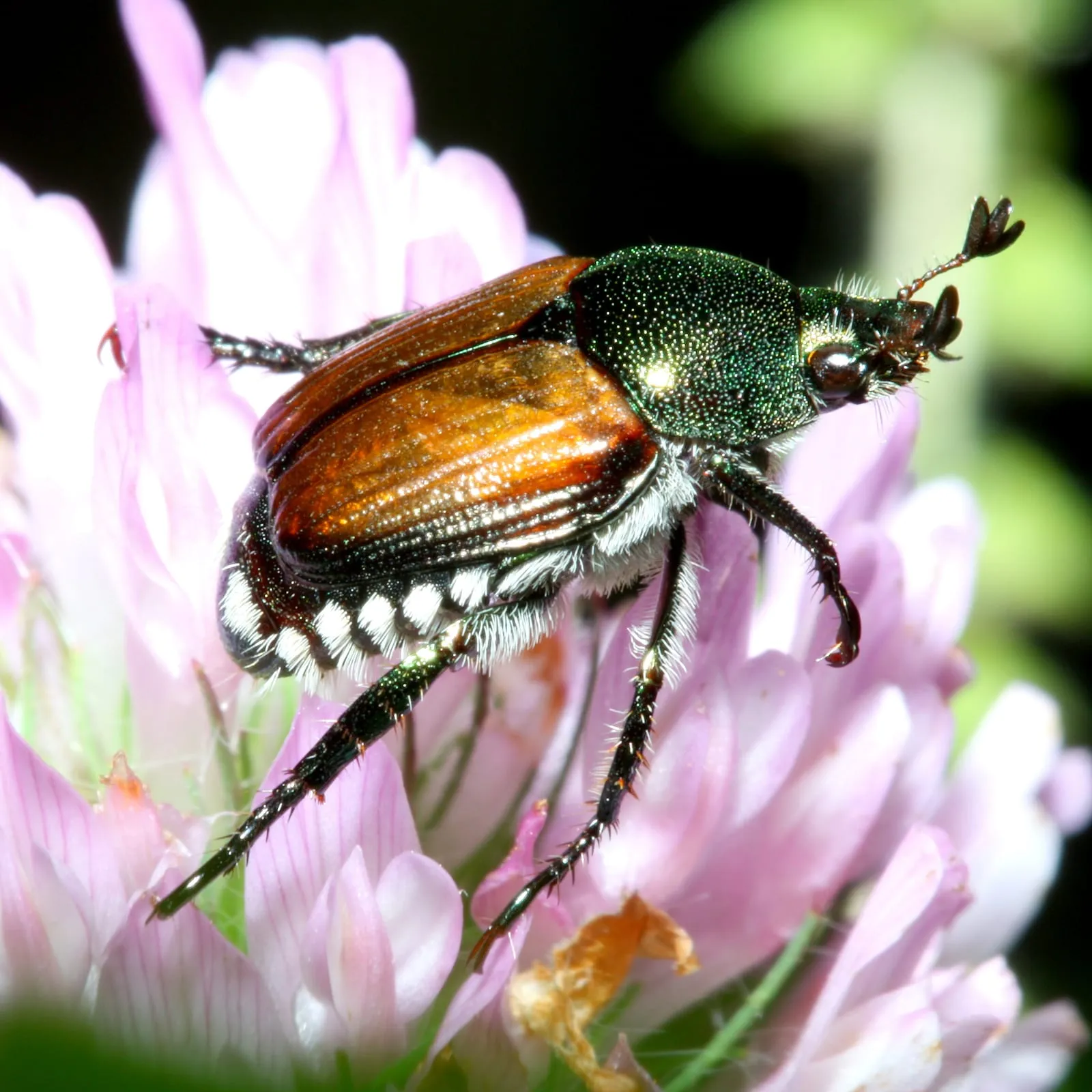
Popillia japonica
Defoliating beetle introduced to North America in 1916. Skeletonizes leaves of many fruit trees, berry canes, and pecan.
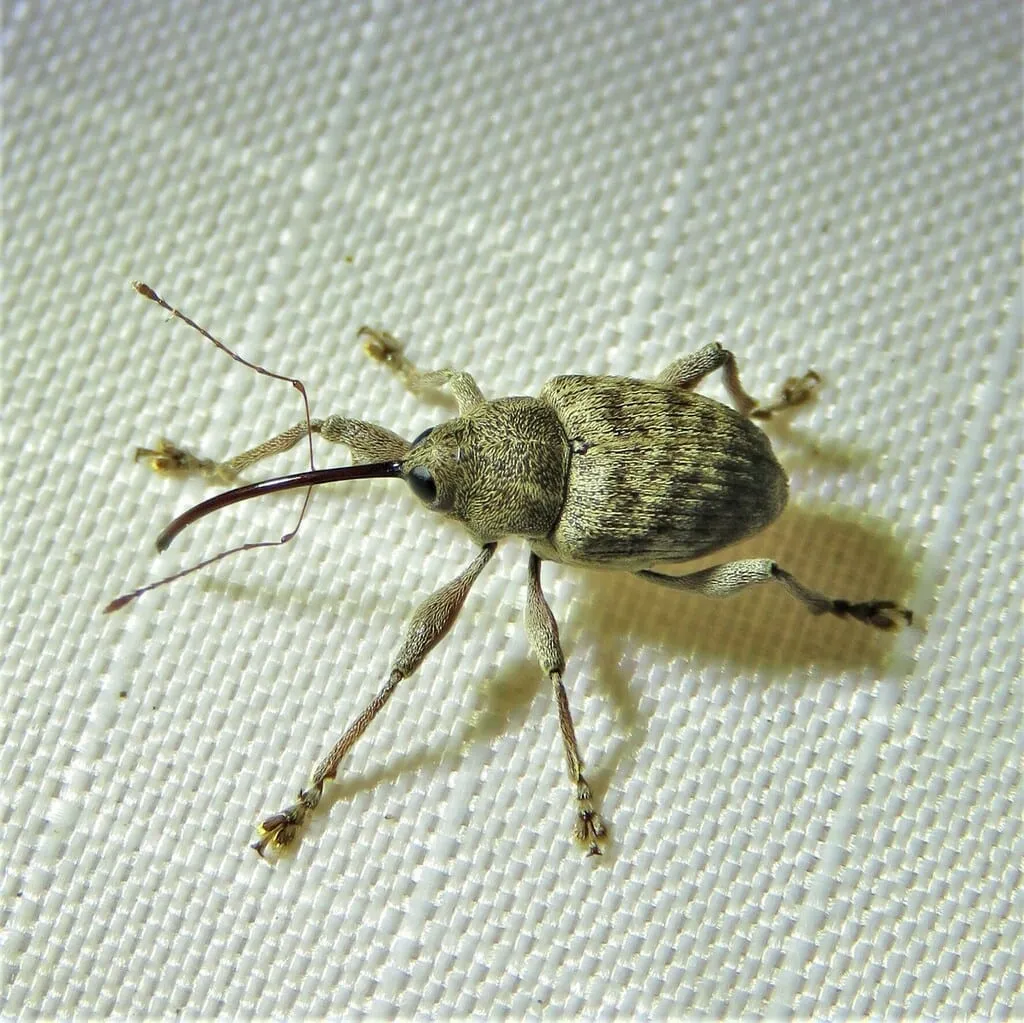
Curculio caryae
The most damaging pecan pest east of the Rockies. Adults emerge from soil in late summer, feed on developing nuts, and lay eggs inside ripening kernels.
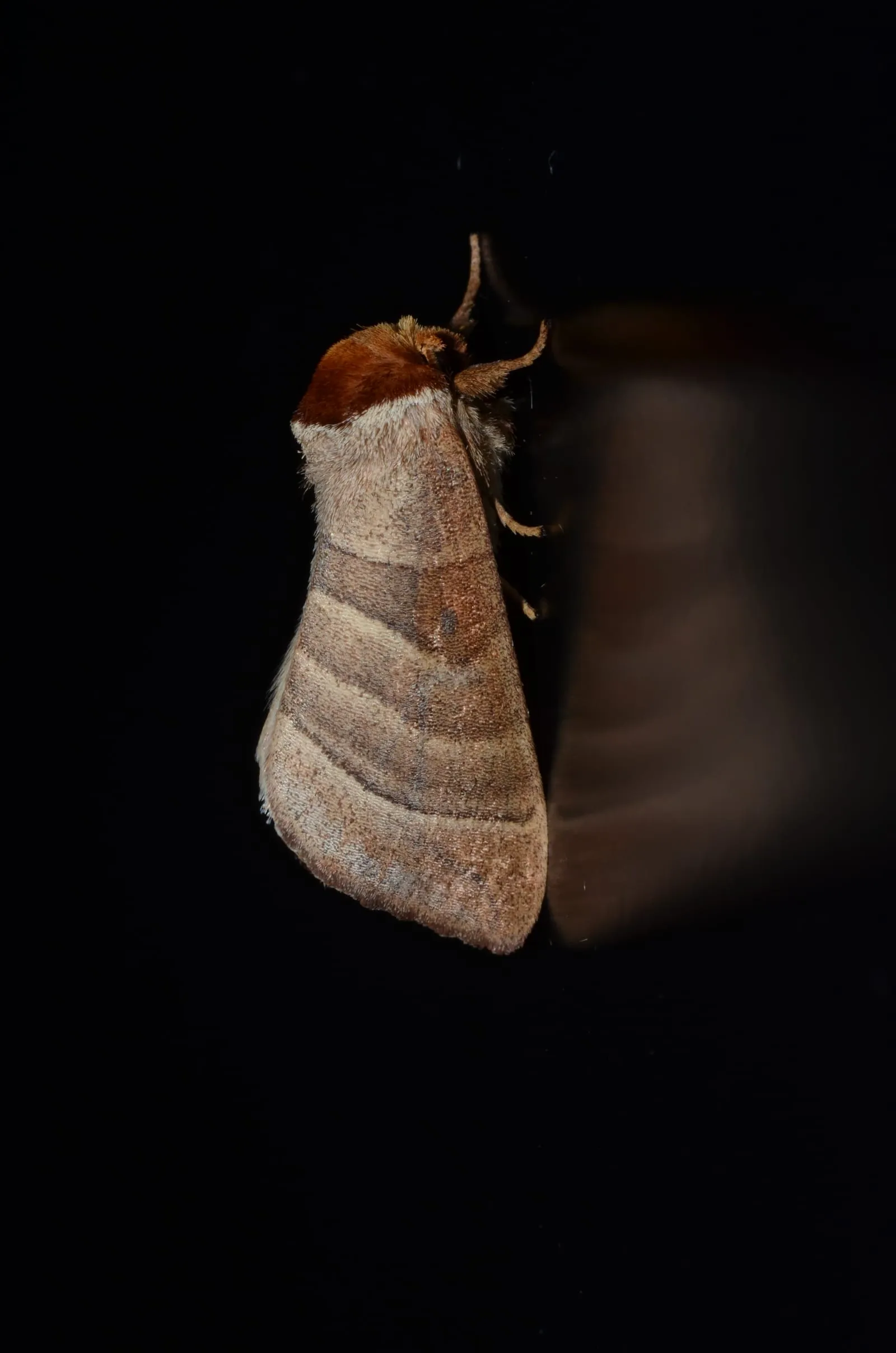
Datana integerrima
Gregarious caterpillar that feeds in dense colonies on walnut and pecan foliage, capable of defoliating entire branches in days.
Common challenges
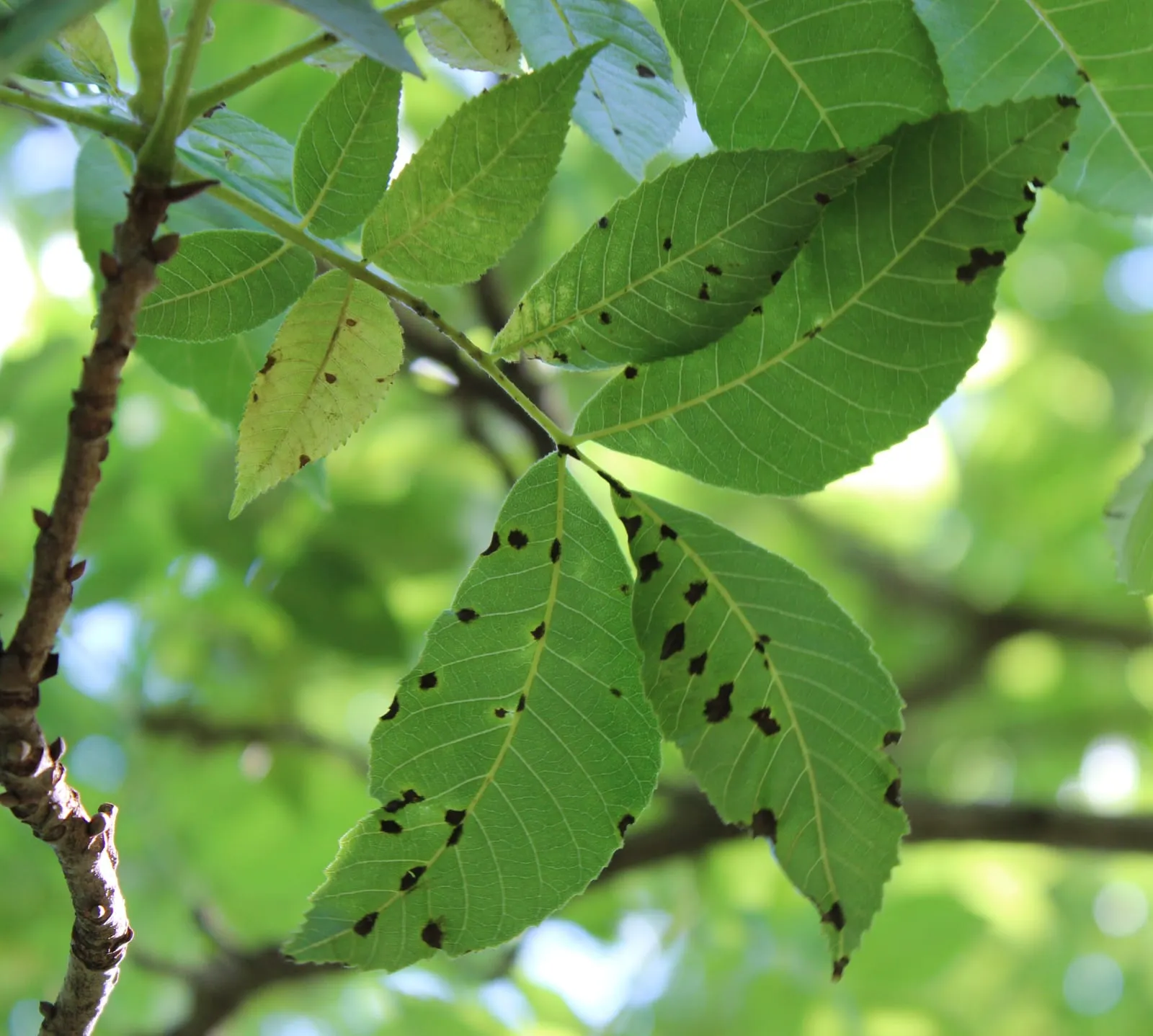
Pecan scab (caused by the fungus Venturia effusa) is the most destructive disease for growers in the humid Southeast and Gulf Coast regions. It attacks foliage and developing shucks, and severe infections can eliminate an entire season's crop. Variety selection is the primary management lever for home growers: Stuart and many older Southern commercial selections carry high susceptibility and require 6 to 10 fungicide applications per season in the Gulf Coast zone, according to UGA Pecan Production. Kanza and Pawnee offer meaningful resistance in their respective ranges and are the practical starting point for unsprayed or low-spray plantings.
Pollination mismatch is frequently overlooked. Pecan flowers are wind-pollinated, and cultivars are classified as Type I (pollen shed before pistils are receptive) or Type II (pistils receptive before pollen shed). Planting two trees of the same type results in poor overlap and thin nut set, regardless of how healthy the trees are. Every planting needs at least one Type I and one Type II variety within 150 to 200 feet for effective pollen transfer.
Cultivar-to-zone mismatch at the northern edge of the range is a third common failure. Long-season Southern varieties planted in zone 6 or cool zone 7 sites accumulate insufficient heat units before first frost, leaving nuts immature or poorly filled. Oklahoma State Pecan Cultivars and UGA Pecan Production both maintain current lists of Northern-type cultivars suited to shorter growing seasons, and consulting those resources before purchasing trees saves years of frustration.
Companion plants
Frequently asked questions
- How many chill hours does pecan require?
Most cultivars require 400 to 700 hours below 45°F. Northern types like Kanza and Pawnee sit toward the lower end of that range, making them better suited to zone 6. Southern types typically need 600 to 700 hours and the longer, hotter summers of zones 7b through 9 to ripen and fill nuts fully.
- How long does it take a pecan tree to produce nuts?
Grafted cultivars typically begin bearing in 6 to 8 years, with consistent heavy crops starting around years 10 to 12. Seedling trees take 10 to 15 years to reach first production. Once in the season, nuts need 200 to 260 days from bloom to harvest, depending on the cultivar and local heat accumulation.
- What USDA zones are suitable for pecan?
Pecan grows in zones 6a through 9a. Performance is most reliable in zones 7 through 8b. Zone 6 growers must use early-ripening Northern cultivars; zone 9 growers face elevated scab pressure and should prioritize disease-resistant varieties.
- Does pecan require a pollinator tree?
Yes. Pecan requires cross-pollination between a Type I (protandrous) and a Type II (protogynous) variety. Planting a single variety, or two trees of the same type, results in unreliable nut set. For home plantings, two compatible named cultivars should be sited within 150 to 200 feet of each other.
- What is the most serious disease affecting pecan?
Pecan scab, caused by Venturia effusa, is the most damaging disease in humid regions. It attacks foliage and shucks, and severe infections can eliminate the crop entirely on susceptible varieties. Resistant cultivars like Kanza are the most practical management tool for growers who do not intend to spray.
- How far apart should pecan trees be planted?
Minimum spacing of 40 to 60 feet between trees is standard. Mature pecans can reach 70 to 100 feet in spread, and canopies that interlock quickly suppress interior light and reduce productivity. Conservative spacing at planting is more effective than attempting to thin a crowded orchard later.
- Can pecan be grown without pesticide applications?
In zones 6 through 7a, scab-resistant Northern varieties can produce reasonable crops without a fungicide program. In the humid Southeast (zones 7b through 9), susceptible varieties rarely produce commercially viable crops unsprayed. Gulf Coast plantings on susceptible cultivars typically require 6 to 10 fungicide applications per season according to UGA Pecan Production.
+−
+−
+−
+−
+−
+−
+−
Sources
Image: "Carya illinoinensis foliagenuts", by Brad Haire, University of Georgia, USA, via Wikimedia Commons, licensed under CC-BY. Source.

Pecan by zone
Related