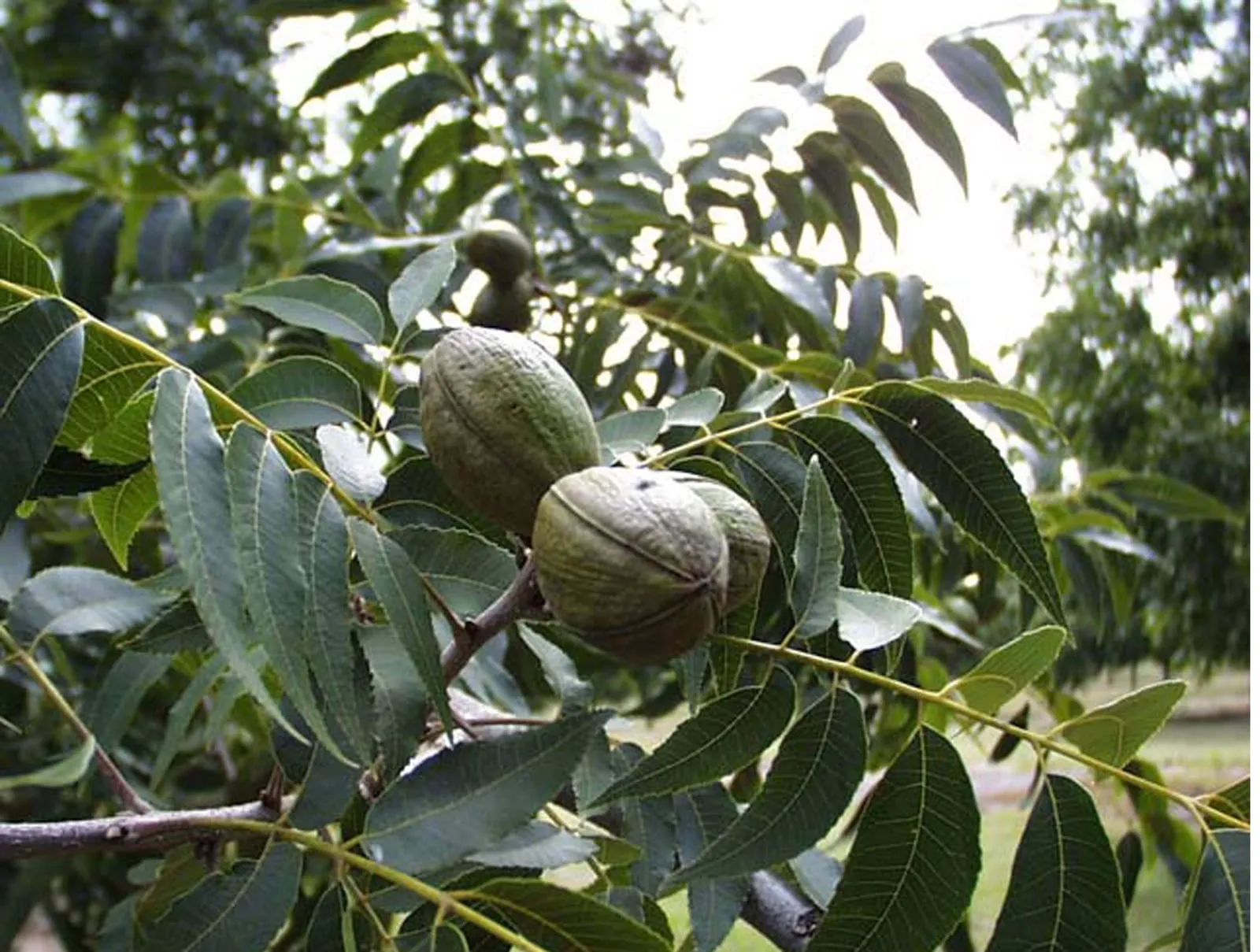
nut in zone 7b
Growing pecan in zone 7b
Carya illinoinensis
- Zone
- 7b 5°F to 10°F
- Growing season
- 220 days
- Chill needed
- 400 to 700 below 45°F
- Suitable varieties
- 4
- Days to harvest
- 200 to 260
The verdict
Zone 7b sits squarely in the heart of commercial pecan country. The chill-hour requirement of 400 to 700 hours is comfortably met across virtually all of zone 7b, where most locations accumulate 800 to 1,200 chilling hours in a typical winter. This is not a marginal zone for pecan; it is the zone most commercial production was built around.
The 220-day growing season is the more meaningful constraint. Pecan needs a long, warm growing season for kernel development, and variety selection determines whether that window is adequate. Early-maturing varieties like Pawnee (approximately 155 days to harvest) fit the zone more reliably than long-season varieties like Stuart, which can push 200 or more days and may come in short if a cool autumn compresses kernel fill. Elliott and Kanza split the difference and offer better disease resistance to boot.
For most of zone 7b, pecan is a reliable long-term planting with appropriate variety selection.
Recommended varieties for zone 7b
4 cultivars suited to this zone, with disease-resistance and zone-fit annotations.
| Variety | Notes | Zone fit | Disease resistance |
|---|---|---|---|
| Pawnee fits zone 7b | Sweet, rich, buttery, oily; fresh, baking, pralines. Early-ripening Northern type, harvests before first frost in zone 6. Scab-resistant in northern range, productive young. | |
|
| Kanza fits zone 7b | Sweet, oily, classic pecan flavor; baking, fresh, pies. Northern type with strong scab resistance, the recommended choice for the Midwest and upper South. Reliable cropper. | |
|
| Stuart fits zone 7b | Sweet, mild, oily; the historic Southern commercial standard, baking and shelling quality. Heavy producer at maturity but scab-susceptible in the humid Southeast. | | none noted |
| Elliott fits zone 7b | Sweet, rich, very oily; smaller nuts but premium flavor. Excellent scab resistance, the safest choice for low-spray Southern home plantings. | |
|
Critical timing for zone 7b
In zone 7b, pecan catkins typically shed pollen in late March to mid-April, with pistillate flowers receptive around the same window. Late cold snaps into early April can damage open flowers, though severe late freezes are infrequent in this zone. Cross-pollination between at least two varieties is necessary for consistent crops.
Nut fill runs through July and August, with shell hardening through September. Harvest generally falls between mid-October and late November depending on variety. Pawnee tends to be among the earliest to ripen; Stuart and Elliott mature later in the window. First fall frosts in zone 7b typically arrive in mid to late November, which gives late-maturing varieties enough time in most years but not all.
Common challenges in zone 7b
- ▸ Cedar-apple rust pressure heavy in piedmont
- ▸ Japanese beetles
- ▸ Brown marmorated stink bug
- ▸ Late summer disease pressure
Disease pressure to watch for
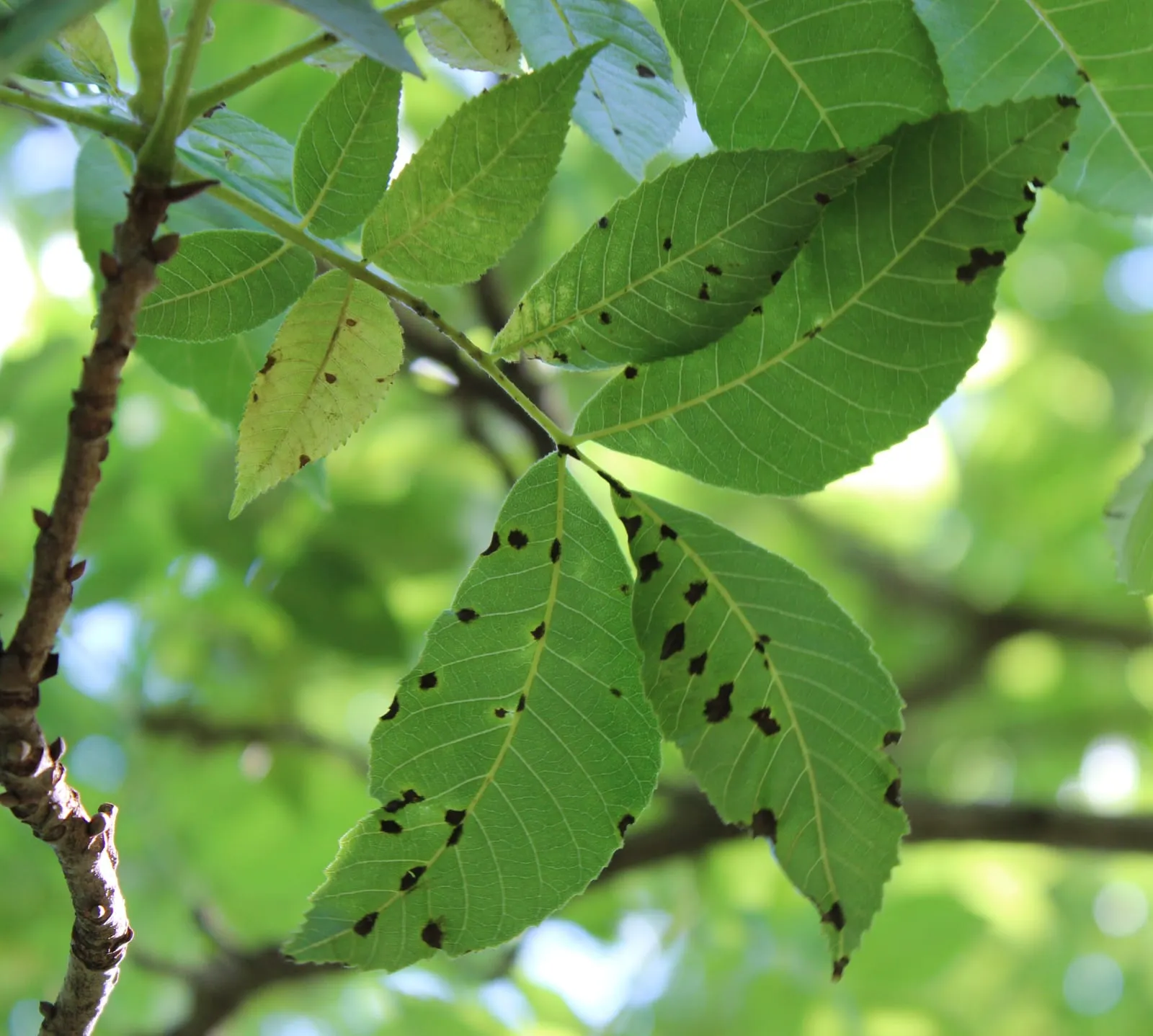
Modified care for zone 7b
Pecan scab is the dominant management concern in zone 7b's humid piedmont and coastal plain areas. Scab-susceptible varieties like Stuart require a fungicide program beginning at bud break and continuing through nut expansion, sometimes 8 to 12 applications in a wet year. Elliott and Kanza carry meaningful scab resistance and reduce that spray burden considerably, making them the practical choice for low-input growers.
Zinc deficiency is common in pecans across much of zone 7b, particularly on sandy or high-pH soils. Foliar zinc applications at budbreak and two to three follow-up sprays through mid-summer are standard practice in this region. Japanese beetle pressure peaks in July and can defoliate young trees; established trees tolerate feeding better but heavy infestations in consecutive years reduce nut set. Brown marmorated stink bug feeding on developing nuts causes kernel darkening and drop, a growing concern in piedmont counties.
Frequently asked questions
- Is zone 7b warm enough to grow pecan successfully?
Zone 7b is well within the primary range for pecan production. Chill-hour requirements are met reliably, the growing season exceeds 200 days, and the Southeast piedmont and coastal plain where zone 7b is concentrated represent the core of historic US pecan production. Variety selection matters more than zone suitability here.
- Which pecan varieties perform best in zone 7b?
Elliott and Kanza are the most practical choices for home growers in zone 7b because both carry scab resistance, which significantly reduces the fungicide program needed in humid conditions. Pawnee is a reliable option where an early-maturing variety is preferred. Stuart is widely planted historically but is scab-susceptible and requires more active management.
- How serious is pecan scab in zone 7b?
Pecan scab is the most economically significant disease in this zone. In wet springs, susceptible varieties can lose most of their crop without a spray program. Scab-resistant varieties like Elliott reduce but do not eliminate risk. The NC State Extension pecan disease guide is the standard reference for spray timing and fungicide selection in the region.
- Do pecans need cross-pollination in zone 7b?
Yes. Pecan is wind-pollinated and relies on cross-pollination between varieties with overlapping but offset pollen shed and receptivity windows. Planting at least two varieties is necessary for consistent nut set. Most recommended variety pairings have been worked out in extension publications for the Southeast region.
+−
+−
+−
+−
Pecan in adjacent zones
Image: "Carya illinoinensis foliagenuts", by Brad Haire, University of Georgia, USA, via Wikimedia Commons, licensed under CC-BY Source.

Related