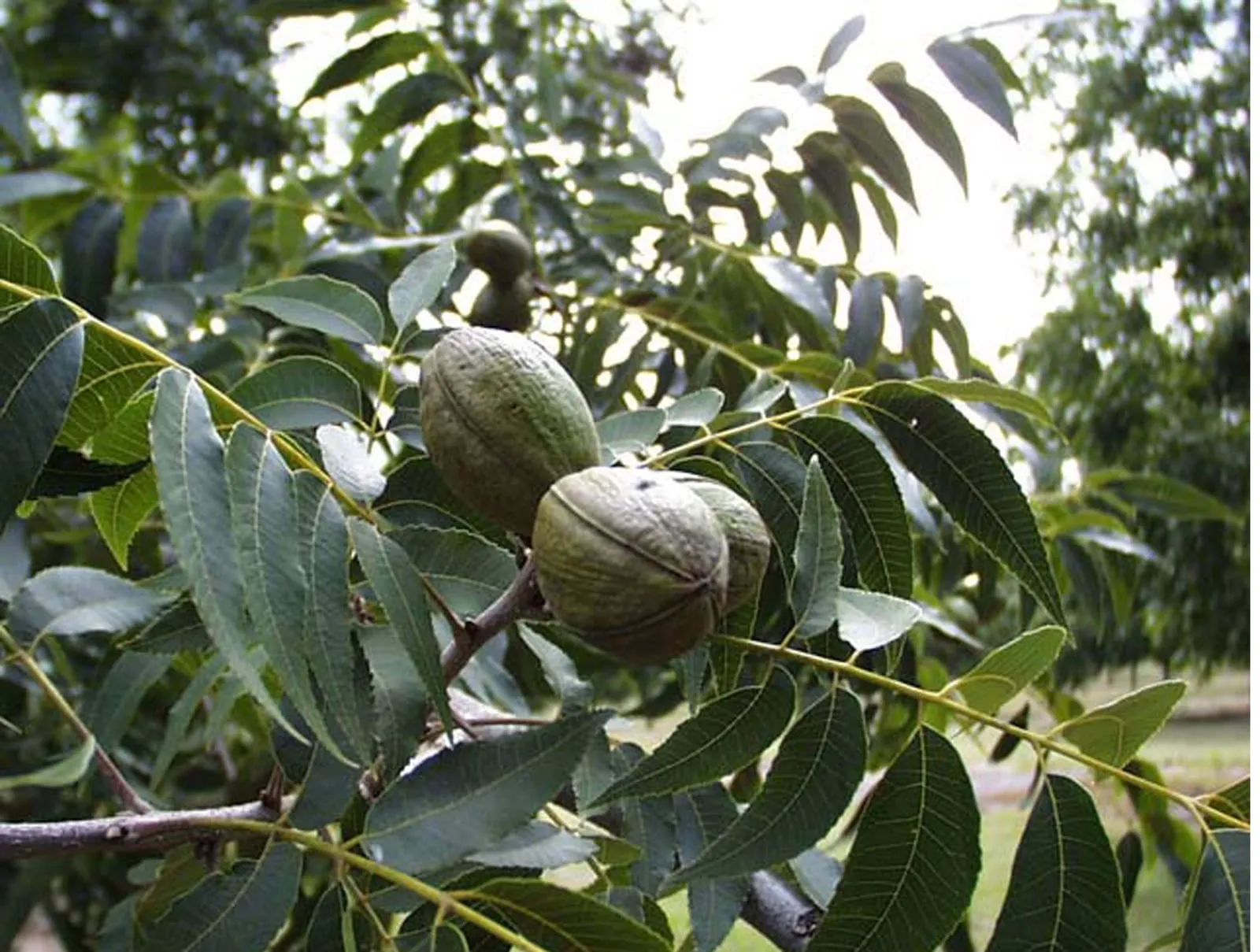
nut in zone 7a
Growing pecan in zone 7a
Carya illinoinensis
- Zone
- 7a 0°F to 5°F
- Growing season
- 210 days
- Chill needed
- 400 to 700 below 45°F
- Suitable varieties
- 5
- Days to harvest
- 200 to 260
The verdict
Pecan is workable in zone 7a but not a sweet spot. The zone's 210-day growing season sits at the lower threshold for reliable nut fill, making variety selection the primary constraint. Chill-hour requirements of 400 to 700 hours present no problem; zone 7a typically accumulates 700 to 1,000 chill hours through winter, so the crop breaks dormancy on schedule in spring.
The binding limitation is whether nuts can mature before the first hard freeze. Long-season varieties like Stuart require 220 or more frost-free days and carry real risk here. Short-season cultivars bred specifically for northern production, including Kanza and Pawnee, were developed partly because of this constraint and are the practical choices for zone 7a. High humidity across much of the zone also favors pecan scab, which compounds the management burden. Zone 7a can produce pecans consistently, but growers are working closer to the edge than those in zones 8 or 9.
Recommended varieties for zone 7a
5 cultivars suited to this zone, with disease-resistance and zone-fit annotations.
| Variety | Notes | Zone fit | Disease resistance |
|---|---|---|---|
| Pawnee fits zone 7a | Sweet, rich, buttery, oily; fresh, baking, pralines. Early-ripening Northern type, harvests before first frost in zone 6. Scab-resistant in northern range, productive young. | |
|
| Kanza fits zone 7a | Sweet, oily, classic pecan flavor; baking, fresh, pies. Northern type with strong scab resistance, the recommended choice for the Midwest and upper South. Reliable cropper. | |
|
| Stuart fits zone 7a | Sweet, mild, oily; the historic Southern commercial standard, baking and shelling quality. Heavy producer at maturity but scab-susceptible in the humid Southeast. | | none noted |
| Elliott fits zone 7a | Sweet, rich, very oily; smaller nuts but premium flavor. Excellent scab resistance, the safest choice for low-spray Southern home plantings. | |
|
| Hardy fits zone 7a | Sweet, mild, oily; small nuts, productive. Cold-hardiest pecan, extends the range into zone 5b sites with full-sun exposure. | | none noted |
Critical timing for zone 7a
Pecan buds break in late March to mid-April in zone 7a, with pollen shed following in April through early May depending on cultivar. The crop is wind-pollinated, and having both Type I (protandrous) and Type II (protogynous) varieties within range improves pollination overlap and nut set.
Harvest in zone 7a typically runs October through early November. Short-season varieties like Kanza generally reach shuck split by late October, leaving a workable buffer before hard frost. Late-season cultivars that need warm conditions into November are a gamble; a hard freeze before shuck opening traps the nut and ruins that year's crop regardless of how well the season otherwise went.
Common challenges in zone 7a
- ▸ Cedar-apple rust
- ▸ Brown rot
- ▸ Fire blight
- ▸ High humidity disease pressure
Disease pressure to watch for
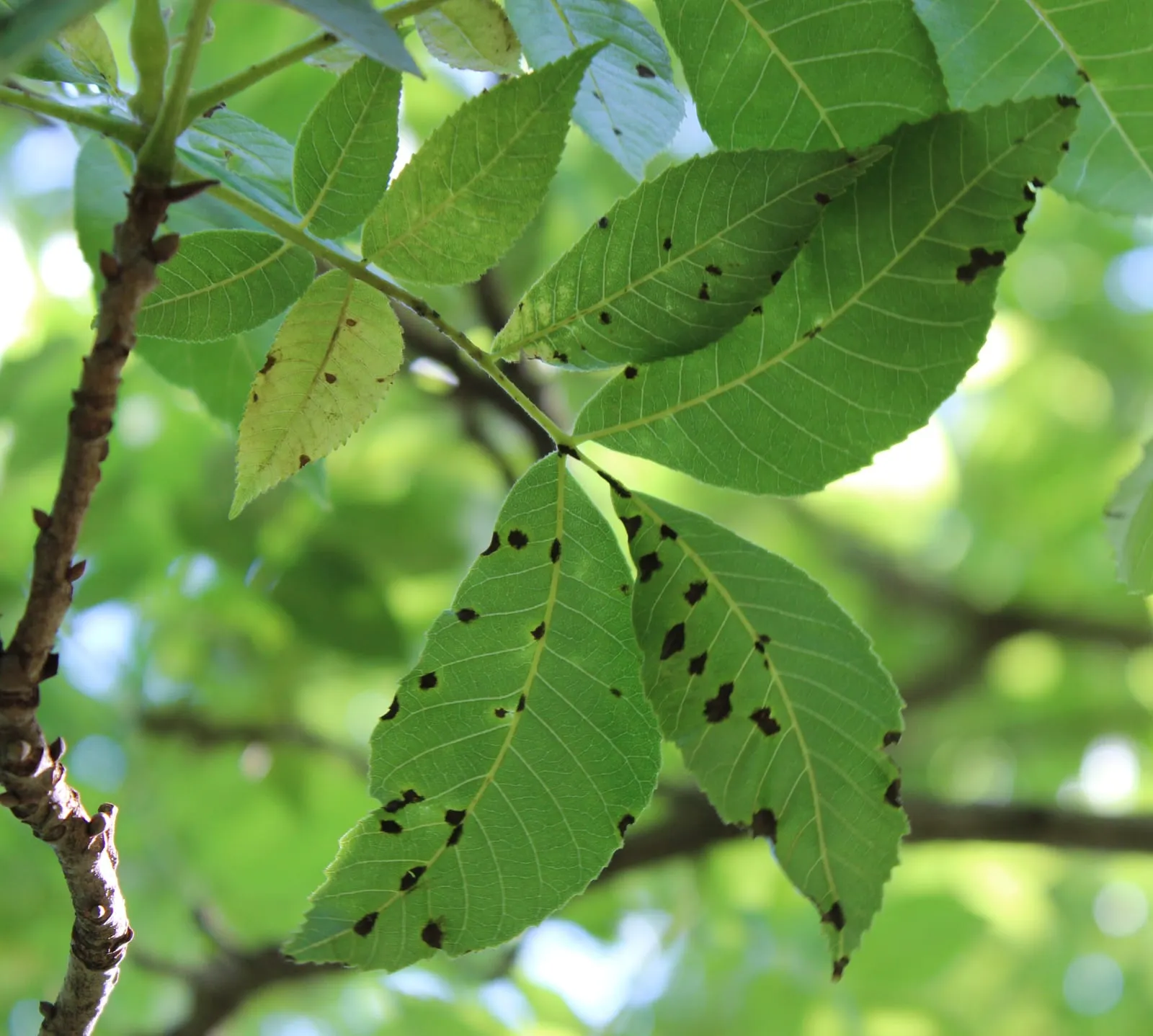
Modified care for zone 7a
Pecan scab is the dominant disease concern in zone 7a's humid conditions. The fungus thrives in wet springs and warm summers, and susceptible varieties can lose significant portions of the crop in bad years. Selecting scab-resistant cultivars, particularly Kanza and Elliott, is the most consequential management decision available before planting.
Pecans are heavy feeders on zinc, and deficiency is common on clay-heavy or alkaline soils found across parts of zone 7a. Foliar zinc applications in spring are standard practice in commercial orchards and worth adopting in home plantings. Zinc deficiency presents as small, mottled leaves and poor nut set, symptoms often misread as disease.
Maintaining open canopy structure through annual pruning reduces humidity in the canopy and cuts scab pressure meaningfully over time.
Pecan in adjacent zones
Image: "Carya illinoinensis foliagenuts", by Brad Haire, University of Georgia, USA, via Wikimedia Commons, licensed under CC-BY Source.

Related