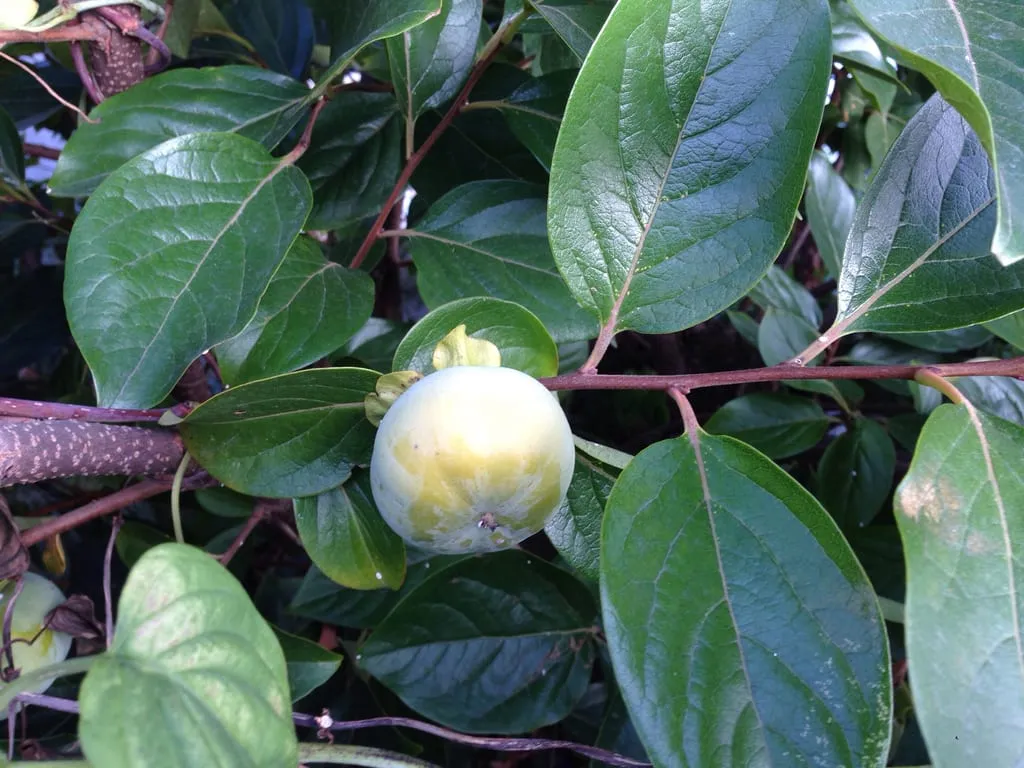
fruit tree in zone 7b
Growing asian persimmon in zone 7b
Diospyros kaki
- Zone
- 7b 5°F to 10°F
- Growing season
- 220 days
- Chill needed
- 100 to 400 below 45°F
- Suitable varieties
- 4
- Days to harvest
- 180 to 240
The verdict
Zone 7b is a genuine sweet spot for Asian persimmon, not a marginal case. The crop's chill-hour requirement of 100 to 400 hours is comfortably met across the zone, which typically accumulates 600 to 900 hours of chilling in an average winter. Trees complete dormancy reliably without the stress of marginal chill accumulation that affects crops like low-chill peaches in borderline zones.
All four commonly grown varieties perform well here. Fuyu and Jiro, both non-astringent when firm, ripen before the first fall frost in most zone 7b locations. Hachiya, an astringent variety that must soften fully before eating, needs the complete 220-day growing season to develop properly, which zone 7b provides. Saijo, adapted to warm winters in Japan's Hiroshima prefecture, performs particularly well in the piedmont and coastal plain climates that characterize much of zone 7b.
Recommended varieties for zone 7b
4 cultivars suited to this zone, with disease-resistance and zone-fit annotations.
| Variety | Notes | Zone fit | Disease resistance |
|---|---|---|---|
| Fuyu fits zone 7b | Mild, honey-sweet, crisp like an apple when firm; the friendly entry-level persimmon, no astringency. Slice into salads, eat out of hand. Most popular Asian persimmon in the US. | | none noted |
| Hachiya fits zone 7b | Intensely sweet, custard-soft, complex tropical-honey flavor when fully ripe; astringent and inedible until soft. Classic for baking persimmon pudding, cookies, and bread. | | none noted |
| Saijo fits zone 7b | Extremely sweet (the name means 'best one' in Japanese), soft custard texture when ripe with deep honey flavor; fresh, drying. Cold-hardy astringent. | | none noted |
| Jiro fits zone 7b | Sweet, mild, crisp; non-astringent like Fuyu but with slightly larger fruit. Eats firm or soft. Productive and well-adapted. | | none noted |
Critical timing for zone 7b
Asian persimmons bloom late in the season, typically in late April to early May in zone 7b. This late bloom window is one of the crop's practical advantages: most late-spring frost events have passed before flowers open, making frost damage to blossoms relatively uncommon compared to earlier-blooming stone fruits.
Harvest falls between early October and mid-November depending on variety. Fuyu and Jiro ripen earliest, generally by October. Hachiya and Saijo run later, into November. Zone 7b's average first fall frost typically arrives in mid-to-late November, leaving adequate time for even the latest-ripening varieties to reach maturity before frost pressure becomes a concern. Growers in frost pockets or higher elevations within the zone should confirm local frost dates, as variation within zone 7b can be meaningful.
Common challenges in zone 7b
- ▸ Cedar-apple rust pressure heavy in piedmont
- ▸ Japanese beetles
- ▸ Brown marmorated stink bug
- ▸ Late summer disease pressure
Modified care for zone 7b
The main adjustments for zone 7b growers are pest-related, not thermal. Japanese beetles feed on persimmon foliage in June and July; repeated heavy defoliation across consecutive seasons can weaken trees and suppress yields. Brown marmorated stink bugs are a more direct fruit threat, feeding on developing fruit from late summer onward and causing corky, discolored patches beneath the skin. Where stink bug pressure is high, netting or individual fruit bagging starting in August is the most reliable deterrent.
Cold hardiness is not a concern for established trees in zone 7b. Asian persimmons tolerate temperatures down to approximately 0°F, well below the zone's minimum of 5 to 10°F. Young trees in their first or second winter benefit from a mulch layer over the root zone to protect against frost heaving, but wrapping or additional cold protection is not typically necessary.
Frequently asked questions
- Do Asian persimmons need a pollinator in zone 7b?
Most commonly grown varieties, including Fuyu, Jiro, and Hachiya, are parthenocarpic and produce fruit without pollination. Saijo occasionally sets larger crops with a nearby pollinator but fruits adequately on its own. Cross-pollination generally does not hurt production, but a dedicated pollinator tree is rarely required.
- How long before an Asian persimmon tree produces fruit in zone 7b?
Grafted trees typically begin fruiting 3 to 5 years after planting. Seedling-grown trees take considerably longer and produce fruit of unpredictable quality. Grafted nursery stock is the practical choice for reliable variety performance and earlier bearing.
- Are stink bugs a serious problem for persimmons in zone 7b?
Brown marmorated stink bugs are a real and growing concern across zone 7b, particularly in the piedmont. They feed on fruit starting in late summer, causing internal corky damage that is invisible externally until harvest. Physical exclusion netting or individual fruit bagging beginning in early August is the most effective management approach where pressure is high.
+−
+−
+−
Asian Persimmon in adjacent zones
Image: "Japanese Persimmon", by Kim, via iNaturalist, licensed under CC-BY Source.
Related