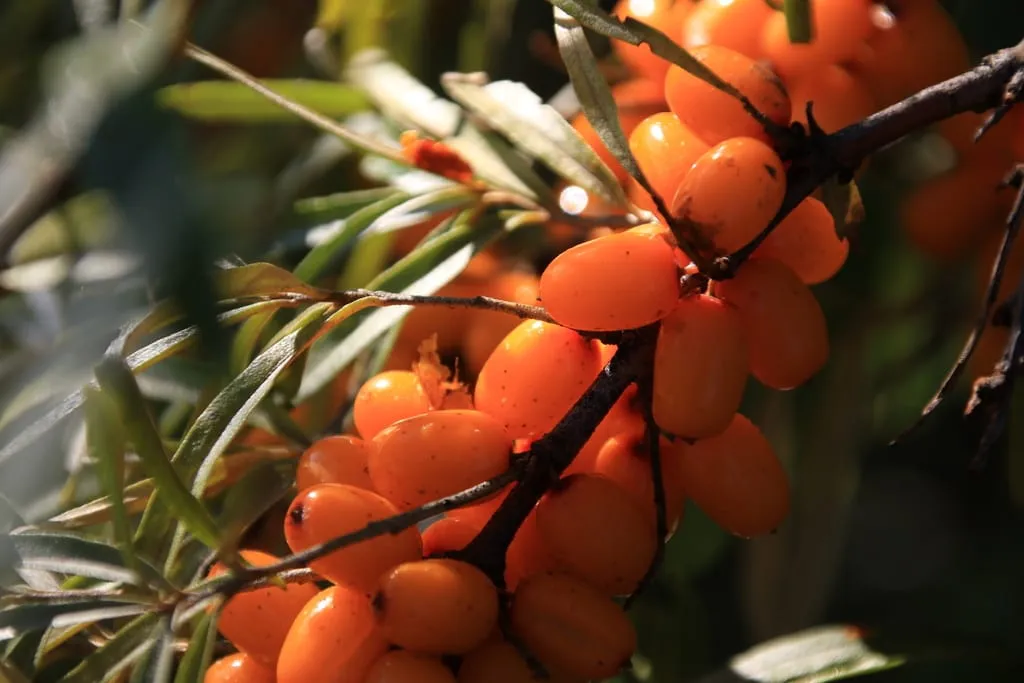
berry in zone 3a
Growing sea buckthorn in zone 3a
Hippophae rhamnoides
- Zone
- 3a -40°F to -35°F
- Growing season
- 90 days
- Suitable varieties
- 3
- Days to harvest
- 100 to 130
The verdict
Sea buckthorn is one of the few fruiting shrubs for which zone 3a is a genuine sweet spot rather than a marginal threshold. Native to Siberian river valleys and Central Asian highlands, the species handles temperatures down to -40°F without significant dieback, which means the lower end of zone 3a falls squarely within its proven cold tolerance. Chill-hour requirements are met with ease; the concern in zone 3a is not cold accumulation but the length of the warm season. At roughly 90 frost-free days, the growing window is tight. Established plants will fruit reliably, but young plants benefit from a full season of root establishment before the first fruiting season is expected. Varieties selected for northern climates, including Botanica and Frugana, have been trialed in Canadian and Scandinavian conditions comparable to zone 3a, which makes them the appropriate starting point. Romeo, listed as the male pollinator, should be planted within roughly 65 feet of female plants for consistent fruit set.
Recommended varieties for zone 3a
3 cultivars suited to this zone, with disease-resistance and zone-fit annotations.
| Variety | Notes | Zone fit | Disease resistance |
|---|---|---|---|
| Botanica fits zone 3a | Tart, bracingly acidic, complex citrus-passionfruit-pineapple flavor; juice, jam, syrup, oil. Russian-bred female with high yields. Requires a male pollinator (one male per 6-8 females). | | none noted |
| Frugana fits zone 3a | Tart, juicy, large bright-orange berries; processing, oil extraction. German-bred female productive with reduced thorns compared to wild stock. | | none noted |
| Romeo (male) fits zone 3a | Pollinator only, no fruit; provides pollen for female cultivars. Plant one male per 6-8 females. Vigorous nitrogen-fixing shrub useful as windbreak. | | none noted |
Critical timing for zone 3a
In zone 3a, sea buckthorn breaks dormancy and releases pollen in late April to early May, well before leaf emergence. This early bloom is an asset and a liability: pollination proceeds without leaf interference, but a late frost event after bloom initiation can reduce fruit set. The last frost in zone 3a typically falls between mid-May and late May, meaning bloom timing and frost timing overlap. Harvest falls in late August to mid-September, depending on the season. Berries do not drop readily when ripe and can be left on the cane until after the first light frost, which is a practical advantage in a zone where autumn arrives quickly. Freezing the canes before harvest, then knocking berries loose into tarps, is a standard harvest method that suits this climate.
Common challenges in zone 3a
- ▸ Very short growing season
- ▸ Late spring frosts
- ▸ Limited fruit-tree options
- ▸ Heavy mulching required
Modified care for zone 3a
Zone 3a growers should prioritize site selection above all other care decisions. A south- or southeast-facing slope with wind protection on the north side extends the effective growing season and reduces desiccation injury during the long winter. Heavy mulching, 4 to 6 inches of wood chips or straw over the root zone, is standard practice given the freeze-thaw dynamics at this latitude. Young plants are more vulnerable than established ones; a burlap windbreak for the first two winters is a reasonable precaution. Because the disease list for this combination is empty, fungal pressure is not a primary concern in zone 3a's dry, cold winters. The main adjustment compared to warmer zones is patience: expect two to three years before meaningful fruit production, as the plant channels energy into root establishment during the compressed growing seasons.
Frequently asked questions
- Does sea buckthorn need a male plant to produce berries?
Yes. Sea buckthorn is dioecious, meaning male and female flowers grow on separate plants. One male, such as Romeo, can pollinate up to seven or eight females within roughly 65 feet. Wind carries the pollen; no insect pollinator is required, which is an advantage in cold climates where early pollinators are scarce.
- Will sea buckthorn survive zone 3a winters without protection?
Established plants generally survive without additional protection, as the species is rated to -40°F. New plantings in their first or second winter benefit from mulching over the root zone and a windbreak on the prevailing wind side to prevent stem desiccation, which is a more common cause of dieback than outright cold injury.
- How do growers harvest sea buckthorn without losing berries?
Berries cling tightly to thorny canes and are difficult to pick by hand without significant loss. The standard approach is to cut fruiting branches and freeze them, then beat the frozen branches over a tarp or container. The berries shatter free cleanly. This method works well in zone 3a, where ambient temperatures around harvest time may be near freezing anyway.
- How long before a new sea buckthorn planting produces fruit?
Expect the first modest fruit set in year three and full production by years four or five. In zone 3a's short seasons, establishment takes priority over fruiting in early years. Pushing fruit production too early by stressing the plant with heavy cuts or poor site conditions delays the productive phase.
+−
+−
+−
+−
Sea Buckthorn in adjacent zones
Image: "Облепиха", by Нурхайдарова Татьяна, via iNaturalist, licensed under CC-BY Source.
Related