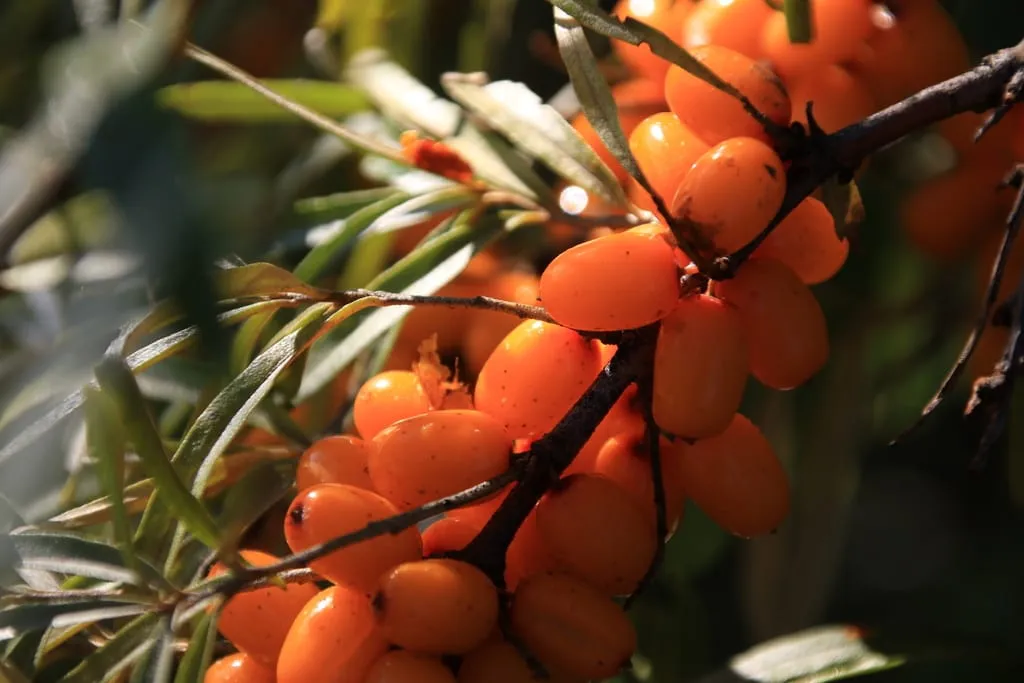
berry in zone 3b
Growing sea buckthorn in zone 3b
Hippophae rhamnoides
- Zone
- 3b -35°F to -30°F
- Growing season
- 100 days
- Suitable varieties
- 4
- Days to harvest
- 100 to 130
The verdict
Sea buckthorn is native to cold continental regions, including Siberia, Mongolia, and the Tibetan plateau, so zone 3b sits comfortably within its natural range. This is not a marginal zone for the crop; it is close to the center of its adapted climate. Winter lows of -35°F to -30°F fall well within the species' documented hardiness limits, which extend to zone 2 under favorable site conditions.
Chill-hour accumulation in zone 3b typically exceeds 2,000 hours below 45°F across most of the season, which satisfies sea buckthorn's requirements with room to spare. The 100-day growing season is adequate for the listed varieties, all selected for northern performance. The binding constraint in zone 3b is not cold per se but winter desiccation combined with wind exposure, which can damage stems even on otherwise hardy plants. Site selection matters more here than zone rating. The varieties available, Botanica, Frugana, Garden's Gift, and Romeo as the male pollinator, are appropriate choices for this range.
Recommended varieties for zone 3b
4 cultivars suited to this zone, with disease-resistance and zone-fit annotations.
| Variety | Notes | Zone fit | Disease resistance |
|---|---|---|---|
| Botanica fits zone 3b | Tart, bracingly acidic, complex citrus-passionfruit-pineapple flavor; juice, jam, syrup, oil. Russian-bred female with high yields. Requires a male pollinator (one male per 6-8 females). | | none noted |
| Frugana fits zone 3b | Tart, juicy, large bright-orange berries; processing, oil extraction. German-bred female productive with reduced thorns compared to wild stock. | | none noted |
| Garden's Gift fits zone 3b | Tart, large vibrant orange berries; juice and jam. Russian female with concentrated cluster, easier handharvest. Pair with male pollinator. | | none noted |
| Romeo (male) fits zone 3b | Pollinator only, no fruit; provides pollen for female cultivars. Plant one male per 6-8 females. Vigorous nitrogen-fixing shrub useful as windbreak. | | none noted |
Critical timing for zone 3b
Sea buckthorn blooms before leaf-out, typically in late April to mid-May in zone 3b. Because the plant is wind-pollinated, male and female trees must flower simultaneously; this synchrony generally holds within the same selection group. Last frost dates in zone 3b commonly fall in late May, meaning bloom can coincide with frost events. Sea buckthorn flowers are more frost-tolerant than those of stone fruits, however, and catastrophic losses from spring frost are uncommon.
Harvest falls in late August through September. Berries soften and become difficult to pick after the first hard frost. In a 100-day season, targeting harvest in early September, before fall frosts arrive, is the practical approach for most zone 3b sites.
Common challenges in zone 3b
- ▸ Short season
- ▸ Winter desiccation
- ▸ Site selection critical for fruit trees
Modified care for zone 3b
The primary adjustment in zone 3b is managing winter desiccation. Cold, dry winds pull moisture from stems and buds faster than roots can replenish it through frozen soil. Siting plants on a sheltered slope with a windbreak on the prevailing wind side reduces this risk substantially. A thick layer of organic mulch applied in late fall helps retain soil moisture and moderate freeze-thaw cycles at the crown.
Young plants during their first two winters are most vulnerable to desiccation damage; wrapping the main stem with burlap for the first season is a reasonable precaution. Beyond site and wind management, zone 3b requires little extra intervention. Sea buckthorn is drought-tolerant once established and fixes atmospheric nitrogen, so supplemental fertilization is generally unnecessary. High-nitrogen inputs should be avoided because they encourage soft late-season growth that is prone to winter dieback.
Frequently asked questions
- Is zone 3b too cold for sea buckthorn?
No. Sea buckthorn is native to some of the coldest continental climates on earth and is documented as hardy to USDA zone 2 under good site conditions. Zone 3b winters fall well within the crop's tolerance range. Wind exposure and winter desiccation are greater concerns than absolute low temperature.
- Do I need both male and female sea buckthorn plants?
Yes. Sea buckthorn is dioecious and wind-pollinated. One male plant, such as Romeo, can typically pollinate three to eight female plants within roughly 60 feet. Without a male, female plants will not set fruit.
- When should sea buckthorn be harvested in zone 3b?
Target late August through early September in zone 3b. Berries are ripe when they reach full orange or yellow color and release juice when pressed. Harvesting before the first hard frost simplifies picking considerably, as frost-softened berries are messy to collect.
- What is winter desiccation and how does it affect sea buckthorn?
Winter desiccation occurs when cold, dry winds pull moisture from above-ground stems and buds while the soil remains frozen and roots cannot absorb water to compensate. It can cause stem dieback or bud kill even on cold-hardy plants. Windbreaks, sheltered planting sites, and fall mulching reduce the risk.
+−
+−
+−
+−
Sea Buckthorn in adjacent zones
Image: "Облепиха", by Нурхайдарова Татьяна, via iNaturalist, licensed under CC-BY Source.
Related