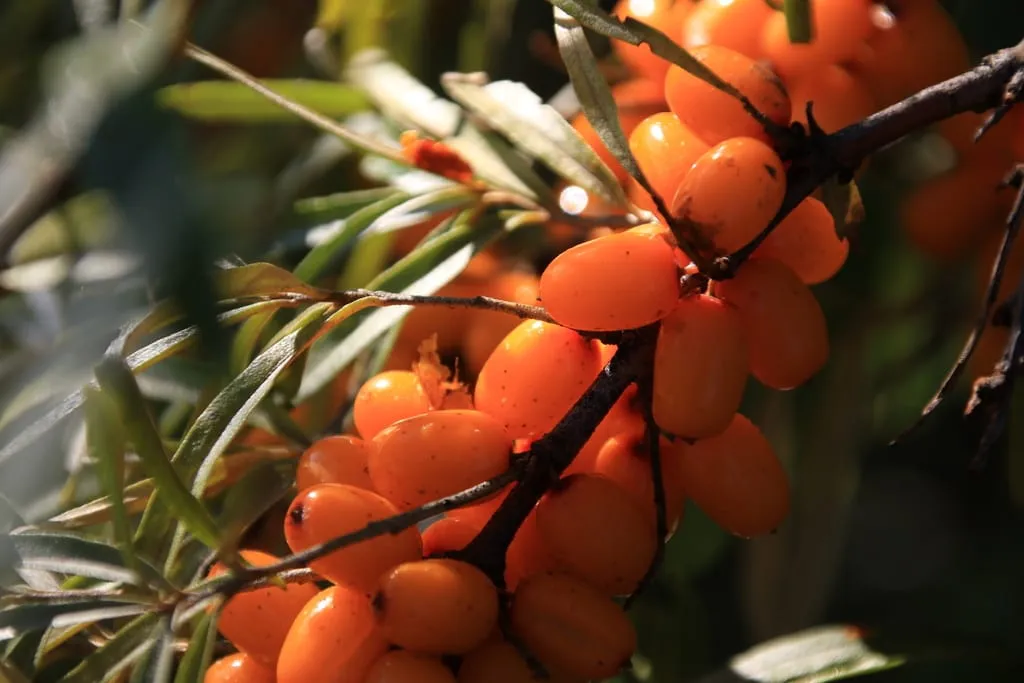
berry in zone 4a
Growing sea buckthorn in zone 4a
Hippophae rhamnoides
- Zone
- 4a -30°F to -25°F
- Growing season
- 120 days
- Suitable varieties
- 4
- Days to harvest
- 100 to 130
The verdict
Zone 4a is well within sea buckthorn's native range, not a marginal case. Hippophae rhamnoides evolved across cold continental climates in central Asia and Siberia, where winter minimums regularly match or exceed the zone 4a threshold of -30 to -25°F. Unlike many temperate fruits that require a precise chill-hour window, sea buckthorn needs deep, reliable dormancy rather than a specific hour count, and zone 4a delivers that consistently.
The varieties listed here (Botanica, Frugana, Garden's Gift, and the male pollinator Romeo) are primarily German and central European selections bred for production in short-season, cold-winter climates. Zone 4a's 120-day growing season is adequate for berry development on these cultivars. Growers in this zone can expect full hardiness without significant winter dieback under normal conditions. The real question for zone 4a is not whether the shrubs will survive but whether the growing season is long enough for berries to ripen fully before first fall frost, which is generally yes for established plantings.
Recommended varieties for zone 4a
4 cultivars suited to this zone, with disease-resistance and zone-fit annotations.
| Variety | Notes | Zone fit | Disease resistance |
|---|---|---|---|
| Botanica fits zone 4a | Tart, bracingly acidic, complex citrus-passionfruit-pineapple flavor; juice, jam, syrup, oil. Russian-bred female with high yields. Requires a male pollinator (one male per 6-8 females). | | none noted |
| Frugana fits zone 4a | Tart, juicy, large bright-orange berries; processing, oil extraction. German-bred female productive with reduced thorns compared to wild stock. | | none noted |
| Garden's Gift fits zone 4a | Tart, large vibrant orange berries; juice and jam. Russian female with concentrated cluster, easier handharvest. Pair with male pollinator. | | none noted |
| Romeo (male) fits zone 4a | Pollinator only, no fruit; provides pollen for female cultivars. Plant one male per 6-8 females. Vigorous nitrogen-fixing shrub useful as windbreak. | | none noted |
Critical timing for zone 4a
Sea buckthorn blooms before leaf-out, typically in late April to early May in zone 4a, depending on how quickly temperatures warm after snowmelt. It is wind-pollinated and relies on pollen release from male plants coinciding with female flower receptivity, so positioning males and females in proximity matters more than frost protection. The blooms tolerate moderate frost, but the late-frost risk characteristic of this zone can reduce pollination if a hard freeze hits during the brief bloom window.
Berry harvest for zone 4a falls roughly in mid-August through September. The berries cling tightly to branches and are difficult to pick by hand; many growers wait until after the first light frost, which loosens the fruit slightly, then freeze branches briefly before stripping them over tarps.
Common challenges in zone 4a
- ▸ Late frosts damage early bloomers
- ▸ Limited peach varieties
Modified care for zone 4a
Little winter protection is needed in zone 4a. Sea buckthorn is generally more cold-hardy than the zone demands, and mulching the root zone is optional rather than essential. The main care adjustment is timing: in a 120-day growing season, planting stock should go in as early as the soil can be worked to maximize establishment before summer heat.
Wind exposure is worth considering. Sea buckthorn tolerates wind well and is often planted as a windbreak crop, but in exposed zone 4a sites, persistent desiccating winds can cause twig dieback even on hardy plants. A sheltered planting site or a temporary windbreak on the prevailing-wind side is worth the effort during the first two winters.
No diseases are documented for this crop in this zone. Standard attention to site drainage is sufficient; sea buckthorn fixes nitrogen and performs poorly in waterlogged soils regardless of zone.
Frequently asked questions
- Does sea buckthorn need a male pollinator in zone 4a?
Yes. Sea buckthorn is dioecious, meaning male and female flowers grow on separate plants. One male such as Romeo is typically sufficient to pollinate six to eight female plants. Males should be planted within roughly 200 feet and upwind of females for reliable fruit set.
- When do sea buckthorn berries ripen in zone 4a?
Berries typically ripen from mid-August through September. Many growers delay harvest until after the first light frost, which loosens the fruit and makes stripping easier. Brief branch-freezing followed by shaking over a tarp is a common approach for managing the thorny, juice-prone harvest.
- Will sea buckthorn survive a zone 4a winter without protection?
Generally yes. Sea buckthorn is rated to zone 3 and often colder. Established plants in zone 4a do not require mulching or winter wrapping. Young transplants benefit from a light organic mulch over the root zone in their first winter as a standard establishment precaution.
+−
+−
+−
Sea Buckthorn in adjacent zones
Image: "Облепиха", by Нурхайдарова Татьяна, via iNaturalist, licensed under CC-BY Source.
Related