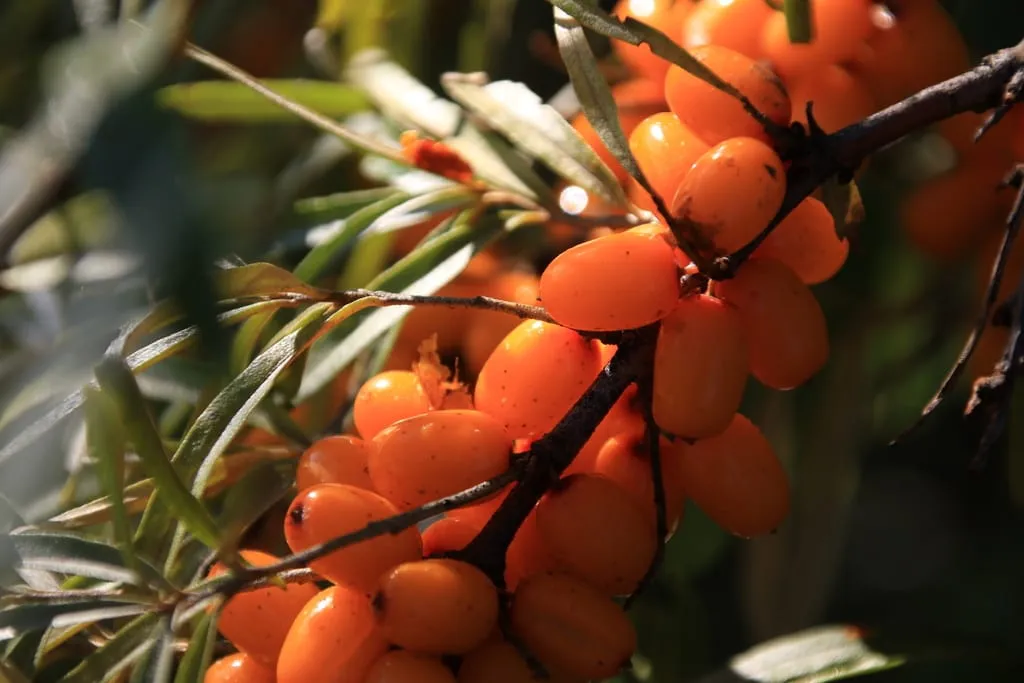
berry in zone 4b
Growing sea buckthorn in zone 4b
Hippophae rhamnoides
- Zone
- 4b -25°F to -20°F
- Growing season
- 130 days
- Suitable varieties
- 4
- Days to harvest
- 100 to 130
The verdict
Zone 4b is a genuine sweet spot for sea buckthorn rather than a marginal case. The plant evolved in continental Siberian and Central Asian climates where winter minimums of -40°F are unremarkable, so the zone 4b floor of -25 to -20°F presents no meaningful cold stress. Most commercial and cultivated varieties, including the four listed here, were selected partly for this cold tolerance.
Unlike stone fruits or many pome fruits, sea buckthorn does not have a documented chill-hour requirement in the traditional sense. It responds to cumulative cold exposure to break dormancy, and zone 4b provides more than enough cold accumulation across a typical winter. The 130-day growing season is sufficient for varieties such as Botanica, Frugana, and Garden's Gift to mature a full berry crop before first fall frost. If anything, the risk runs the other direction: in zones warmer than 6 or 7, sea buckthorn underperforms. Zone 4b is the range where the crop behaves as intended.
Recommended varieties for zone 4b
4 cultivars suited to this zone, with disease-resistance and zone-fit annotations.
| Variety | Notes | Zone fit | Disease resistance |
|---|---|---|---|
| Botanica fits zone 4b | Tart, bracingly acidic, complex citrus-passionfruit-pineapple flavor; juice, jam, syrup, oil. Russian-bred female with high yields. Requires a male pollinator (one male per 6-8 females). | | none noted |
| Frugana fits zone 4b | Tart, juicy, large bright-orange berries; processing, oil extraction. German-bred female productive with reduced thorns compared to wild stock. | | none noted |
| Garden's Gift fits zone 4b | Tart, large vibrant orange berries; juice and jam. Russian female with concentrated cluster, easier handharvest. Pair with male pollinator. | | none noted |
| Romeo (male) fits zone 4b | Pollinator only, no fruit; provides pollen for female cultivars. Plant one male per 6-8 females. Vigorous nitrogen-fixing shrub useful as windbreak. | | none noted |
Critical timing for zone 4b
Sea buckthorn blooms early, typically in late April through early May in zone 4b, before leaf-out and well ahead of most other fruiting shrubs. Bloom is wind-pollinated and brief, lasting roughly one to two weeks. A late frost event in early May, which is common in zone 4b, can reduce fruit set on female plants if it coincides with peak pollen release from males like Romeo.
Harvest falls in late August through mid-September depending on variety. Botanica and Frugana tend toward the earlier end of that window; Garden's Gift can run slightly later. Berry clusters are persistent on the branch after ripening, which provides some flexibility in harvest timing. The 130-day zone growing season fits this schedule cleanly, with harvest typically completing well before the first fall frost.
Common challenges in zone 4b
- ▸ Spring frost timing
- ▸ Apple scab pressure
- ▸ Cane berry winter dieback
Modified care for zone 4b
Sea buckthorn requires less winter adjustment in zone 4b than almost any other fruiting shrub. It does not need mulching for root protection, wrapping, or any extra cold preparation. Site selection matters more than insulation: because the shrub blooms so early, planting in low frost pockets or north-facing exposures that delay bloom slightly can reduce the risk of late-frost damage to flowers.
Apple scab, listed among zone 4b challenges, does not affect sea buckthorn, so that pressure can be disregarded entirely for this crop. The more relevant management issue in this zone is suckering. Sea buckthorn spreads aggressively by root suckers, and the combination of ample moisture and cool summers common in zone 4b can accelerate this. A regular mowing perimeter or root barrier at planting keeps the planting footprint manageable. Maintain at least one male plant (Romeo or equivalent) per six to eight females to ensure adequate pollination.
Frequently asked questions
- Is zone 4b too cold for sea buckthorn?
No. Sea buckthorn is among the most cold-tolerant fruiting shrubs available, with documented hardiness to -40°F in its native range. Zone 4b winters are well within the plant's comfort zone, and all four varieties listed here were bred for exactly this climate.
- Do I need both male and female sea buckthorn plants?
Yes. Sea buckthorn is dioecious, meaning male and female flowers appear on separate plants. Only female plants produce berries, but they require pollen from a nearby male. Romeo is the male variety listed here; one male plant typically pollinates six to eight females within roughly 50 to 60 feet.
- When should sea buckthorn be harvested in zone 4b?
Most zone 4b plantings reach harvest in late August through mid-September. Berries are ripe when they soften slightly and develop full orange or yellow color. Because the stems are thorny and berries crush easily, some growers cut entire fruiting branches and freeze them briefly before stripping the berries.
- Will late spring frosts damage sea buckthorn blooms in zone 4b?
A frost during peak bloom, which can happen in early to mid-May in zone 4b, can reduce fruit set. Siting plants on slight elevations rather than frost-collecting low spots reduces this risk. The plant itself will not be harmed, only the current season's fruit yield.
+−
+−
+−
+−
Sea Buckthorn in adjacent zones
Image: "Облепиха", by Нурхайдарова Татьяна, via iNaturalist, licensed under CC-BY Source.
Related