nut in zone 8b
Growing almond in zone 8b
Prunus dulcis
- Zone
- 8b 15°F to 20°F
- Growing season
- 260 days
- Chill needed
- 200 to 500 below 45°F
- Suitable varieties
- 3
- Days to harvest
- 180 to 240
The verdict
Zone 8b's minimum winter temperatures of 15 to 20°F keep almond trees well within their cold-hardiness limits, and the zone's 260-day growing season provides ample time for fruit development and hull split. The critical variable is chill hours. Almonds require 200 to 500 hours below 45°F depending on variety, and zone 8b delivers a range that can satisfy most of that spectrum in most years, though accumulation varies by elevation and proximity to marine influence.
All-In-One, at the low end of the chill requirement, is the safest choice. Nonpareil, which needs roughly 400 hours, performs well in years with adequate winter cold but may bloom erratically when winters are mild. Mission carries the highest chill requirement of the three and is better suited to zone 8b sites with reliable cold accumulation rather than coastal or warm-valley locations.
Overall, zone 8b is a workable zone for almonds, closer to a sweet spot than a marginal one, provided variety selection is matched to local chill accumulation patterns.
Recommended varieties for zone 8b
3 cultivars suited to this zone, with disease-resistance and zone-fit annotations.
| Variety | Notes | Zone fit | Disease resistance |
|---|---|---|---|
| All-In-One fits zone 8b | Sweet, mild, soft kernels; fresh, baking, almond flour. Self-pollinating semi-dwarf (12-15 ft), the home-orchard favorite where space is limited. Productive young. | | none noted |
| Nonpareil fits zone 8b | Sweet, mild, smooth kernels; the global commercial standard, fresh, baking, processing. California's leading variety. Requires a pollinizer (typically Carmel or Mission). | | none noted |
| Mission fits zone 8b | Sweet, rich, hard-shelled medium kernels; baking, processing, traditional almonds. Late-blooming California heritage variety, often the pollinizer for Nonpareil. | | none noted |
Critical timing for zone 8b
Almonds bloom earlier than almost any other tree crop, often in late January to mid-February across zone 8b, well before the average last frost date for most of the zone. This early bloom is the primary production risk. A hard freeze after petal fall can eliminate a season's crop in a single night, and zone 8b's frost window extends into February or early March in many locations.
Harvest follows a long development period: hulls begin to split in late July, with most varieties ready for shaking and drying in August. The zone's 260-day season is more than sufficient for full kernel development, so late-season heat is rarely a limiting factor. The real calendar challenge is protecting or siting the tree to minimize frost exposure during the February bloom window.
Common challenges in zone 8b
- ▸ Low chill hours limit apple variety selection
- ▸ Citrus greening risk
- ▸ Nematodes in sandy soils
Disease pressure to watch for
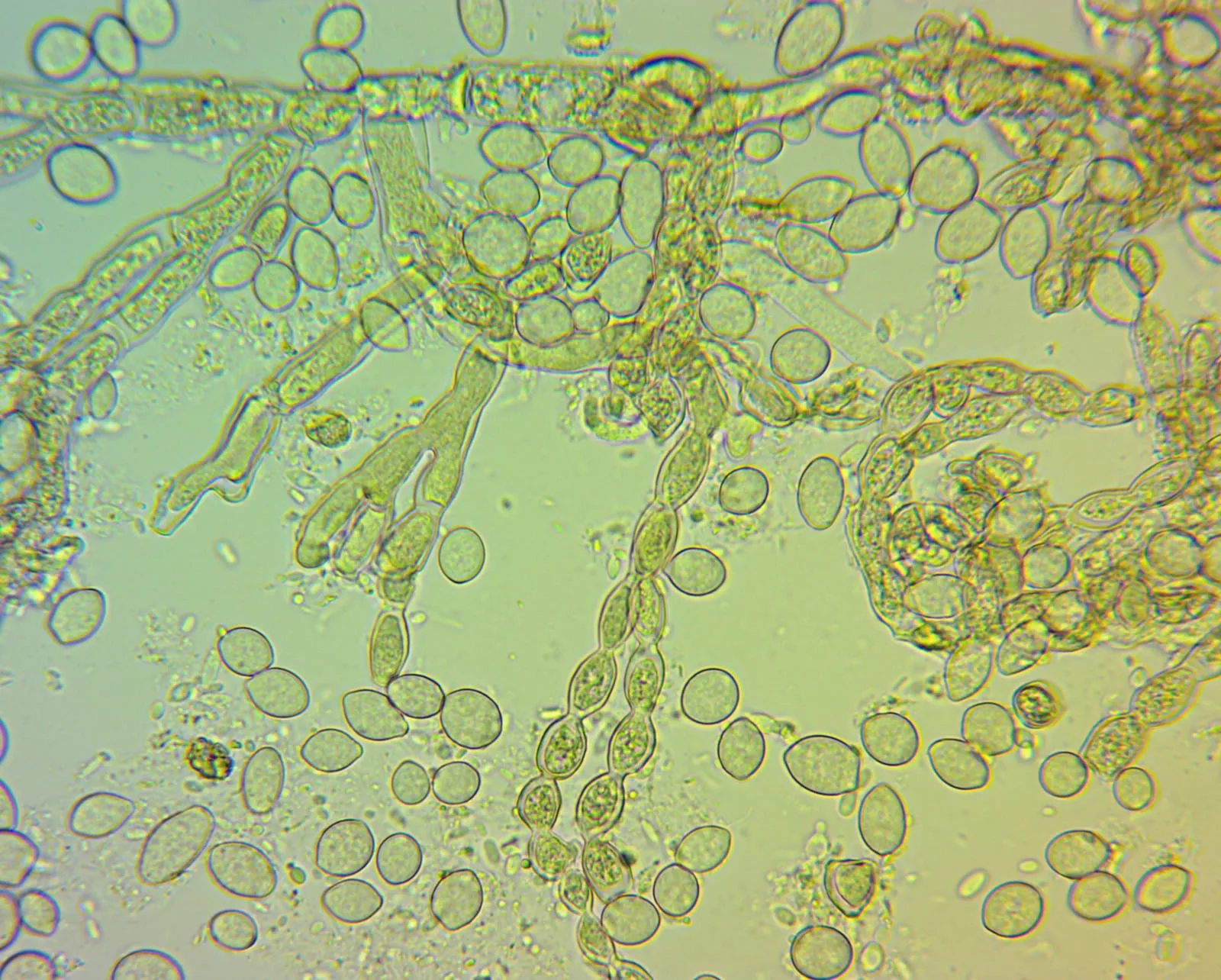
Monilinia fructicola
The most damaging stone-fruit and almond disease, causing blossom blight and fruit rot.
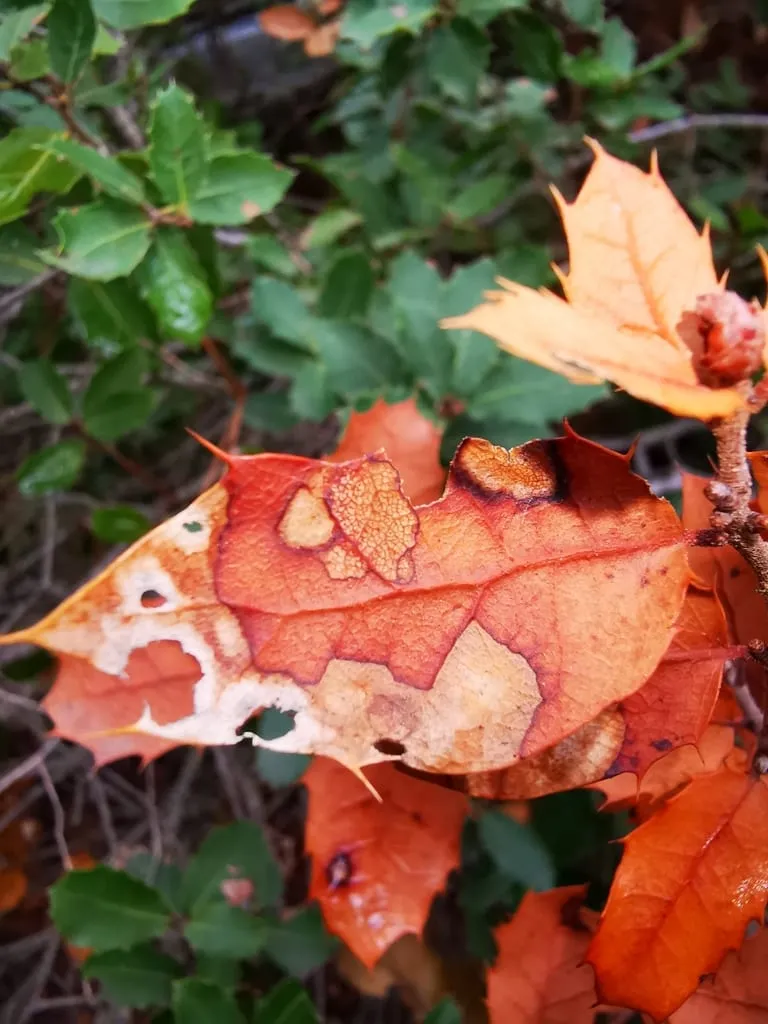
Xylella fastidiosa
Bacterial disease vectored by sharpshooter leafhoppers, causing progressive leaf scorch and tree decline. Same pathogen species as Pierce's disease in grape.
Modified care for zone 8b
Brown rot becomes more damaging in humid conditions during spring and at harvest. Zone 8b growers in areas with wet springs should apply preventive fungicide at bloom, at petal fall, and as hulls begin to split. Almond leaf scorch, caused by the bacterium Xylella fastidiosa and spread by leafhoppers, is a significant concern in warmer parts of zone 8b. There is no cure once a tree is infected; management focuses on controlling leafhopper populations and removing infected trees promptly.
In sandy soils common to parts of zone 8b, nematodes can stunt growth and shorten productive tree life. Planting on Nemaguard or Lovell rootstocks provides meaningful resistance; Guardian rootstock performs better in lighter soils with higher nematode pressure. Frost protection during the February bloom window remains the most consequential zone-specific intervention, given that a single late freeze can eliminate an entire season's crop.
Almond in adjacent zones
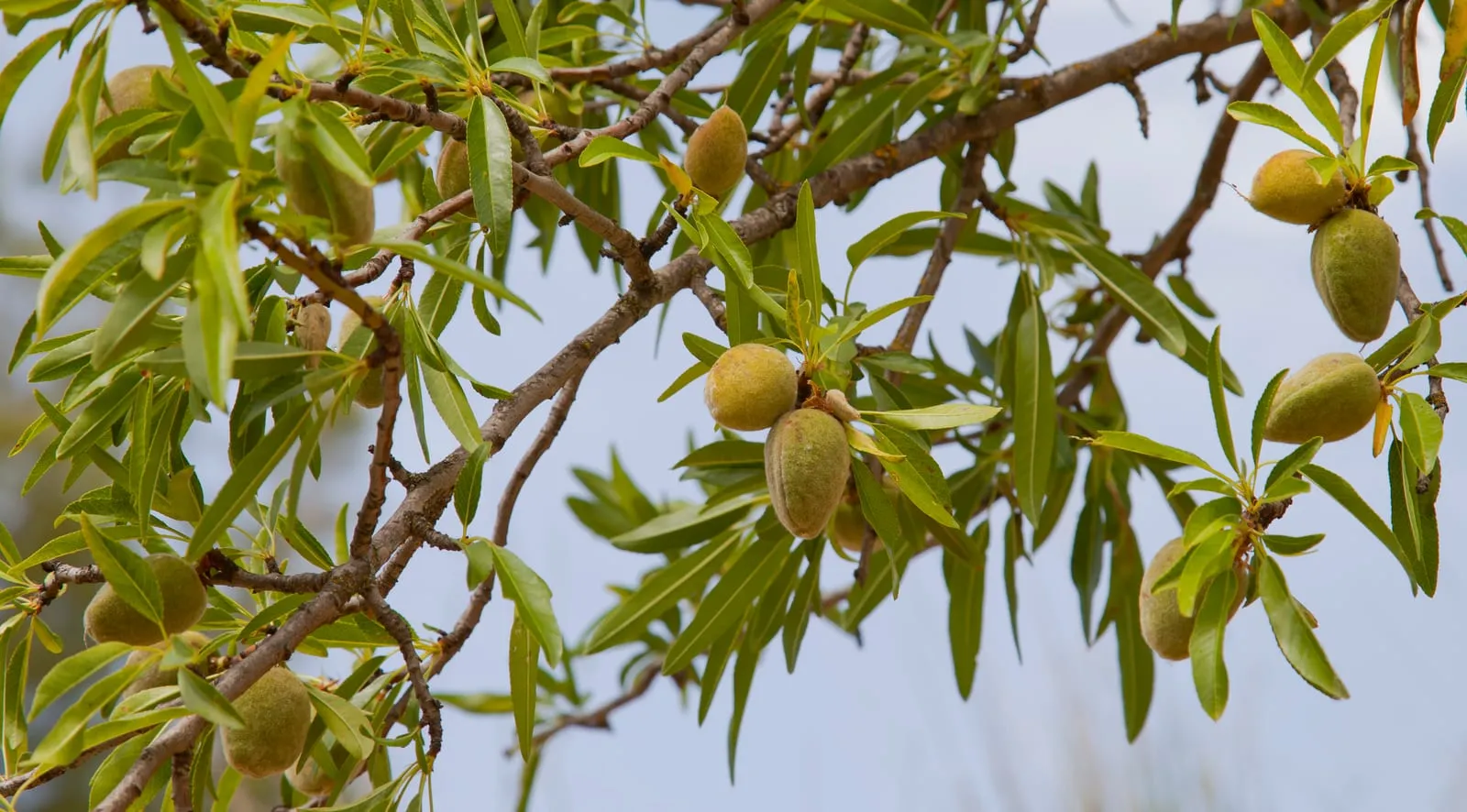
Image: "Almendras (Prunus dulcis), Huérmeda, España 2012-05-19, DD 01", by Diego Delso, via Wikimedia Commons, licensed under CC-BY Source.
,_Hu%C3%A9rmeda,_Espa%C3%B1a_2012-05-19,_DD_01.JPG)
Related