vegetable in zone 6b
Growing asparagus in zone 6b
Asparagus officinalis
- Zone
- 6b -5°F to 0°F
- Growing season
- 190 days
- Suitable varieties
- 3
- Days to harvest
- 730 to 1095
The verdict
Zone 6b is a genuine sweet spot for asparagus, not a marginal case. Asparagus is a cold-hardy perennial that requires a sustained dormancy period each winter to produce reliably in spring, and the zone's minimum temperatures of -5°F to 0°F deliver exactly that. Crowns planted in well-drained beds will overwinter without supplemental protection in most zone 6b locations.
The 190-day growing season comfortably accommodates the crop's needs: spears emerge and are harvested in spring, then the ferny top growth runs through summer and fall before frost triggers dormancy. All three recommended varieties, Jersey Knight, Purple Passion, and Mary Washington, are rated for zone 6b and perform consistently here. Jersey Knight offers the strongest Fusarium Wilt resistance, which matters given that disease's presence in the region. Purple Passion brings lower fiber content and a slightly later emergence that can reduce late-frost risk to early spears.
Recommended varieties for zone 6b
3 cultivars suited to this zone, with disease-resistance and zone-fit annotations.
| Variety | Notes | Zone fit | Disease resistance |
|---|---|---|---|
| Jersey Knight fits zone 6b | Tender, sweet, large green spears; all-male hybrid. Steamed, grilled, roasted, fresh. Productive male hybrid puts energy into spears not seeds. Disease-resistant Rutgers release. | | none noted |
| Purple Passion fits zone 6b | Sweet, tender, distinctive deep purple spears that turn green when cooked; higher sugar content than green types. Steamed, grilled, fresh raw on platters. Productive heritage selection. | | none noted |
| Mary Washington fits zone 6b | Mild, classic asparagus flavor; thin to medium green spears. Heritage 1949 USDA release. Productive open-pollinated, has both male and female plants (some seed-set reduces yield). | | none noted |
Critical timing for zone 6b
In zone 6b, asparagus spears typically push through the soil in mid- to late April, once soil temperatures at crown depth reach approximately 50°F. The harvest window runs roughly six to eight weeks, ending in late May or early June when spear diameter drops and fern development signals that the planting needs to rebuild its root reserves.
The main frost risk is to emerging spears rather than to the crowns themselves. A late freeze after spears have broken ground can blacken tips and reduce that season's harvest. Zone 6b's average last frost falls in the April 1 to April 15 range across much of the region, meaning early-emerging spears in warm springs are occasionally caught. Foliage persists until the first hard freeze in October or November, at which point it yellows and should be left standing until fully dormant before cutting back.
Common challenges in zone 6b
- ▸ Cedar-apple rust
- ▸ Fire blight
- ▸ Stink bugs
Disease pressure to watch for
Modified care for zone 6b
The primary disease concern in zone 6b plantings is Fusarium Wilt, a soilborne fungal pathogen that shortens bed longevity and reduces yield over time. Selecting resistant varieties (Jersey Knight in particular) at establishment is the most effective mitigation. Avoid replanting asparagus in a bed that previously hosted the crop, as Fusarium persists in soil for years.
Stink bugs are a documented pest pressure across zone 6b and can feed on emerging spears and developing berries on female plants. Row covers in early spring offer protection during peak spear harvest without requiring chemical intervention. In winters where temperatures drop to the colder end of the zone 6b range and snow cover is absent, a light layer of straw mulch over beds after the ground freezes adds insurance without causing crown rot. Remove it promptly in late winter before spears emerge.
Frequently asked questions
- How long until an asparagus bed produces a full harvest in zone 6b?
Crowns planted in zone 6b typically yield a light harvest in year two and a full harvest by year three. The first year should be a no-harvest year to let root systems establish. Patience at establishment translates directly into bed longevity, which can exceed 20 years in well-maintained plantings.
- Can asparagus crowns survive a zone 6b winter without mulch?
In most zone 6b locations, yes. Established crowns are rated to around -20°F and should survive zone 6b minimima without protection. Mulching is a reasonable precaution in the first winter after planting, when the root system is still shallow, or in exposed sites without snow cover as insulation.
- Is Purple Passion asparagus as productive as green varieties in zone 6b?
Purple Passion yields somewhat less per planting than Jersey Knight under equivalent conditions, but the difference is modest in home garden scale. It emerges a few days later than most green varieties, which can reduce exposure to late April frosts. The color fades to green when cooked.
+−
+−
+−
Asparagus in adjacent zones
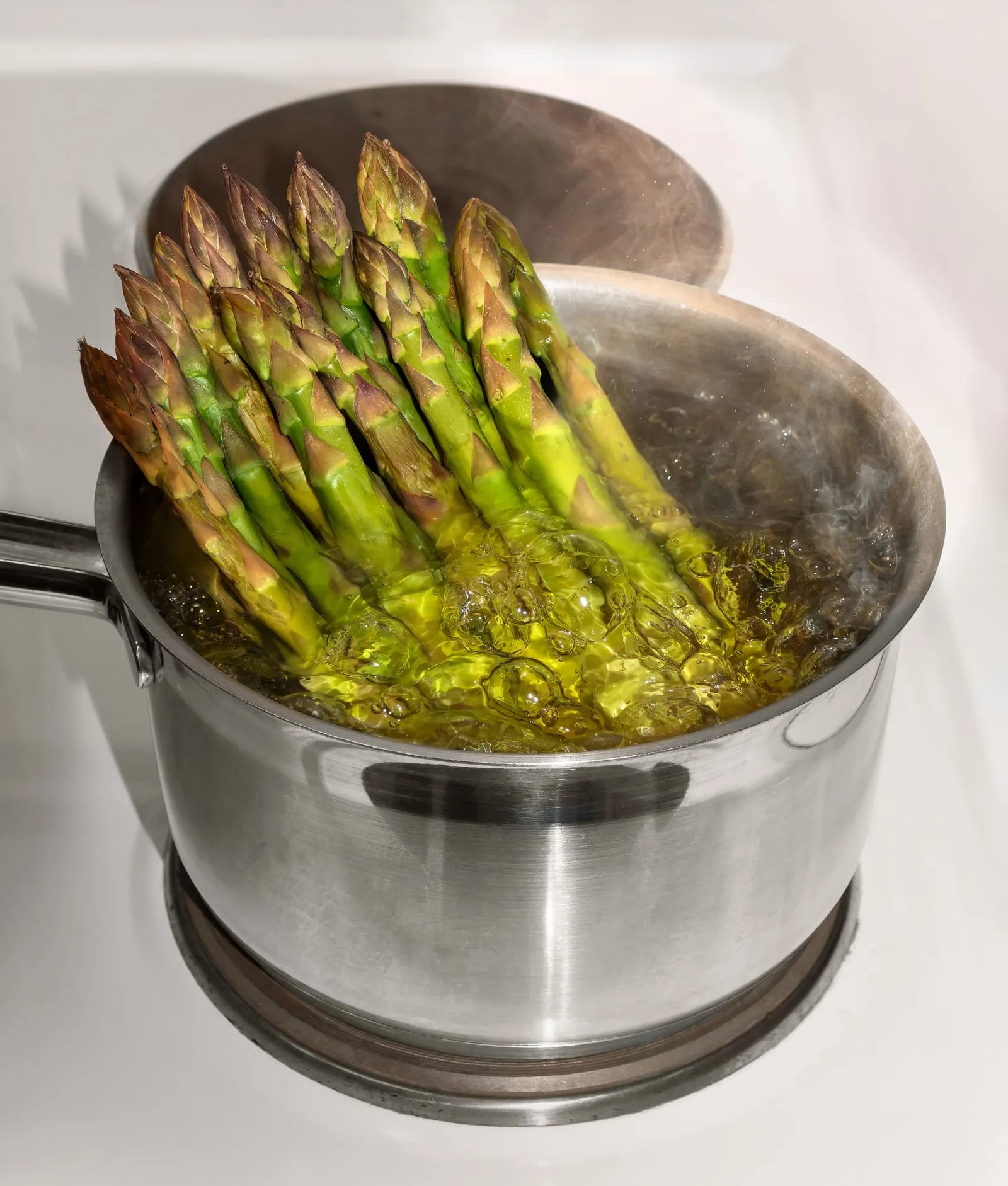
Image: "Steam-boiling green asparagus", by W.carter, via Wikimedia Commons, licensed under CC0 Source.

Related