vegetable in zone 5b
Growing beet in zone 5b
Beta vulgaris
- Zone
- 5b -15°F to -10°F
- Growing season
- 165 days
- Suitable varieties
- 4
- Days to harvest
- 55 to 70
The verdict
Zone 5b is a reliable production zone for beets. The crop is cool-season by nature, preferring soil temperatures between 50°F and 65°F for germination and root development, and zone 5b delivers those conditions twice each season: a genuine spring window and a productive fall window. The 165-day frost-free season is more than enough to run two full successions of beets, since most varieties mature in 55 to 70 days.
Beets are not chill-hour crops, so there is no matching concern the way there is with stone fruits or apples. The binding factor is heat, not cold. Zone 5b summers can push soil temperatures high enough to cause zoning of roots (pale interior rings) and woody texture, but that is a mid-summer direct-sow issue, not a zone-level limitation. For growers willing to time plantings around the heat, zone 5b is closer to a sweet spot than a marginal zone.
Recommended varieties for zone 5b
4 cultivars suited to this zone, with disease-resistance and zone-fit annotations.
| Variety | Notes | Zone fit | Disease resistance |
|---|---|---|---|
| Detroit Dark Red fits zone 5b | Sweet, earthy, classic deep-red beet flavor; uniformly round dark roots. Roasting, pickling, borscht, fresh salads. Heritage 1892 variety, the home-garden standard. | | none noted |
| Chioggia fits zone 5b | Mild, sweet, less earthy; red-and-white concentric ring patterns when sliced. Fresh raw on salads, lightly roasted. Italian heirloom, ornamental and edible. | | none noted |
| Golden fits zone 5b | Mild, sweet, delicate; orange-skinned yellow-fleshed beets. Fresh, roasting, salads. Less earthy than red types, doesn't bleed onto other ingredients. | | none noted |
| Bull's Blood fits zone 5b | Earthy, sweet, intensely red; deep wine-red roots and decorative dark red foliage. Roasting, micro greens, ornamental edible. Greens valuable in their own right. | | none noted |
Critical timing for zone 5b
Spring direct sowing in zone 5b typically begins 4 to 6 weeks before the last frost date, which falls in late April to early May depending on location within the zone. Soil must be workable and at least 40°F for reasonable germination; cold-soaked soil in early April often delays germination enough that a mid-April sow catches up to an early one.
Harvest for spring-sown beets runs June through early July, ahead of peak summer heat. For fall production, sow in late July to mid-August, targeting harvest before the first hard freeze, which arrives in zone 5b around mid-October. Fall beets often develop superior sweetness as cooling nights concentrate sugars in the roots.
Common challenges in zone 5b
- ▸ Plum curculio
- ▸ Codling moth
- ▸ Cedar-apple rust
Disease pressure to watch for
Modified care for zone 5b
Fusarium wilt is the primary disease risk to monitor in zone 5b. The pathogen persists in soil and favors warm, wet conditions. Rotating beets out of any bed that has grown beets, spinach, or Swiss chard in the past three years substantially reduces pressure. Detroit Dark Red and Golden both show reasonable field tolerance compared to more susceptible varieties.
Summer heat management matters more in zone 5b than in cooler zones. Mid-summer direct sowing into hot, dry soil frequently results in poor germination and stressed seedlings. A light mulch layer after thinning helps buffer soil temperature and retain moisture during July heat. There is no meaningful winter protection requirement for beets in zone 5b since the crop is grown as an annual; any roots left in ground after the first hard freeze are collateral, not a structural loss.
Frequently asked questions
- Can beets overwinter in zone 5b?
Not reliably. Zone 5b sees lows of -15°F to -10°F, which will kill beet roots in the ground. Beets can be mulched heavily and survive light frosts into November, but intentional overwintering is not practical at this zone. Harvest before the first hard freeze and store roots in a cool, humid cellar instead.
- Which beet varieties perform best in zone 5b?
Detroit Dark Red is the most broadly proven variety for this zone, with consistent germination in cool soils and good disease tolerance. Chioggia and Golden are reliable alternatives with different flesh color and milder flavor. Bull's Blood is grown as much for its ornamental foliage as its roots and performs well in both spring and fall plantings in zone 5b.
- How many crops of beets can be grown per year in zone 5b?
Two successions are practical: a spring crop sown in mid-April and harvested by early July, and a fall crop sown in late July and harvested in October before hard frost. A third succession is theoretically possible in a very long season, but the mid-summer window is generally too hot for quality root development.
+−
+−
+−
Beet in adjacent zones
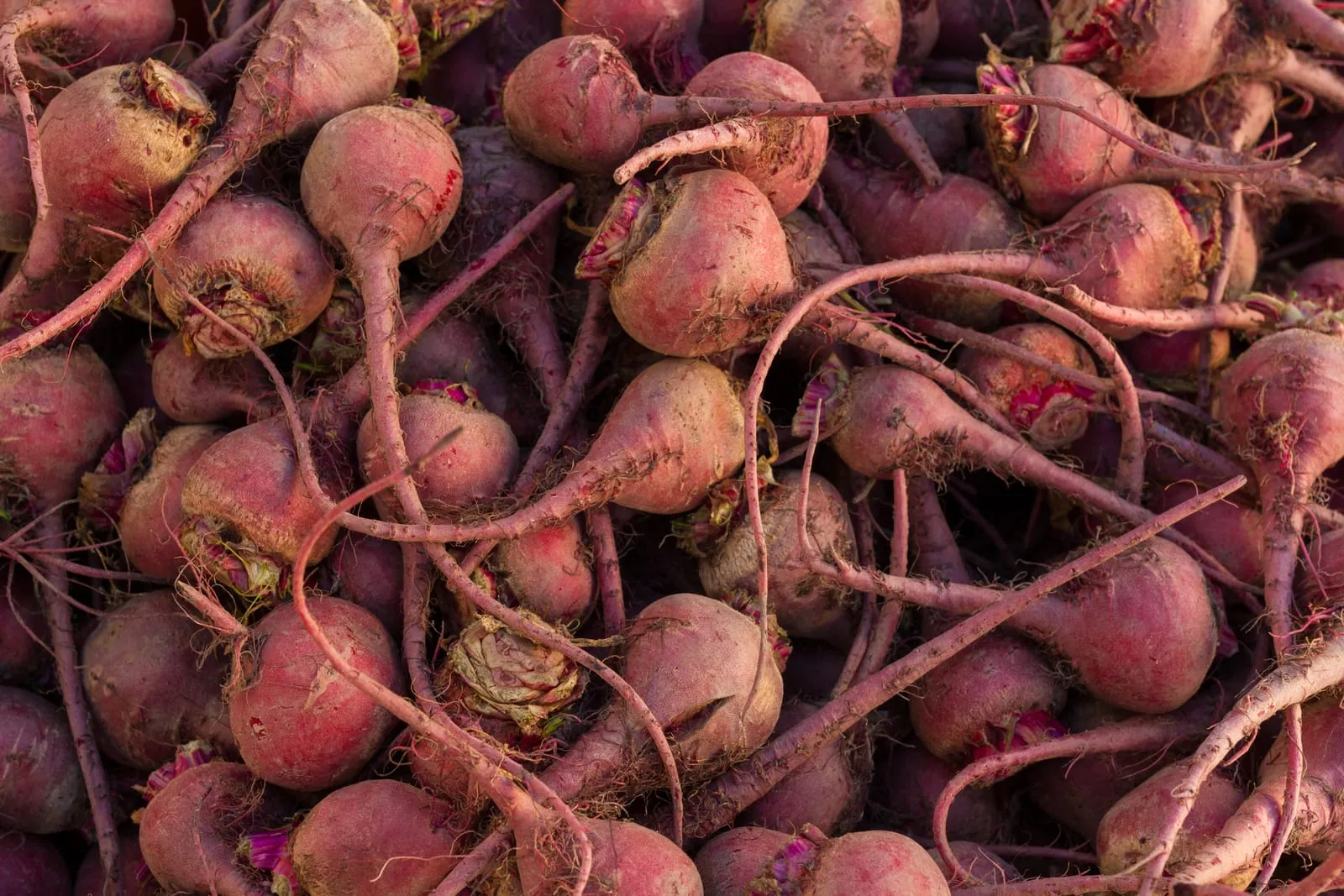
Image: "Beta vulgaris, San Francisco farmers market", by Frank Schulenburg, via Wikimedia Commons, licensed under CC0 Source.

Related