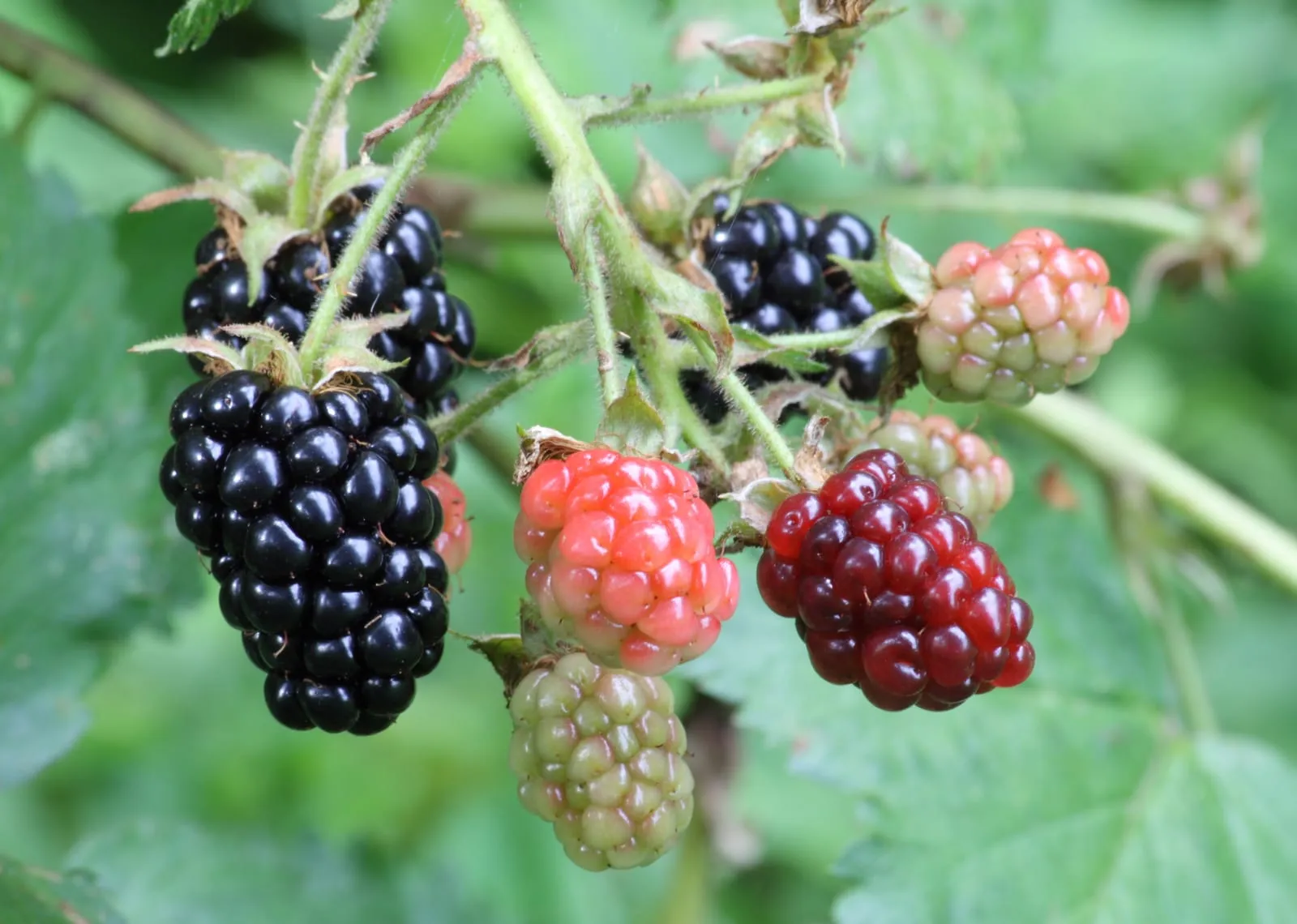
berry in zone 8a
Growing blackberry in zone 8a
Rubus subgenus Rubus
- Zone
- 8a 10°F to 15°F
- Growing season
- 240 days
- Chill needed
- 200 to 800 below 45°F
- Suitable varieties
- 5
- Days to harvest
- 60 to 90
The verdict
Zone 8a sits comfortably within blackberry's productive range rather than at its margins. Most blackberry varieties require 200 to 800 chill hours (hours below 45°F), and zone 8a typically accumulates 400 to 600 chill hours depending on location, satisfying even mid-range requirements with room to spare. The 240-day growing season is more than sufficient for fruit to develop and ripen fully.
The varieties listed for this zone reflect intentional selection for warm-climate performance. Navaho and Ouachita were developed by the University of Arkansas specifically for the mid-South climate profile that zone 8a represents. Prime-Ark Freedom adds the advantage of primocane bearing, producing a fall crop independent of chill accumulation. Marionberry is the outlier here: bred in the Pacific Northwest, it performs best with cooler summers and may disappoint in the warmer, more humid parts of zone 8a. Triple Crown is adaptable but also leans toward moderate summer temperatures.
For most blackberry plantings in zone 8a, chill hours are not the limiting factor. Summer heat management and disease pressure are the real variables.
Recommended varieties for zone 8a
5 cultivars suited to this zone, with disease-resistance and zone-fit annotations.
| Variety | Notes | Zone fit | Disease resistance |
|---|---|---|---|
| Triple Crown fits zone 8a | Sweet, large, glossy black berries with rich balanced flavor; fresh, baking, jam. Semi-erect thornless, very productive. Outstanding home-garden choice. | | none noted |
| Navaho fits zone 8a | Sweet, firm, small-medium berries with high sugar; fresh eating premium and shipping quality. Erect thornless, compact and self-supporting. | | none noted |
| Ouachita fits zone 8a | Sweet, firm, large berries with classic flavor; fresh eating and shipping. Erect thornless, productive, disease-resistant. Heat-tolerant southern cultivar. | | none noted |
| Prime-Ark Freedom fits zone 8a | Sweet, large, very high quality berries; fresh eating premium. Primocane-fruiting (bears on first-year canes), allows fall harvest plus floricane crop. Thornless. | | none noted |
| Marionberry fits zone 8a | Rich, complex, sweet-tart; the iconic Pacific Northwest blackberry, prized for pies and jam. Trailing habit, traditional thorny canes. Cold-tender (zone 7+). | | none noted |
Critical timing for zone 8a
Blackberries in zone 8a typically break dormancy in late February to early March as temperatures rise. Bloom follows from late March through April, roughly four to six weeks after last frost, which falls between mid-February and early March across most of the zone. The overlap between early bloom and late frost events is real, though floricane-bearing varieties have some natural protection because only a portion of canes bloom at once.
Harvest generally runs from late May through July for floricane varieties, with the bulk of fruit ripening in June. Prime-Ark Freedom adds a second flush in September through October from primocanes. This extended harvest window is a practical advantage in zone 8a, spreading labor and allowing home growers to manage fresh consumption without a single overwhelming glut.
Common challenges in zone 8a
- ▸ Insufficient chill hours for some apple varieties
- ▸ Pierce's disease in grapes
- ▸ Heat stress on cool-season crops
Disease pressure to watch for
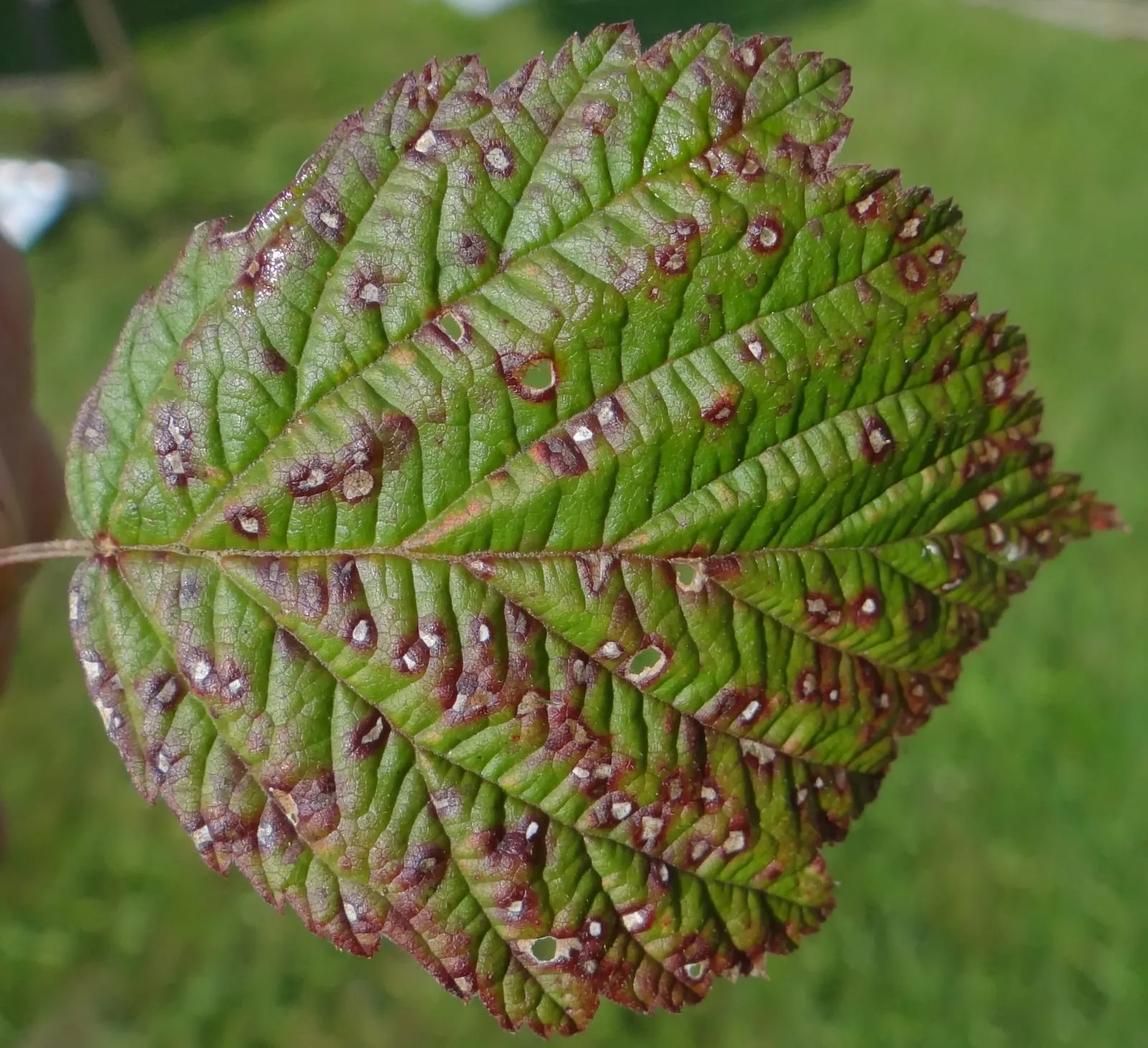
Elsinoe veneta
Fungal cane disease causing purple-bordered lesions that girdle and weaken bramble and Ribes canes, reducing yield over consecutive seasons.
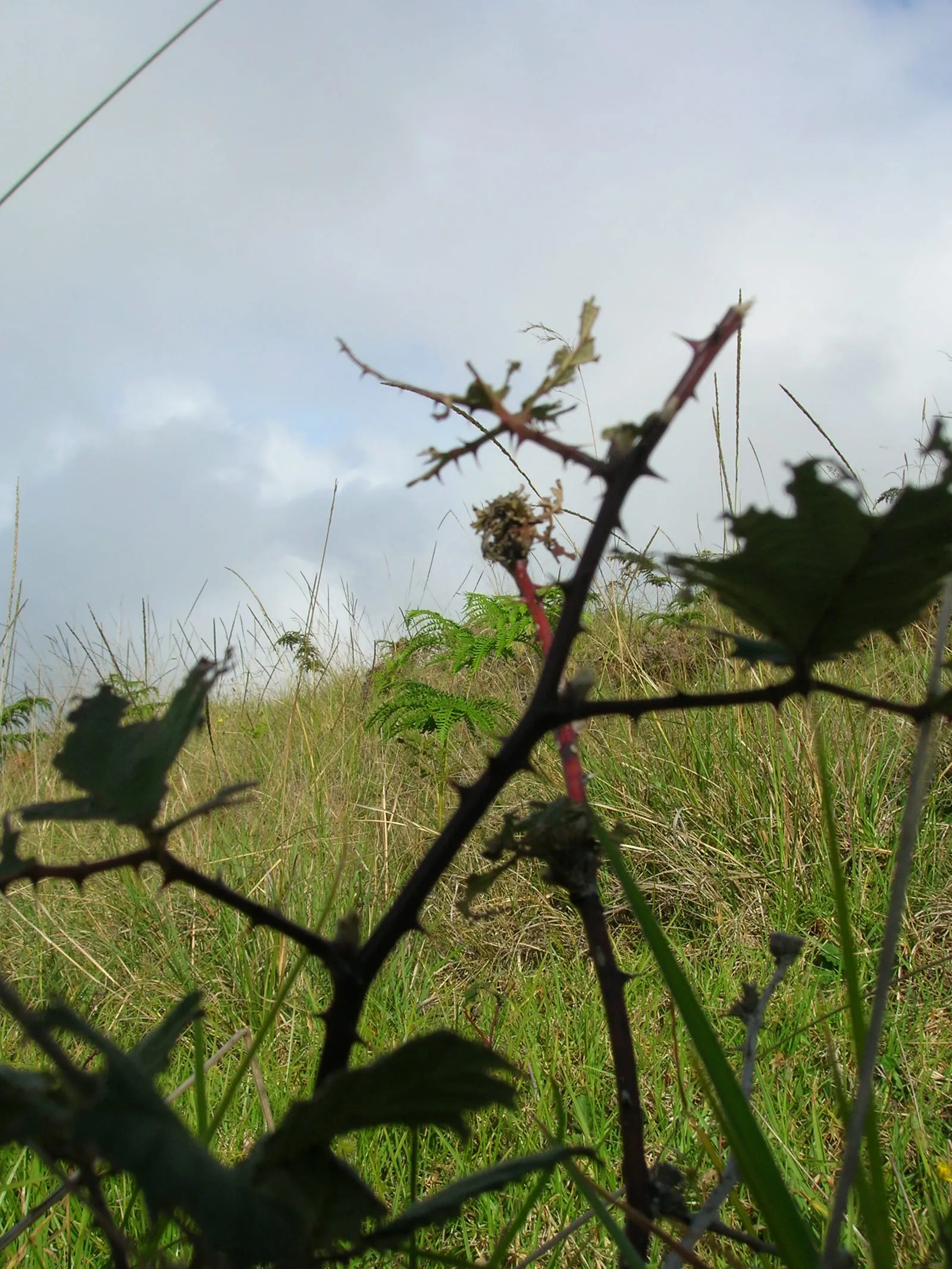
Leptosphaeria coniothyrium
Fungal disease that enters through wounds (often from cane-borer or pruning cuts) and causes dark cankers that wilt and kill canes.
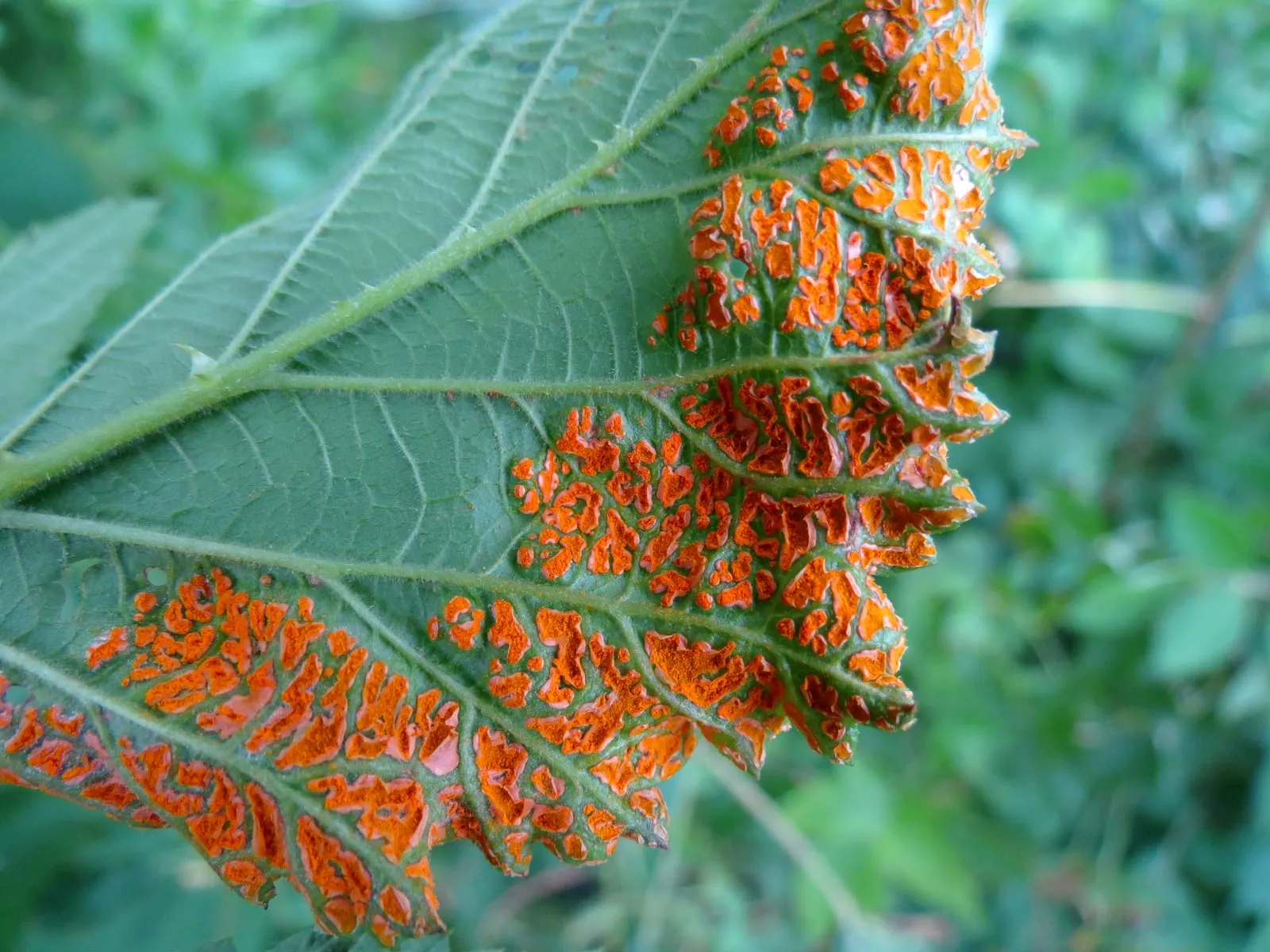
Arthuriomyces peckianus
Systemic fungal disease that permanently infects black raspberries and blackberries (not red raspberry); infected plants must be removed entirely.
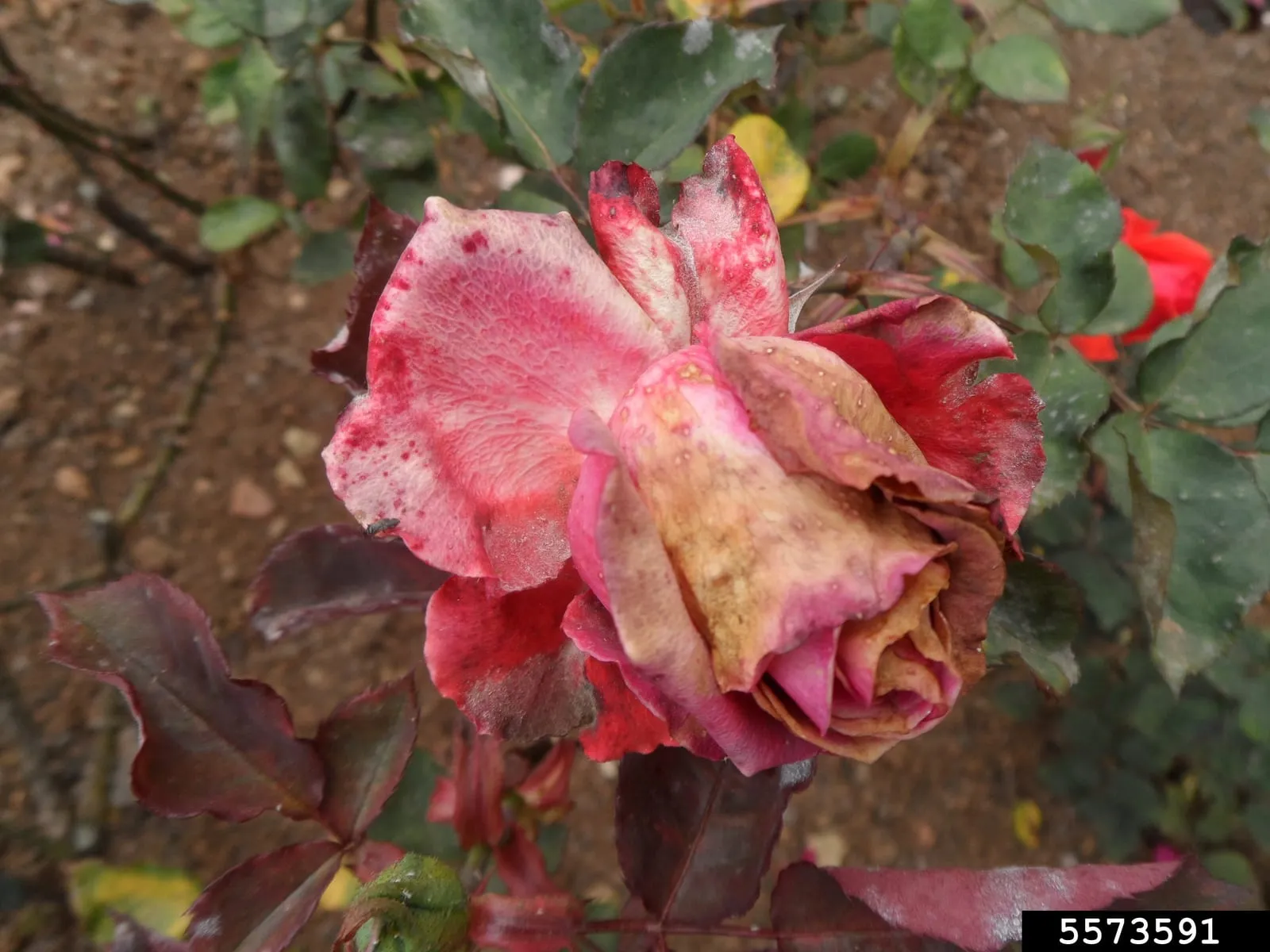
Botrytis cinerea
Ubiquitous fungal disease that causes fruit rot during cool wet weather, often the dominant berry disease in humid regions.
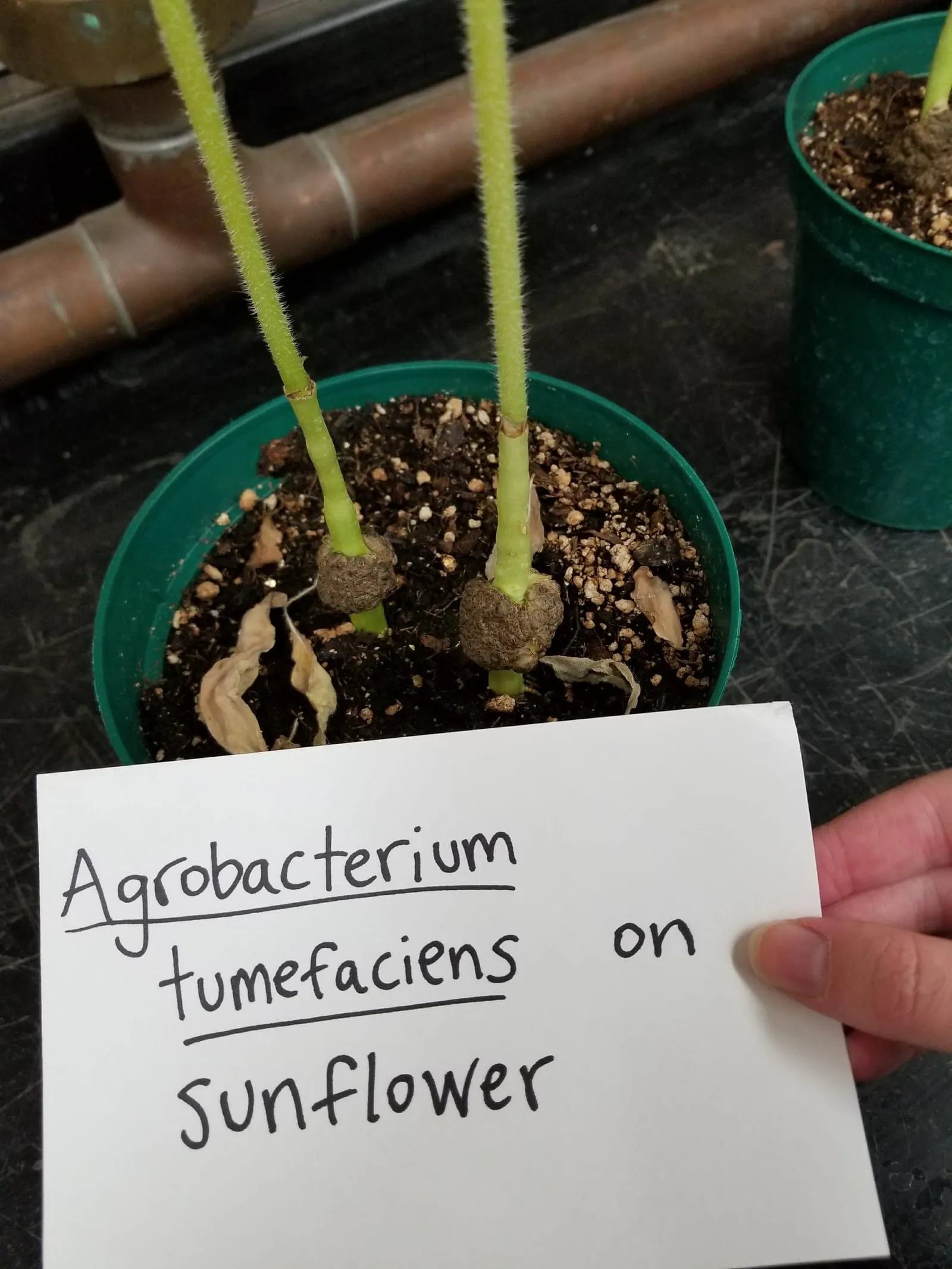
Agrobacterium tumefaciens
Soil-borne bacterium that enters plants through wounds and induces tumor-like galls on roots, crown, and lower stems. Galls reduce vigor and shorten plant lifespan; on Rubus the disease is often fatal.
Modified care for zone 8a
The main care adjustment in zone 8a is disease management intensity. Cane anthracnose, cane blight, and orange rust all thrive under the warm, humid conditions common across much of zone 8a. Removing floricanes immediately after harvest rather than waiting until winter reduces the inoculum load for the following season. Spacing canes for airflow and avoiding overhead irrigation where possible both lower gray mold pressure during fruiting.
Water management during summer heat is the other significant adjustment. Blackberries producing fruit through June and July in 90°F-plus conditions need consistent soil moisture; water stress during fruit swell directly reduces berry size and sugar development. A 3 to 4 inch mulch layer moderates soil temperature and extends irrigation intervals.
Winter protection is rarely necessary in zone 8a for the varieties suited to this climate. Floricanes are generally cold-hardy to well below the zone's minimum of 10 to 15°F.
Frequently asked questions
- Do blackberries need a pollinator in zone 8a?
Most blackberry varieties, including Navaho, Ouachita, and Triple Crown, are self-fertile. Planting multiple varieties can improve fruit set and extend the harvest window, but a single-variety planting will produce fruit without a pollinator partner.
- Why is Marionberry listed if zone 8a summers may be too warm for it?
Marionberry can succeed in the cooler, higher-elevation or coastal portions of zone 8a where summer temperatures stay moderate. In hot, humid lowland areas of the zone it often underperforms. Navaho or Ouachita are lower-risk choices if summer heat is a consistent pattern at your site.
- When should floricanes be pruned out in zone 8a?
Remove floricanes as soon as harvest is complete, typically July. Leaving spent canes standing through summer increases cane blight and anthracnose pressure. Prompt removal and disposal (not composting) reduces fungal carry-over to new primocanes.
- Can blackberries in zone 8a produce a fall crop?
Only primocane-bearing varieties like Prime-Ark Freedom produce a fall crop. Standard floricane varieties fruit once in late spring to summer. In zone 8a the fall primocane crop typically ripens September through October, before the first frost.
+−
+−
+−
+−
Blackberry in adjacent zones
Image: "Ripe, ripening, and green blackberries", by Ragesoss, via Wikimedia Commons, licensed under CC-BY-SA 3.0 Source.

Related