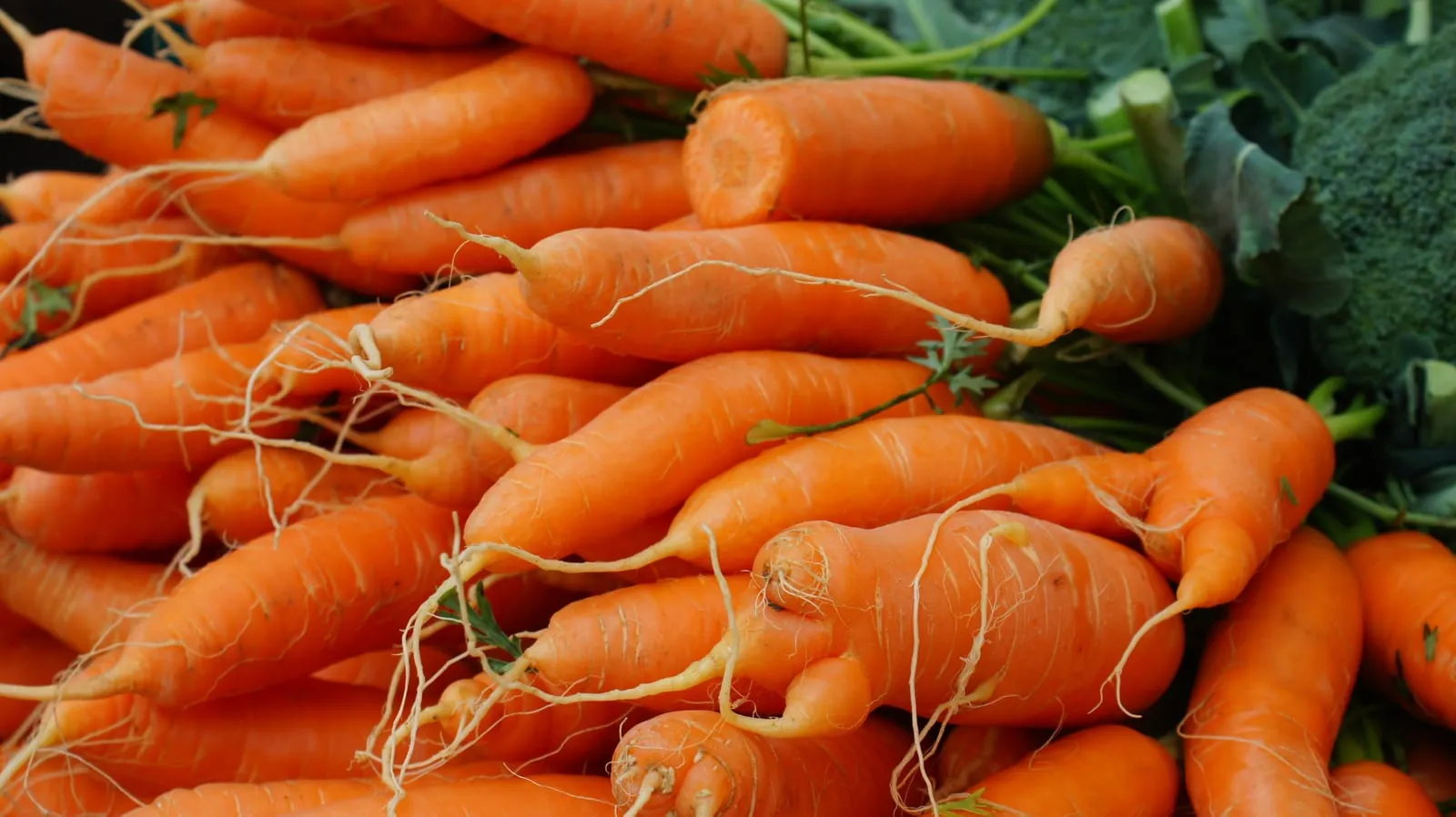
vegetable in zone 4b
Growing carrot in zone 4b
Daucus carota subsp. sativus
- Zone
- 4b -25°F to -20°F
- Growing season
- 130 days
- Suitable varieties
- 5
- Days to harvest
- 60 to 80
The verdict
Carrot is a cool-season root crop, and zone 4b suits it well. Unlike fruit trees, carrots have no chill-hour requirement; instead, they perform best when soil temperatures stay in the 50 to 70°F range during root development. Zone 4b's cool springs and autumns align with exactly those conditions, producing denser, sweeter roots than warmer zones typically yield.
The 130-day frost-free window in zone 4b is sufficient for virtually all carrot varieties. Nantes types mature in 65 to 75 days; Chantenay and Danvers Half Long types in 70 to 80 days. There is room for a spring crop and, in many locations within the zone, a second sowing timed for fall harvest. The main constraint is not season length but spring frost timing, which compresses the window for early direct sowing.
Recommended varieties for zone 4b
5 cultivars suited to this zone, with disease-resistance and zone-fit annotations.
| Variety | Notes | Zone fit | Disease resistance |
|---|---|---|---|
| Nantes fits zone 4b | Sweet, crisp, very low bitterness; cylindrical orange roots with blunt tips. Fresh, juicing, salads, the snacking carrot standard. Heritage French variety, sweetens with frost. | | none noted |
| Danvers Half Long fits zone 4b | Sweet, slightly stronger flavor; tapered orange roots that handle heavier soil. Fresh, cooking, storage. Heritage 1870s American variety, the root-cellar standard. | | none noted |
| Chantenay Red Core fits zone 4b | Sweet, juicy, broad shoulders tapering to a stubby point; copes with shallow or rocky soil. Fresh, juicing, soups. Heritage stocky variety good for difficult soils. | | none noted |
| Cosmic Purple fits zone 4b | Sweet, mild, novelty deep purple skin with orange core; holds purple when cooked briefly. Fresh, salads. Anthocyanin-rich, ornamental, kid-friendly. | | none noted |
| Atomic Red fits zone 4b | Mild, slightly bitter raw, sweet when cooked; deep red roots that turn brighter with cooking. Roasting, soups. Lycopene-rich, novelty for color. | | none noted |
Critical timing for zone 4b
Direct sow as soon as soil can be worked in spring, typically 3 to 4 weeks before the average last frost. In zone 4b, that generally falls between late April and mid-May depending on location within the zone. Carrot seed germinates slowly in cold soil (soil below 50°F slows germination considerably), so early sowings may take 3 weeks or more to emerge.
Harvest for spring-sown carrots falls in midsummer, 65 to 80 days after sowing. A second sowing in mid to late July targets fall harvest; roots left in the ground through the first several frosts gain sweetness as starches convert to sugars in the cold. Hard freezes below 25°F will eventually damage unprotected roots in the ground.
Common challenges in zone 4b
- ▸ Spring frost timing
- ▸ Apple scab pressure
- ▸ Cane berry winter dieback
Modified care for zone 4b
The primary adjustment in zone 4b is timing precision. A late spring frost after germination will not kill established carrot seedlings, but a hard freeze can damage emerging seedlings and slow an already slow-germinating crop. Row cover provides a few degrees of buffer for early sowings.
For fall harvests, plan the second sowing carefully: count back from the average first fall frost date by the variety's days-to-maturity plus a week of buffer. Mulching with straw after the first light frost extends the harvest window by several weeks, keeping soil from freezing hard and allowing roots to be pulled through early November in many parts of the zone.
Short-rooted types like Chantenay Red Core are worth considering in heavier soils common to northern zones, where Nantes or Danvers roots may fork in dense subsoil. Amending planting beds with compost to a depth of 12 inches reduces forking regardless of variety.
Frequently asked questions
- Can carrots survive a light frost in zone 4b?
Established carrot tops can tolerate light frosts down to about 28°F without significant damage. Roots in the ground are well insulated by soil and can survive harder frosts. Seedlings just emerging are more vulnerable; row cover is useful if a hard frost is forecast shortly after germination.
- Why do fall carrots taste sweeter in zone 4b?
When soil temperatures drop below 50°F, carrot roots convert stored starches to sugars as a cold-tolerance mechanism. Zone 4b's sharp autumn temperature drop accelerates this process, producing noticeably sweeter roots compared to summer harvests. Leaving roots in the ground through several frosts maximizes this effect.
- Which carrot variety works best in a short zone 4b season?
Nantes types mature in 65 to 75 days and are well suited to zone 4b's 130-day window. Chantenay Red Core performs well in heavier soils and matures in a similar timeframe. Cosmic Purple and Atomic Red are slower at 70 to 80 days but still fit comfortably within the season.
- Is a second carrot planting realistic in zone 4b?
Yes, in most of zone 4b a second sowing is practical. Sow the second crop in mid to late July, counting back from your average first fall frost by the variety's days-to-maturity plus one week. The fall crop typically out-flavors the summer crop due to cold-sweetening in the root.
+−
+−
+−
+−
Carrot in adjacent zones
Image: "Carrots at Ljubljana Central Market", by domdomegg, via Wikimedia Commons, licensed under CC-BY Source.

Related