vegetable in zone 5b
Growing carrot in zone 5b
Daucus carota subsp. sativus
- Zone
- 5b -15°F to -10°F
- Growing season
- 165 days
- Suitable varieties
- 5
- Days to harvest
- 60 to 80
The verdict
Carrots are a cool-season root crop, and zone 5b suits them well. Unlike fruit trees, carrots carry no chill-hour requirement; they are annuals that complete their life cycle within a single growing season, making winter minimum temperatures of -15 to -10°F irrelevant to production. The 165-day frost-free window comfortably accommodates two distinct growing windows: a spring sowing targeting early summer harvest and a late-summer sowing aimed at fall. The cool shoulder seasons that zone 5b reliably provides are exactly the conditions carrots need for dense, sweet roots. Sustained soil temperatures above 80°F can cause forking, bitterness, and color loss; zone 5b summers are warm enough to grow good roots but short enough to reduce, though not eliminate, that heat pressure. All five varieties listed here, including the pigmented selections Cosmic Purple and Atomic Red, develop their characteristic color and flavor best under cool-to-moderate growing conditions, making zone 5b a genuine sweet spot rather than a marginal one.
Recommended varieties for zone 5b
5 cultivars suited to this zone, with disease-resistance and zone-fit annotations.
| Variety | Notes | Zone fit | Disease resistance |
|---|---|---|---|
| Nantes fits zone 5b | Sweet, crisp, very low bitterness; cylindrical orange roots with blunt tips. Fresh, juicing, salads, the snacking carrot standard. Heritage French variety, sweetens with frost. | | none noted |
| Danvers Half Long fits zone 5b | Sweet, slightly stronger flavor; tapered orange roots that handle heavier soil. Fresh, cooking, storage. Heritage 1870s American variety, the root-cellar standard. | | none noted |
| Chantenay Red Core fits zone 5b | Sweet, juicy, broad shoulders tapering to a stubby point; copes with shallow or rocky soil. Fresh, juicing, soups. Heritage stocky variety good for difficult soils. | | none noted |
| Cosmic Purple fits zone 5b | Sweet, mild, novelty deep purple skin with orange core; holds purple when cooked briefly. Fresh, salads. Anthocyanin-rich, ornamental, kid-friendly. | | none noted |
| Atomic Red fits zone 5b | Mild, slightly bitter raw, sweet when cooked; deep red roots that turn brighter with cooking. Roasting, soups. Lycopene-rich, novelty for color. | | none noted |
Critical timing for zone 5b
Carrots are direct-sown rather than transplanted. In zone 5b, the spring sowing window opens roughly three to four weeks before the last expected frost, which falls in early to mid-April for most of the zone. Germination is temperature-dependent and slows sharply in cold soil; below 50°F, seeds may take three weeks or more to emerge. Most standard varieties mature in 70 to 80 days from sowing, placing spring-sown roots at peak harvest in late June through July.
The fall sowing window opens in late July to early August, targeting roots that mature as temperatures drop in September and October. Timing the fall sowing so roots reach maturity just after the first light frost is deliberate: cool temperatures convert stored starches to sugars, improving sweetness. Zone 5b's first hard freeze typically arrives in mid-to-late October, marking the practical end of unprotected field harvest.
Common challenges in zone 5b
- ▸ Plum curculio
- ▸ Codling moth
- ▸ Cedar-apple rust
Modified care for zone 5b
Spring soil in zone 5b warms slowly after hard winters. Sowing under row cover or low tunnels in early April can raise soil temperature by 5 to 10°F and meaningfully reduce germination time. Without cover, waiting until soil reaches a consistent 50°F before sowing avoids erratic stands.
For fall crops, mulching with 4 to 6 inches of straw after the tops die back can extend in-ground storage through November and into early December in most zone 5b locations, where hard ground freeze is typically delayed until mid-to-late November.
The pest pressures most commonly associated with zone 5b fruit crops, including plum curculio, codling moth, and cedar-apple rust, do not affect carrots. The primary carrot-specific pest concern in this zone is carrot rust fly (Psila rosae). Annual bed rotation and floating row cover applied during adult fly activity periods in May and again in August reduces infestation without chemical intervention.
Carrot in adjacent zones
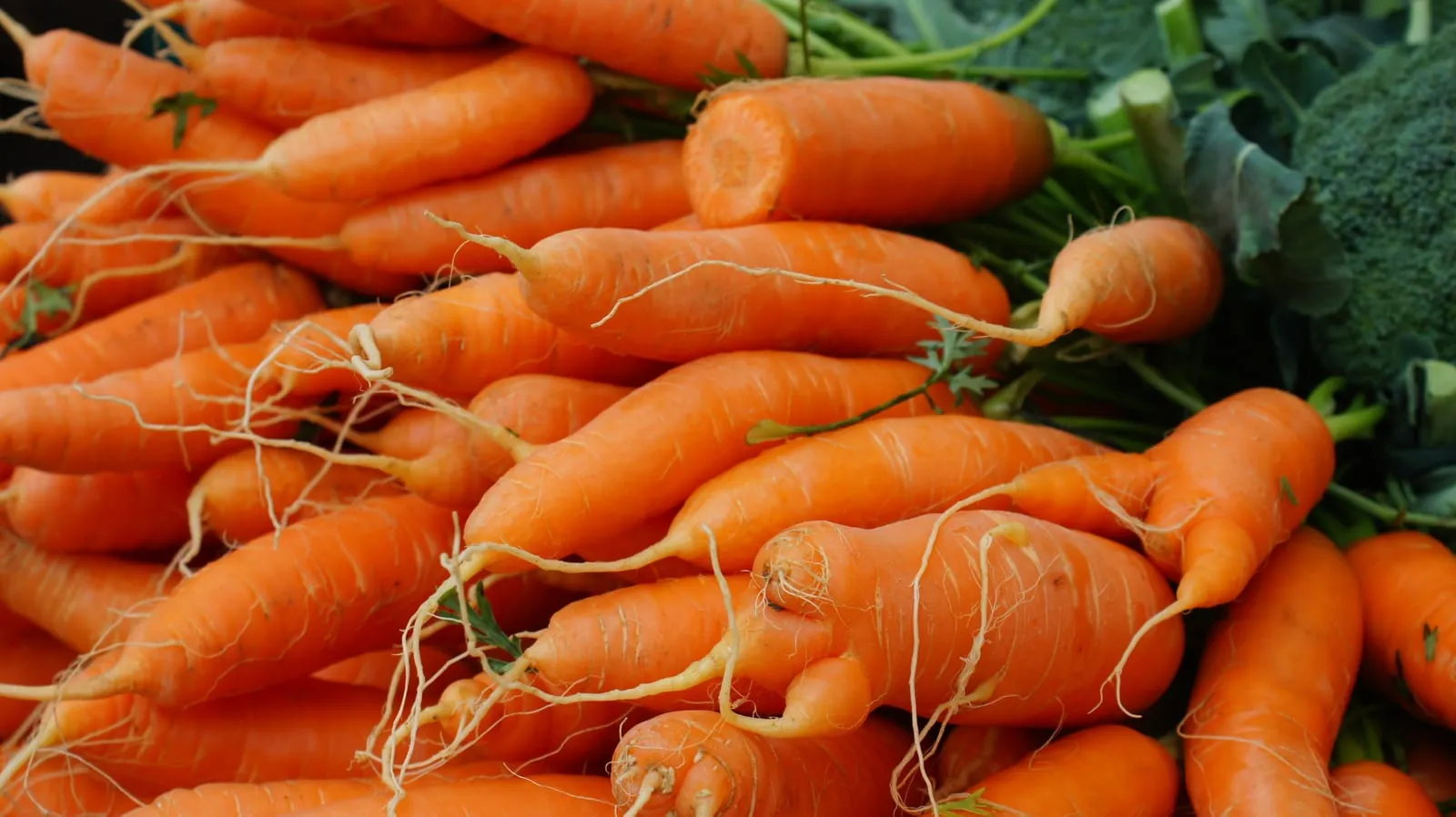
Image: "Carrots at Ljubljana Central Market", by domdomegg, via Wikimedia Commons, licensed under CC-BY Source.

Related