vegetable in zone 6a
Growing carrot in zone 6a
Daucus carota subsp. sativus
- Zone
- 6a -10°F to -5°F
- Growing season
- 180 days
- Suitable varieties
- 5
- Days to harvest
- 60 to 80
The verdict
Carrots are a cool-season biennial grown as an annual for their roots. The chill-hour framework used for fruit trees does not apply; the relevant question is whether zone 6a's temperatures provide the cool conditions (optimal soil temp 60-65°F) that produce sweet, well-formed roots.
Zone 6a is a reliable fit. The 180-day growing season supports two sowings per year: a spring planting that benefits from cool weather before summer arrives and a fall planting that matures in the cool weeks leading up to first frost. A light frost actually increases sweetness by triggering starch-to-sugar conversion in the roots, so late-season harvests often outperform spring ones on flavor.
The zone's winter minimum of -10 to -5°F means overwintering carrots in the ground requires heavy mulching to prevent the roots from freezing solid. For standard spring and fall crops, that cold is irrelevant to the growing cycle.
Recommended varieties for zone 6a
5 cultivars suited to this zone, with disease-resistance and zone-fit annotations.
| Variety | Notes | Zone fit | Disease resistance |
|---|---|---|---|
| Nantes fits zone 6a | Sweet, crisp, very low bitterness; cylindrical orange roots with blunt tips. Fresh, juicing, salads, the snacking carrot standard. Heritage French variety, sweetens with frost. | | none noted |
| Danvers Half Long fits zone 6a | Sweet, slightly stronger flavor; tapered orange roots that handle heavier soil. Fresh, cooking, storage. Heritage 1870s American variety, the root-cellar standard. | | none noted |
| Chantenay Red Core fits zone 6a | Sweet, juicy, broad shoulders tapering to a stubby point; copes with shallow or rocky soil. Fresh, juicing, soups. Heritage stocky variety good for difficult soils. | | none noted |
| Cosmic Purple fits zone 6a | Sweet, mild, novelty deep purple skin with orange core; holds purple when cooked briefly. Fresh, salads. Anthocyanin-rich, ornamental, kid-friendly. | | none noted |
| Atomic Red fits zone 6a | Mild, slightly bitter raw, sweet when cooked; deep red roots that turn brighter with cooking. Roasting, soups. Lycopene-rich, novelty for color. | | none noted |
Critical timing for zone 6a
Carrots are direct-sown rather than transplanted, as the taproot does not tolerate disturbance. In zone 6a, the spring window opens roughly 4 to 6 weeks before the average last frost date (typically mid-April, though local conditions vary), meaning direct sowing can begin as early as mid-March once soil temperature exceeds 45°F.
Fall planting is often more productive. Count back 70 to 80 days from the average first frost date (around mid-October in much of zone 6a) and sow in late July or early August. Roots harvested in October and November, after light frosts have sweetened them, tend to be higher quality than spring-pulled carrots that matured in warming summer soil. Most varieties in the compatible list reach harvest in 70 to 75 days.
Common challenges in zone 6a
- ▸ Brown rot in stone fruit
- ▸ Japanese beetles
- ▸ Spring frost damage to peach buds
Modified care for zone 6a
The primary zone 6a adjustment for carrots is soil temperature management in early spring. Germination is slow and unreliable below 50°F; covering a prepared bed with clear plastic for two weeks before sowing can raise soil temperature enough to meaningfully improve germination speed and uniformity.
Summer heat is the second concern. Varieties like Nantes and Chantenay Red Core tolerate moderate heat better than thin Imperator types, but any carrot left to mature through extended periods above 85°F risks becoming fibrous and bitter. The fall planting schedule largely sidesteps this problem by keeping root development in cooler soil.
Japanese beetles, a documented zone 6a pressure, can skeletonize carrot foliage during mid-summer peak emergence. Severe defoliation reduces root size but rarely kills the plant. Floating row cover provides effective protection where beetle pressure has been heavy in previous seasons.
Carrot in adjacent zones
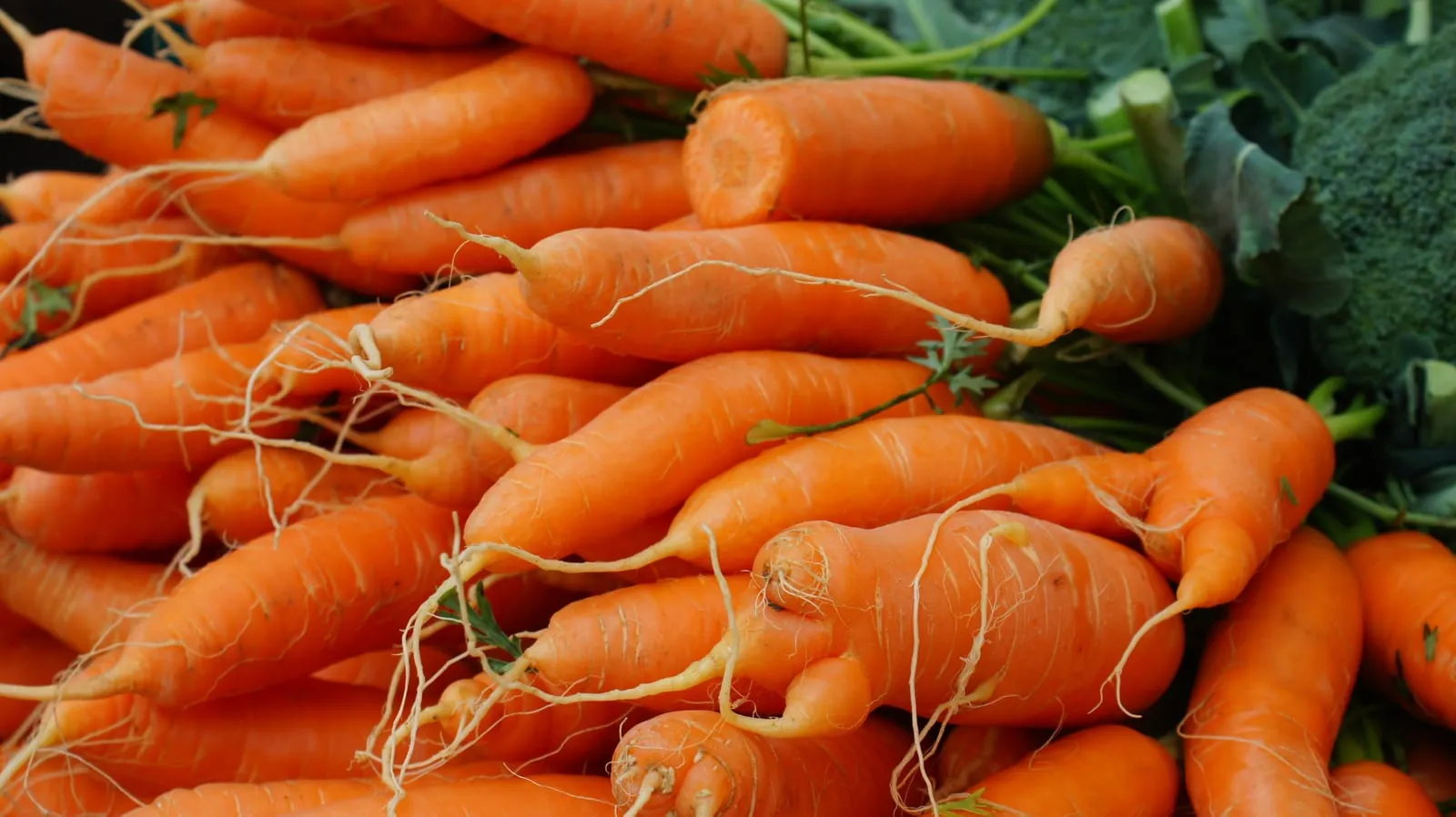
Image: "Carrots at Ljubljana Central Market", by domdomegg, via Wikimedia Commons, licensed under CC-BY Source.

Related