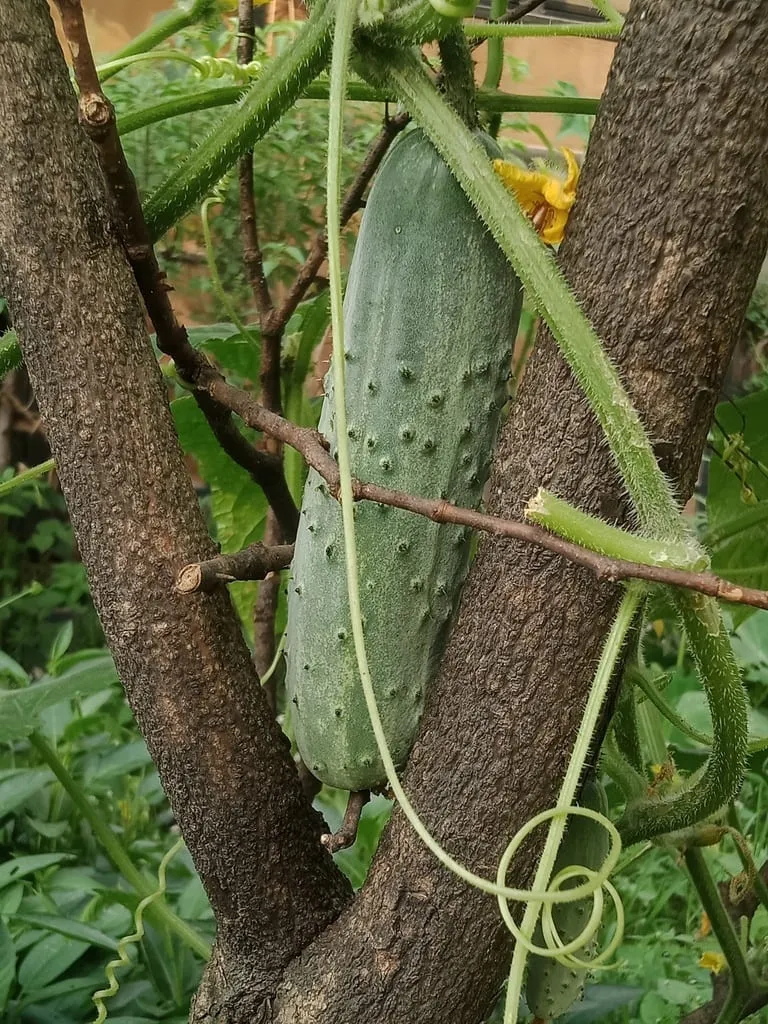
vegetable in zone 7b
Growing cucumber in zone 7b
Cucumis sativus
- Zone
- 7b 5°F to 10°F
- Growing season
- 220 days
- Suitable varieties
- 5
- Days to harvest
- 50 to 70
The verdict
Cucumber is a warm-season annual with no chill-hour requirement, so zone 7b is not a marginal zone for the crop. It is a reliable sweet spot. The 220-day growing season comfortably accommodates multiple succession plantings; most slicing and pickling varieties reach harvest in 50 to 65 days from direct sowing, leaving room for two full crops between the region's typical last frost (mid-April in the piedmont) and first fall frost (late October to early November).
The limiting factor in zone 7b is not cold tolerance but summer disease pressure. Downy mildew and bacterial wilt both intensify in the humid piedmont summers, and late-season heat can accelerate vine decline. Varieties with documented mildew tolerance, such as Marketmore 76 and Persian/Beit Alpha types, hold up better through August than older open-pollinated lines. Lemon and Suyo Long are more susceptible to foliar disease under humid conditions and perform best when sown early enough to complete harvest before mid-August heat peaks.
Recommended varieties for zone 7b
5 cultivars suited to this zone, with disease-resistance and zone-fit annotations.
| Variety | Notes | Zone fit | Disease resistance |
|---|---|---|---|
| Marketmore 76 fits zone 7b | Crisp, mild, classic American slicing cucumber; long dark green fruit. Salads, fresh, sandwiches. Disease-resistant Cornell release, the home-garden standard. | | none noted |
| National Pickling fits zone 7b | Crisp, blocky, ideal for fermentation; classic short pickling cucumber. Pickles, fresh, pickle relish. Productive, concentrated harvest for putting up. | | none noted |
| Lemon fits zone 7b | Mild, crisp, slightly sweet; round pale-yellow cucumber the size of a tennis ball. Salads, fresh out of hand, pickling whole. Heat-tolerant heritage variety. | | none noted |
| Suyo Long fits zone 7b | Sweet, burpless, crisp; foot-long ribbed Asian cucumber. Stir-fries, fresh, salads. Productive in heat where other cucumbers fail. Trellis required. | | none noted |
| Persian / Beit Alpha fits zone 7b | Sweet, thin-skinned, no need to peel; small smooth fruits. Fresh eating, salads, snacks. Parthenocarpic types set without pollination, productive in greenhouses. | | none noted |
Critical timing for zone 7b
In zone 7b piedmont, the safe direct-sowing window opens around mid-April once soil temperature reaches 60°F and frost risk drops below 10 percent. Transplants started indoors 3 to 4 weeks earlier can be set out at the same time, though cucumber roots resent disturbance, so cell trays are preferable to bare-root starts.
Bloom typically begins 35 to 45 days after germination. The first harvest follows 10 to 14 days after pollination for most slicing types. A mid-April sowing reaches peak production in late June, which precedes the most aggressive downy mildew pressure. A second sowing in late June extends harvest into September but runs directly into the late-summer disease window, so disease-tolerant variety selection becomes more important for that planting.
Common challenges in zone 7b
- ▸ Cedar-apple rust pressure heavy in piedmont
- ▸ Japanese beetles
- ▸ Brown marmorated stink bug
- ▸ Late summer disease pressure
Disease pressure to watch for
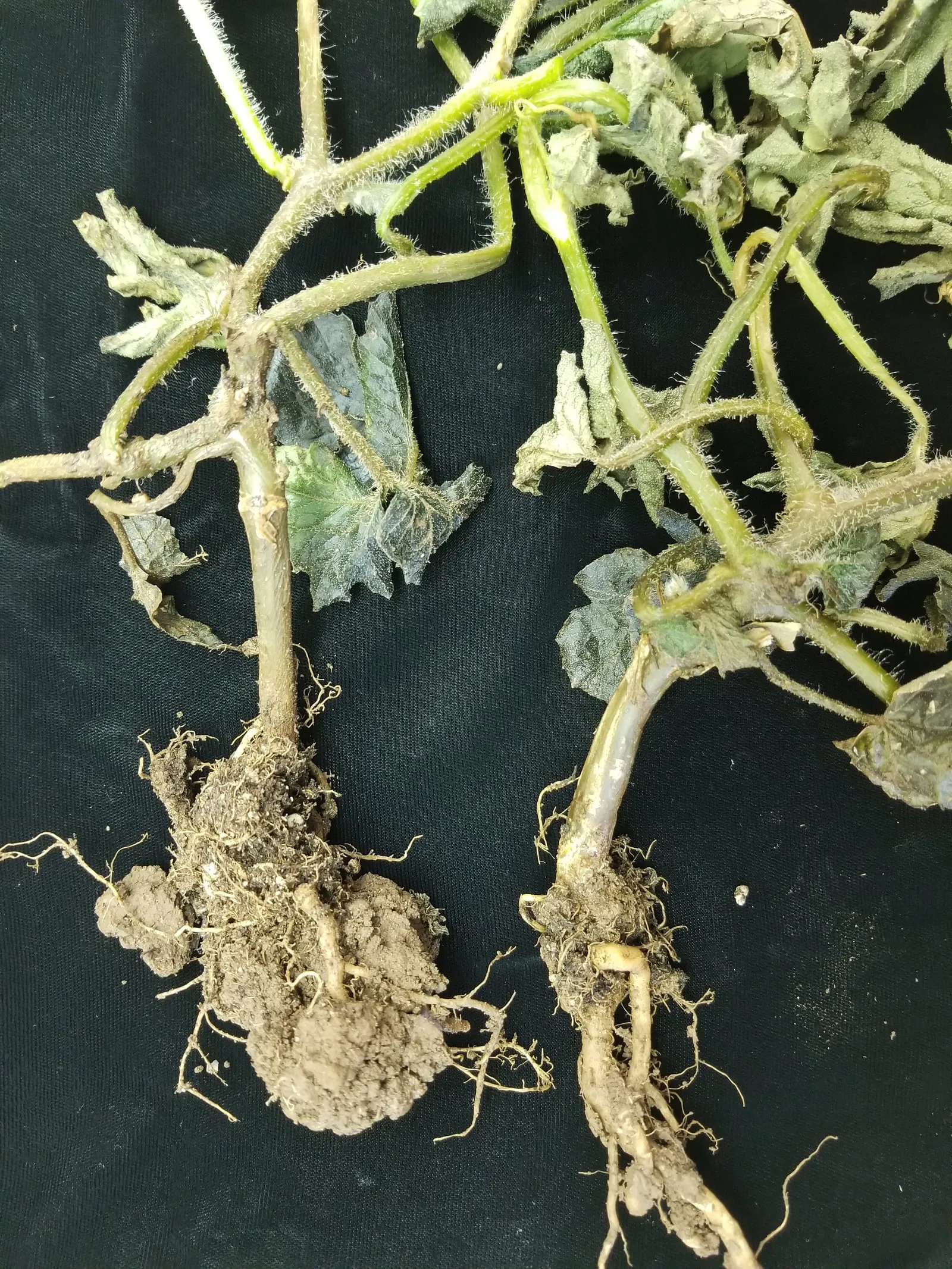
Erwinia tracheiphila
Bacterial disease vectored exclusively by cucumber beetles. Once a plant is infected there is no recovery; whole-plant collapse follows.
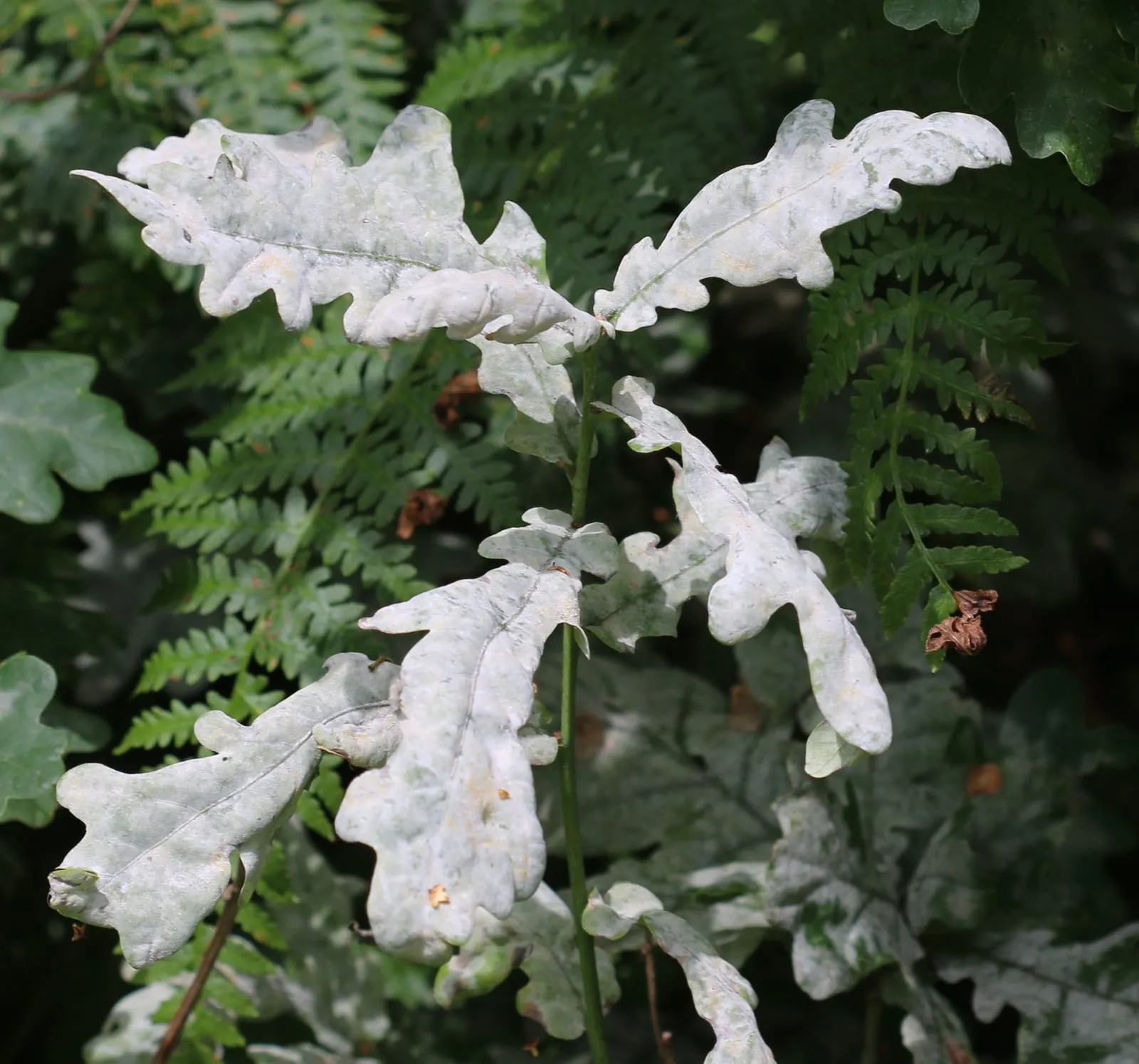
Multiple species (Erysiphales)
Surface-feeding fungal disease producing white powdery growth on leaves and stems. Reduces yield by stealing photosynthate and accelerating senescence.
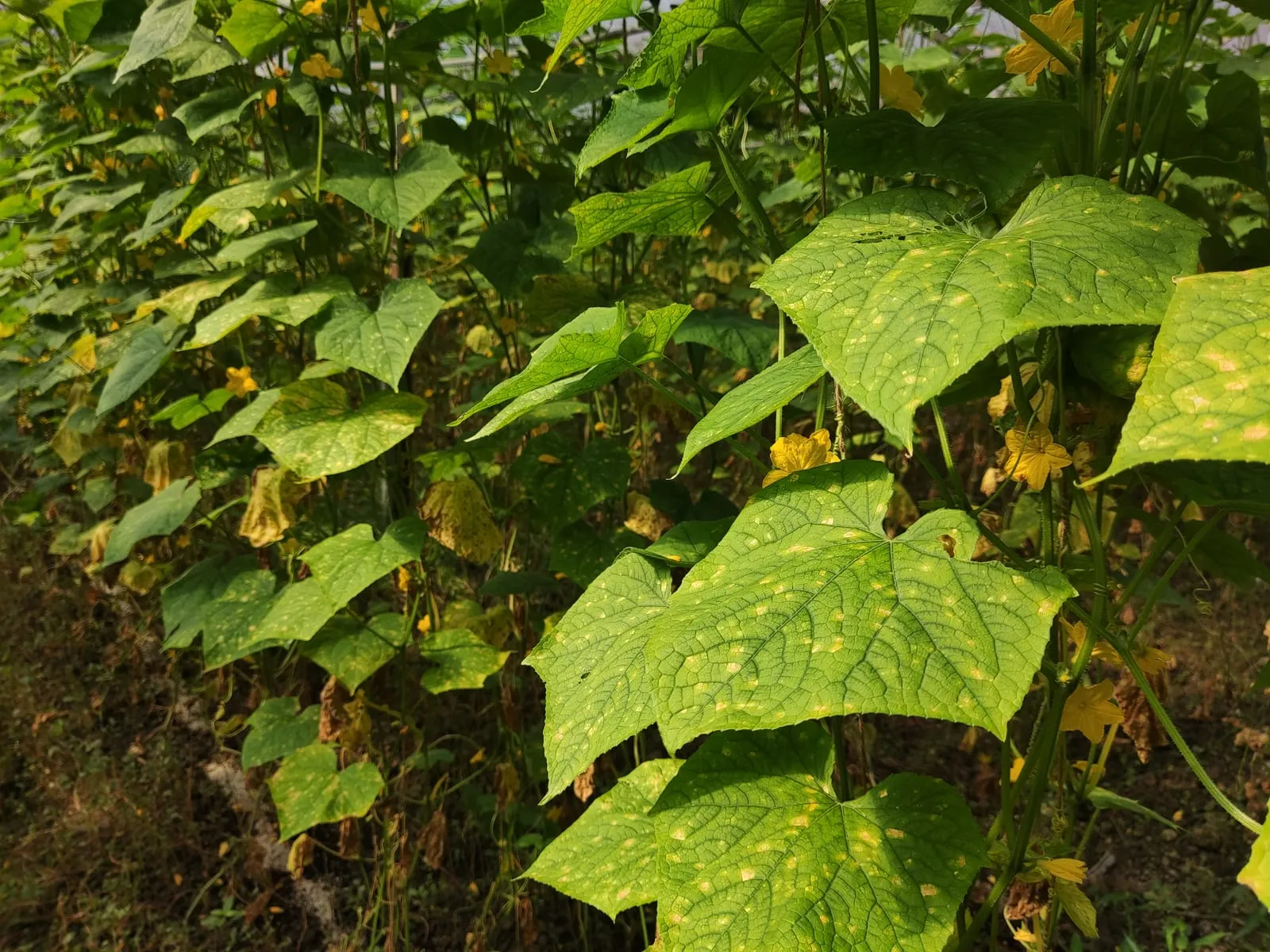
Pseudoperonospora cubensis (cucurbits) and others
Water mold (oomycete, not a true fungus) that thrives in cool damp conditions. Spreads rapidly through cucurbit and brassica plantings on wind-borne spores.
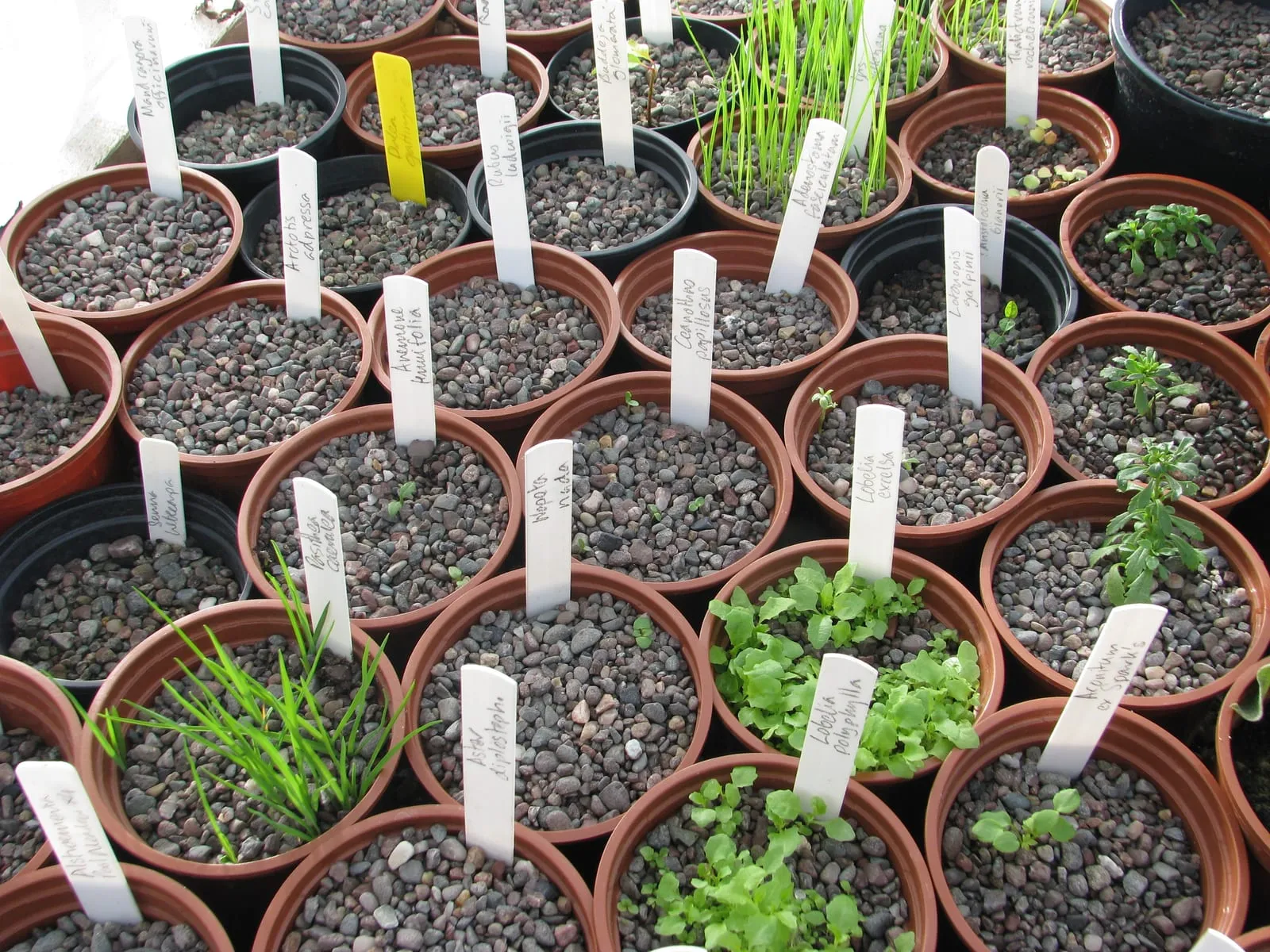
Pythium and Rhizoctonia species
Soil-borne complex of water molds and fungi that kill seedlings before or shortly after emergence. The single most common cause of seed-starting failures.
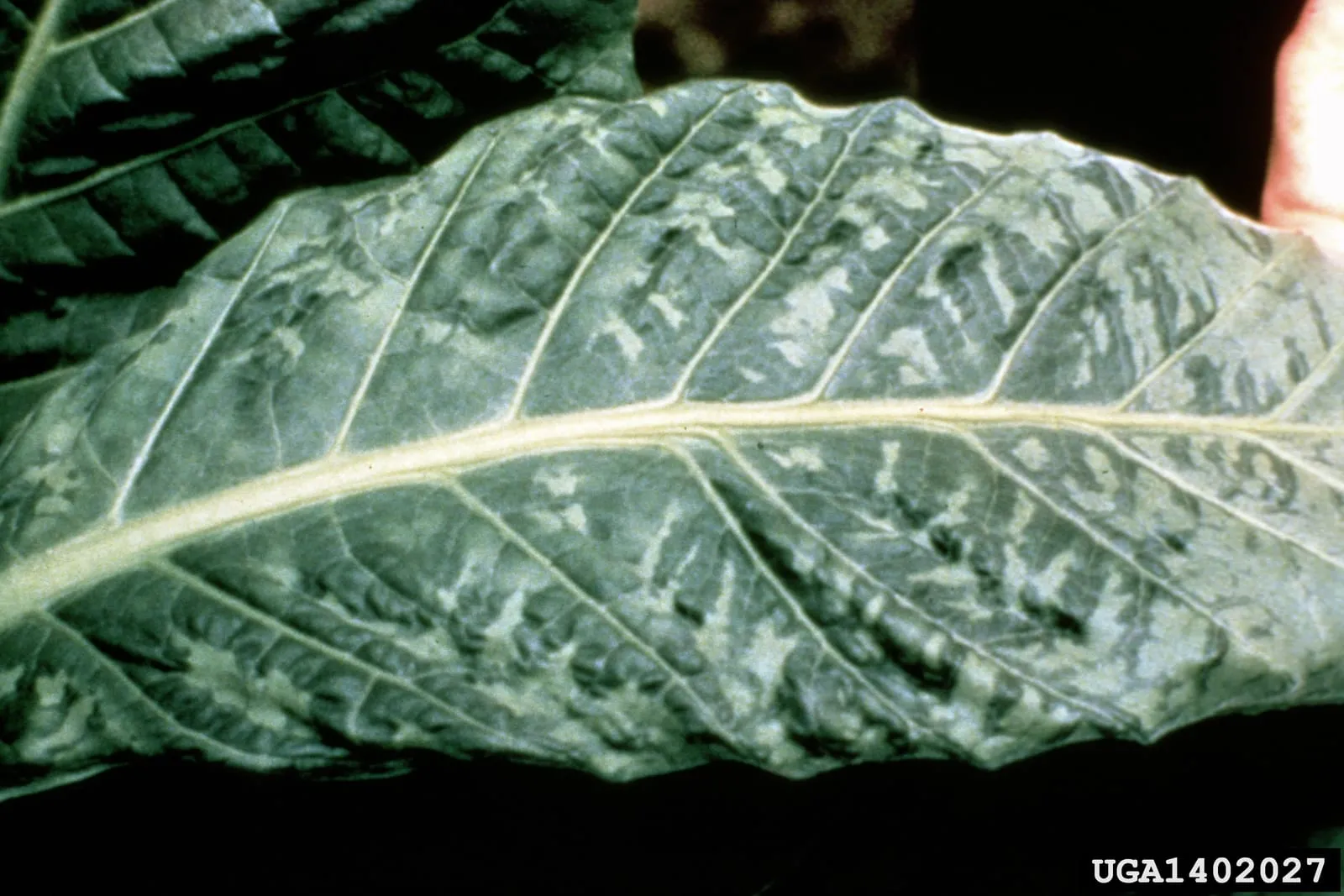
Cucumber mosaic virus, Tobacco mosaic virus, and others
Family of plant viruses producing mottled yellow-and-green leaf patterns. Vectored primarily by aphids; some are seed-transmitted or spread by handling tools and tobacco products.
Modified care for zone 7b
The primary care adjustment in zone 7b is early-season pest exclusion to limit bacterial wilt. Bacterial wilt is vectored exclusively by striped and spotted cucumber beetles; once a plant is infected, there is no effective treatment. Floating row cover applied at transplant and removed at first female flower keeps beetle populations low during the most vulnerable establishment period.
Japanese beetles and brown marmorated stink bugs add feeding pressure from late June onward. Stink bugs are particularly difficult to manage organically and cause scarring and deformity in fruit. Consistent scouting and perimeter trap crops (blue Hubbard squash is documented to draw cucurbit pests away from main plantings) reduce pressure without relying on broad-spectrum insecticides that disrupt pollinator activity.
In July and August, overhead irrigation should be avoided in favor of drip or soaker hoses. Wet foliage accelerates both downy mildew and powdery mildew spread, and zone 7b summers rarely have enough dry periods between rain events to make overhead watering safe.
Cucumber in adjacent zones
Image: "Cucumber", by Patricia Rose, via iNaturalist, licensed under CC-BY Source.
Related