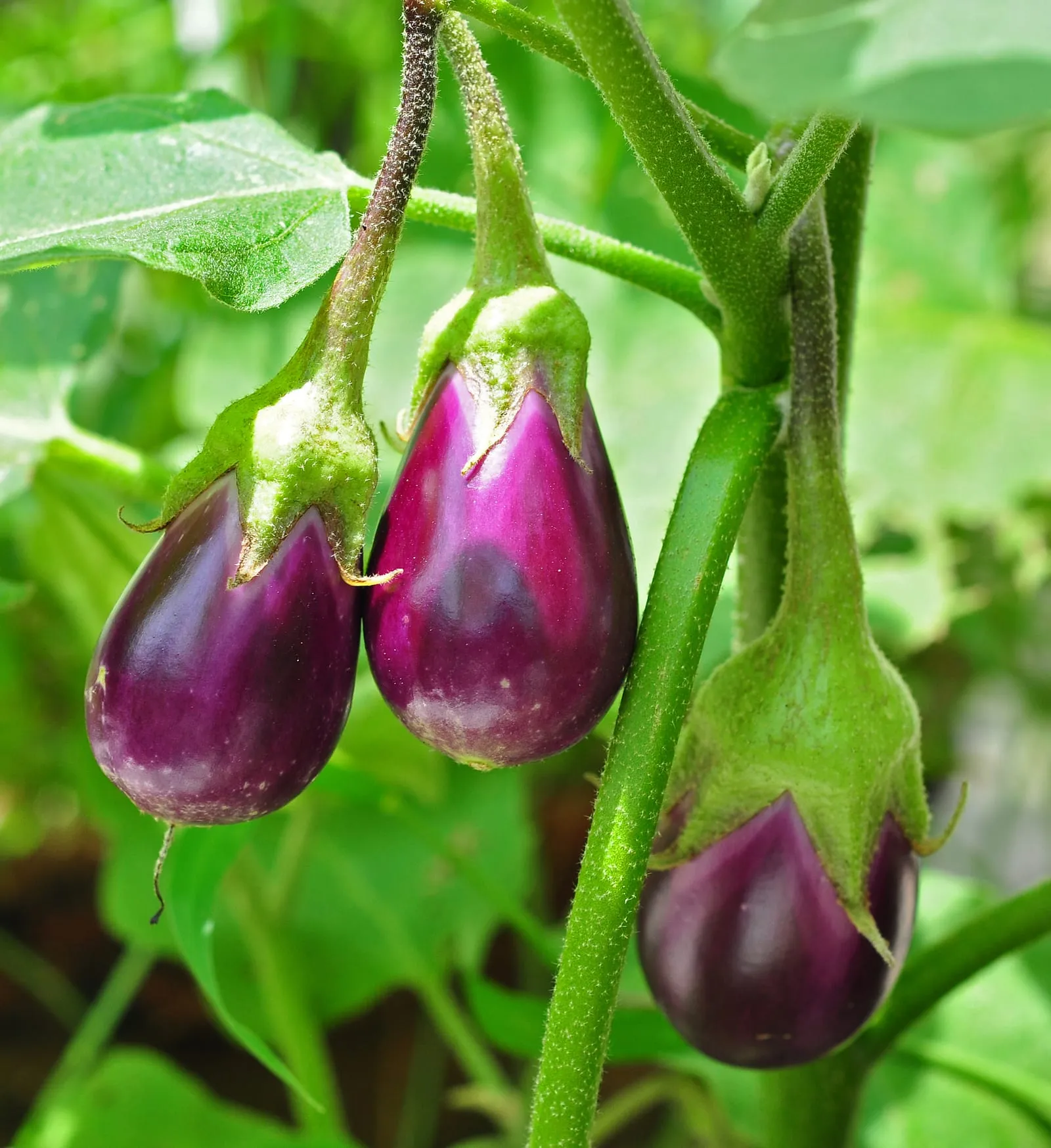
vegetable in zone 10b
Growing eggplant in zone 10b
Solanum melongena
- Zone
- 10b 35°F to 40°F
- Growing season
- 365 days
- Suitable varieties
- 0
- Days to harvest
- 70 to 100
The verdict
Eggplant is a tropical crop with no chill-hour requirement, so the "no winter chill" characteristic of zone 10b is irrelevant here. This is firmly a sweet spot for the crop, not a marginal zone. Minimum winter temperatures of 35 to 40°F are warm enough that established plants can persist year-round, and the 365-day growing season removes the clock pressure that growers in cooler zones face.
The main limitation in zone 10b is not cold but heat and disease. Sustained temperatures above 95°F cause flower drop, and the humid subtropical and coastal conditions common in this zone create sustained pressure from Early Blight and Verticillium Wilt. Neither disease eliminates eggplant as a viable crop here; both require management rather than avoidance. Coastal soils with saltwater intrusion present a separate challenge, as eggplant is moderately salt-sensitive and will underperform on saline ground without soil amendment.
Critical timing for zone 10b
With no meaningful frost risk, zone 10b growers can transplant eggplant seedlings at almost any point in the year, but the practical planting windows are late winter through early spring (February to March) and late summer into early fall (August to September). Midsummer planting tends to produce slower establishment because extreme heat stresses transplants before root systems are established.
From transplant, expect first harvest in roughly 65 to 80 days depending on variety. Spring plantings typically produce from May through July; fall plantings extend harvest from October through December and often beyond. Plants that overwintered in light frost zones typically decline and are replaced, but in zone 10b, productive plants can be maintained for a second season if pest and disease loads are managed.
Common challenges in zone 10b
- ▸ No winter chill
- ▸ Tropical pest and disease pressure
- ▸ Saltwater intrusion in coastal soils
Disease pressure to watch for
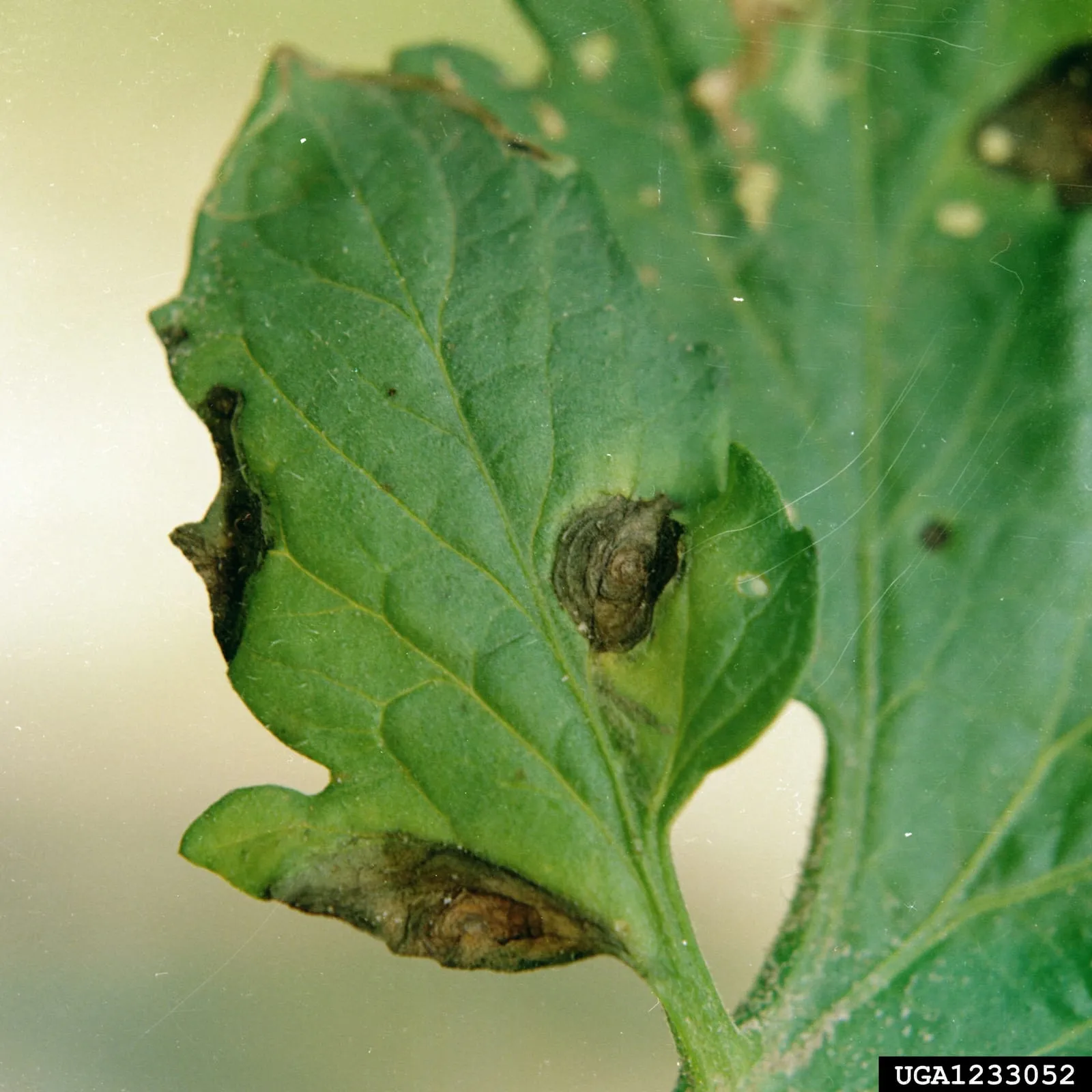
Alternaria solani
Fungal disease starting on lower leaves and progressing upward. The most common tomato and potato leaf disease in the eastern US.
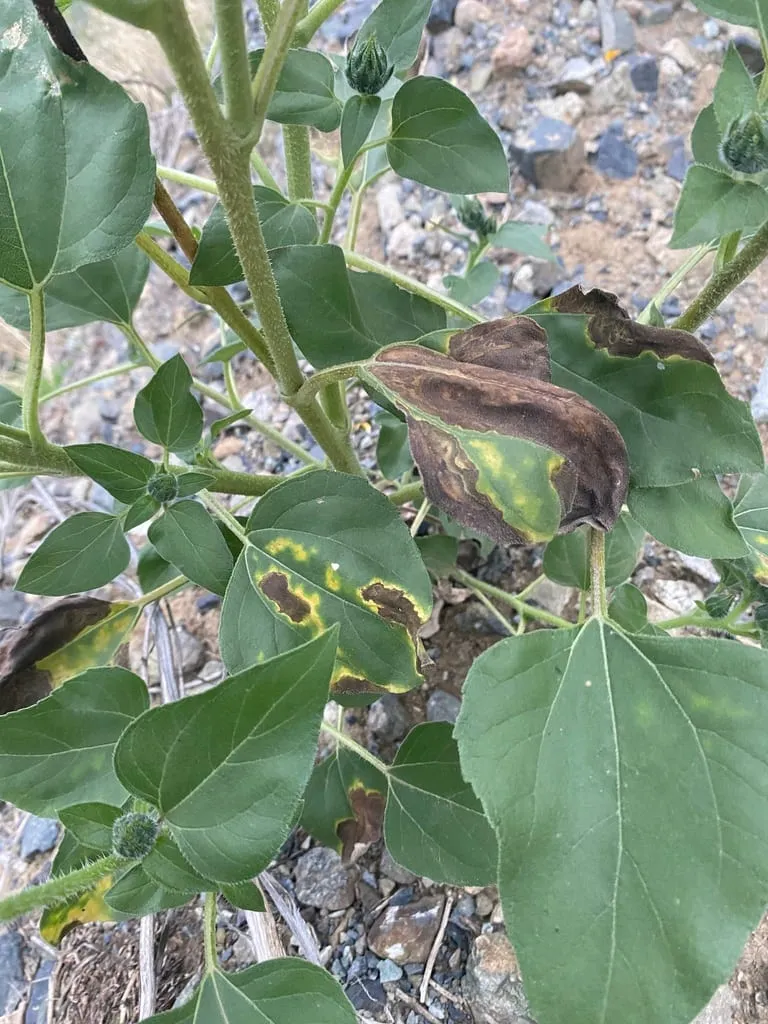
Verticillium dahliae
Soil-borne fungal disease similar to fusarium wilt but with broader host range and cooler temperature optimum. Persists in soil for 10+ years.
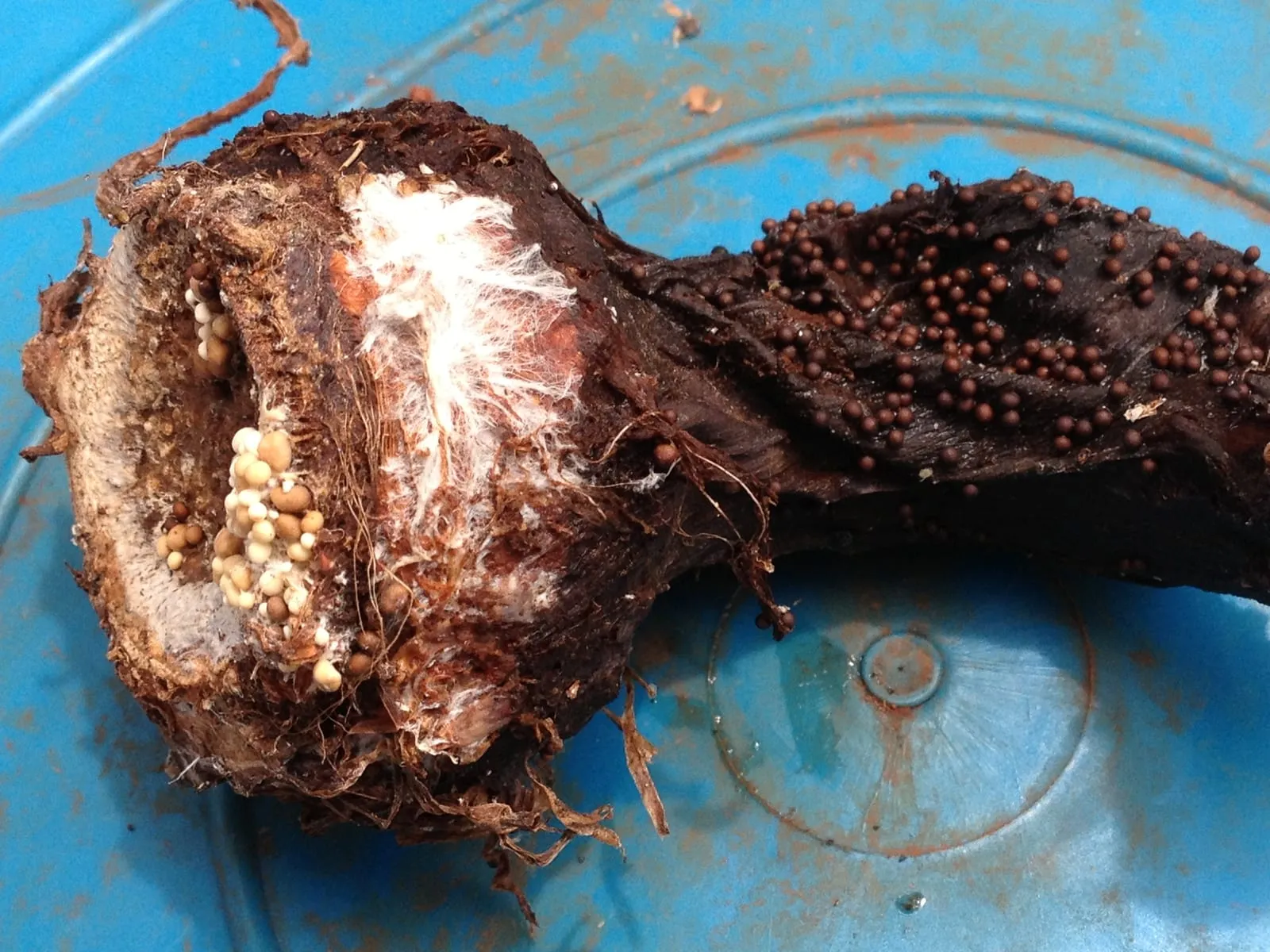
Sclerotium rolfsii
Soil-borne fungal disease most damaging in warm humid Southern conditions. White mycelial fans and small mustard-seed-sized sclerotia at the soil line are diagnostic.
Modified care for zone 10b
Standard eggplant care recommendations are written for zones where frost ends the season. In zone 10b, the season does not end, which creates different management priorities.
Heat management matters more than cold protection. During stretches of temperatures above 95°F, 30 to 40 percent shade cloth reduces flower drop and extends the productive window. Deep, consistent watering is critical; eggplant is drought-sensitive and inconsistent moisture contributes to fruit scarring and blossom drop.
Disease rotation becomes especially important with year-round soil use. Verticillium Wilt persists in soil; planting eggplant in the same bed in consecutive seasons increases infection risk substantially. A two-year rotation away from solanaceous crops (tomatoes, peppers) reduces but does not eliminate this risk. For coastal growers dealing with saltwater intrusion, raised beds with amended soil or container growing sidesteps the salinity problem more reliably than soil treatment alone.
Frequently asked questions
- Can eggplant be grown year-round in zone 10b?
Technically yes, though midsummer heat above 95°F often causes flower drop, reducing fruit set in the hottest months. Most growers find spring and fall plantings more productive than midsummer starts. Plants can persist year-round but may benefit from replacement after 18 to 24 months as yields decline and disease accumulates.
- Is Verticillium Wilt a serious problem for eggplant in zone 10b?
It can be, particularly where the same beds are replanted with solanaceous crops year after year. The pathogen overwinters in soil (there is no winter to kill it in zone 10b), so crop rotation is the primary management tool. A two-year break from tomatoes, peppers, and eggplant in the same bed reduces but does not eliminate risk.
- Does eggplant need any frost protection in zone 10b?
Rarely. Zone 10b minimum temperatures of 35 to 40°F are above the threshold where eggplant suffers cold damage. An unusual cold snap dipping toward 32°F is possible but uncommon; light row cover is sufficient protection for those brief events.
+−
+−
+−
Eggplant in adjacent zones
Image: "Solanum melongena 24 08 2012 (1)", by Joydeep, via Wikimedia Commons, licensed under CC-BY Source.
.JPG)
Related